Americas
Sacred Valley
"The valley does not feel like a detour to Machu Picchu — it feels like the point."
I arrived in the Sacred Valley from Cusco in the back of a colectivo that took the curves above Pisac at a speed that made me grip the door handle and stare directly at the mountains to avoid thinking about the drop. Then the valley opened up below — wide, green, improbably fertile at 2,800 metres — and I forgot about the road entirely. The Urubamba River cuts through the middle of it all, and the Inca terraces climb the hillsides on either side like a staircase built for giants. Nothing prepares you for the scale of it.
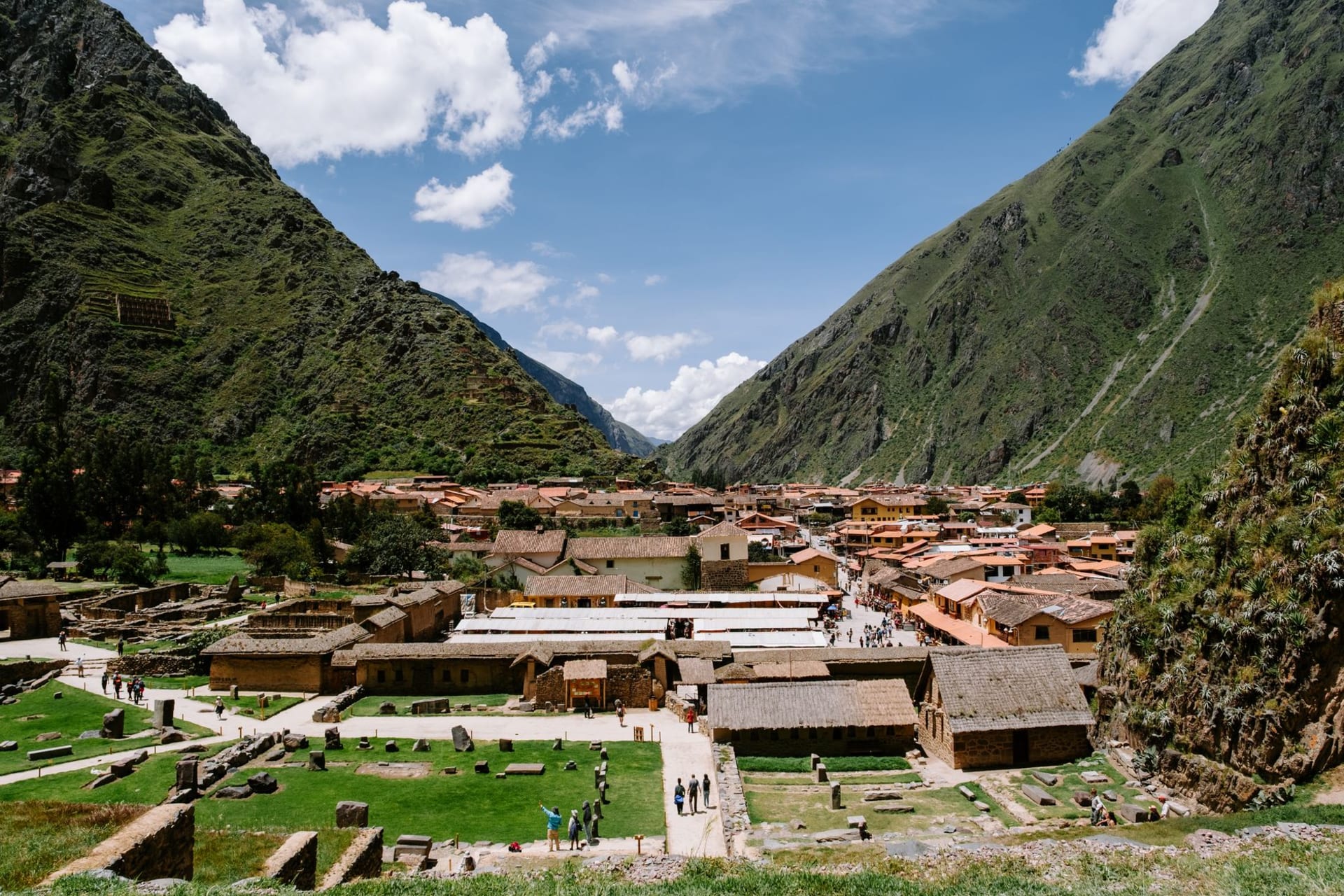
Pisac market is the obvious entry point, and it is still worth it despite the tour groups. The market runs every day now — the Sunday version is the famous one, the Tuesday and Thursday versions are quieter and more local, the vendors more willing to linger over a conversation. But what most people miss is the ruin complex above the town, a forty-minute climb above the market stalls. Up there, the terracing is vertiginous, the views run the full length of the valley, and you will almost certainly have it to yourself. Ollantaytambo, at the valley’s western end, is different in character — a working Inca town where the original street grid is still inhabited, where the water channels still run, where the temple complex rising above the plaza is genuinely unfinished in a way that makes you feel the interruption of history viscerally. I sat on the plaza steps eating a potato soup from a woman who had set up a pot there every morning for what felt like decades, watching the light shift on the pink granite face of the fortress, and felt no urgency to be anywhere else.
The detours are what elevate the valley beyond a transit corridor. Maras, a village above the valley floor, sits at the edge of salt evaporation terraces that have been worked since pre-Inca times — thousands of small pools cut into a hillside, each one a slightly different shade of white and pink and amber depending on the hour. A few kilometres away, the circular agricultural terracing of Moray spirals down into the earth like an amphitheatre designed for experimenting with microclimates, which is almost certainly what it was. Neither site appears in the major tour itineraries with the frequency they deserve. You can rent a bicycle in Maras village and connect them both in a half-day that will feel like the best decision you made in Peru.
When to go: May through October is dry season, and the light in the valley during those months — thin, high-altitude, gold at the edges — is extraordinary. June and July are peak season; arrive early at Pisac and Ollantaytambo or accept the crowds. April and November are shoulder months with fewer people and occasional afternoon rain that rarely ruins a morning.
What most guides get wrong: They treat the Sacred Valley as an acclimatization zone before Cusco, a place to sleep off the altitude while waiting for the main event. It is not. The valley sits lower than Cusco, which makes it a reasonable first stop — but the reason to start here is not physiological, it is because the valley itself is one of the great Andean landscapes, with enough depth to absorb three or four days before you have exhausted it.