The colectivo from Cusco dropped me at the Pisac market on a Thursday morning, and for the first twenty minutes I was completely overwhelmed. The market sprawls across several streets below the main plaza — stall after stall of textiles, ceramics, carved wood, silver jewellery — and the vendors are polished at the tourist transaction in a way that can feel exhausting before nine in the morning. I almost left. Then I looked up at the hillside above the town and saw the ruins climbing into the low cloud, and decided the market was the wrong thing to be paying attention to.
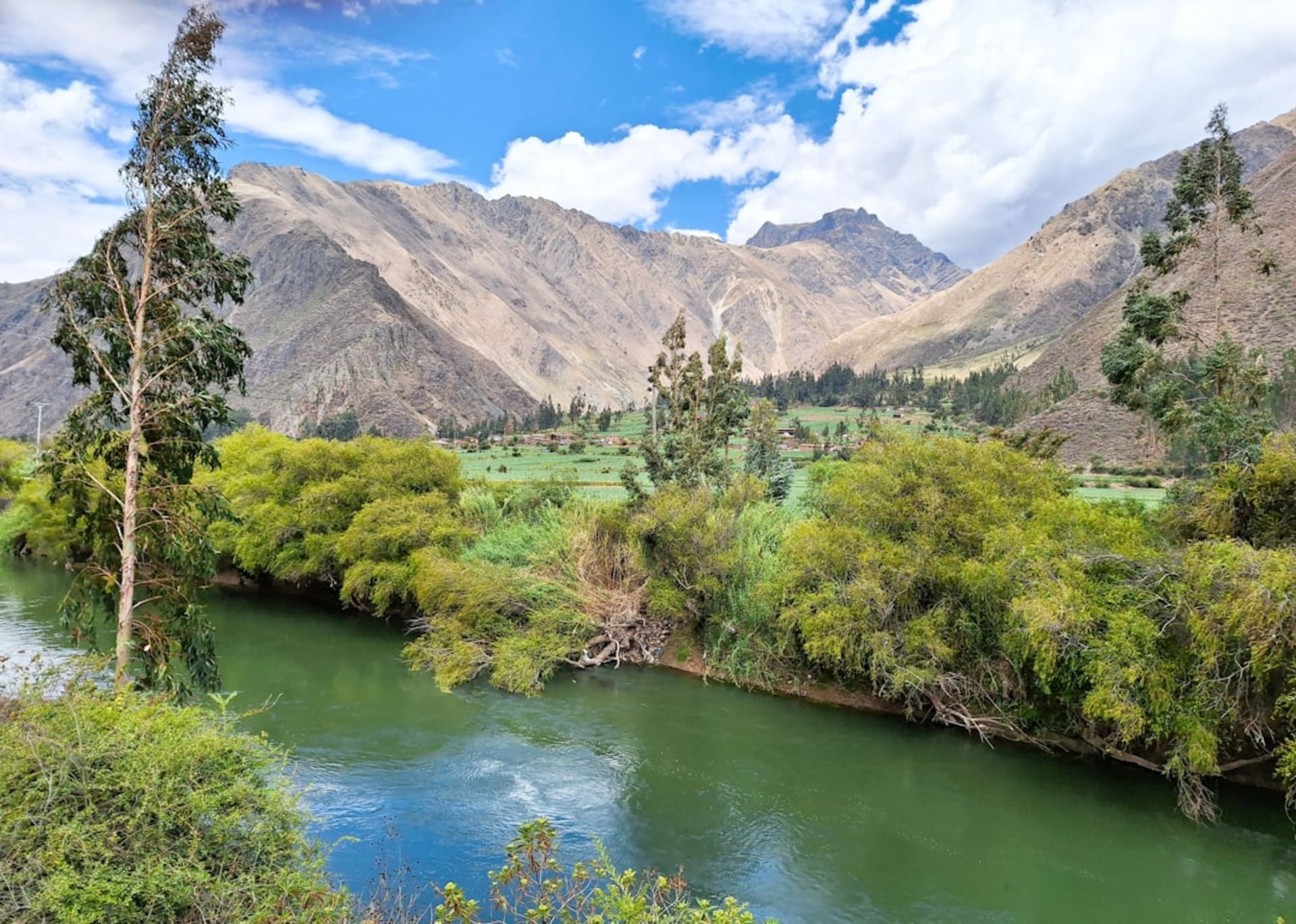
The ascent to the Pisac ruins takes about forty minutes from the edge of town, following a path through agricultural terraces that widen and steepen as you climb. The ruin complex at the top is enormous — the ceremonial core, the agricultural terracing, the residential quarters spread across multiple ridges — and on a Thursday it was nearly empty. I had the main temple platform to myself for long enough to eat my lunch there, looking straight down the valley toward Calca and Lamay, the Urubamba River glinting silver far below.

The market, revisited after the ruins, became something else entirely. I came back down in the afternoon, when the tour groups had thinned and the women selling chicha were more interested in having a conversation than making a sale. There is a produce section in the back of the market, away from the handicraft stalls, where farmers bring potatoes in varieties I couldn’t name — purple, orange, waxy, floury — and the negotiation is quick and serious. I bought a bag of something that looked like small purple marbles, roasted them on the hostel’s gas ring that evening, and ate them with salt and the last of a hot sauce I’d been carrying since Lima.

The Sunday market is the famous one, and if you’ve never been to the Sacred Valley I understand why you’d go then — it’s bigger, louder, more spectacular in every way. But the ruins will be crowded too, and the colectivos from Cusco run in convoys. A Thursday or Tuesday visit rewards the slight inconvenience with a quieter version of both things: a market that still functions for the people who live here, and ruins you can sit in without narration.
When to go: The market runs daily, but Tuesday and Thursday are the most locally oriented versions; Sunday is the spectacle. The ruins are best in early morning, when cloud often sits in the lower valley and burns off by mid-morning. Dry season (May–October) guarantees clearer light; shoulder months of April and November bring fewer people and rain that usually saves itself for the afternoon.