Ollantaytambo
"The Inca didn't build ruins here — the Spanish just ran out of time to finish the demolition."
I reached Ollantaytambo in the late afternoon, when the sun was already behind the peaks and the valley had gone into that cool, diffuse light that turns the pink granite of the fortress a pale dusty rose. The train station at the edge of town was busy — this is the departure point for Aguas Calientes — but the main plaza, two streets away, had the unhurried quality of a place that has been functioning in exactly this way for a very long time. I sat on the stone steps below the temple complex with a bowl of potato soup that a woman had been ladling from a pot since what seemed like early that morning, and watched the last light move off the fortress above me.
Ollantaytambo is unusual among Inca sites in that the town itself is still lived in. The original grid of long rectangular blocks — canchas — each one a compound organised around a central courtyard, is still the neighbourhood structure. The water channels cut into the edges of the streets still run. Locals dry laundry in the same courtyards where, several centuries ago, the same arrangement of stone and flowing water managed household space with a logic that is completely evident once you understand what you’re looking at.
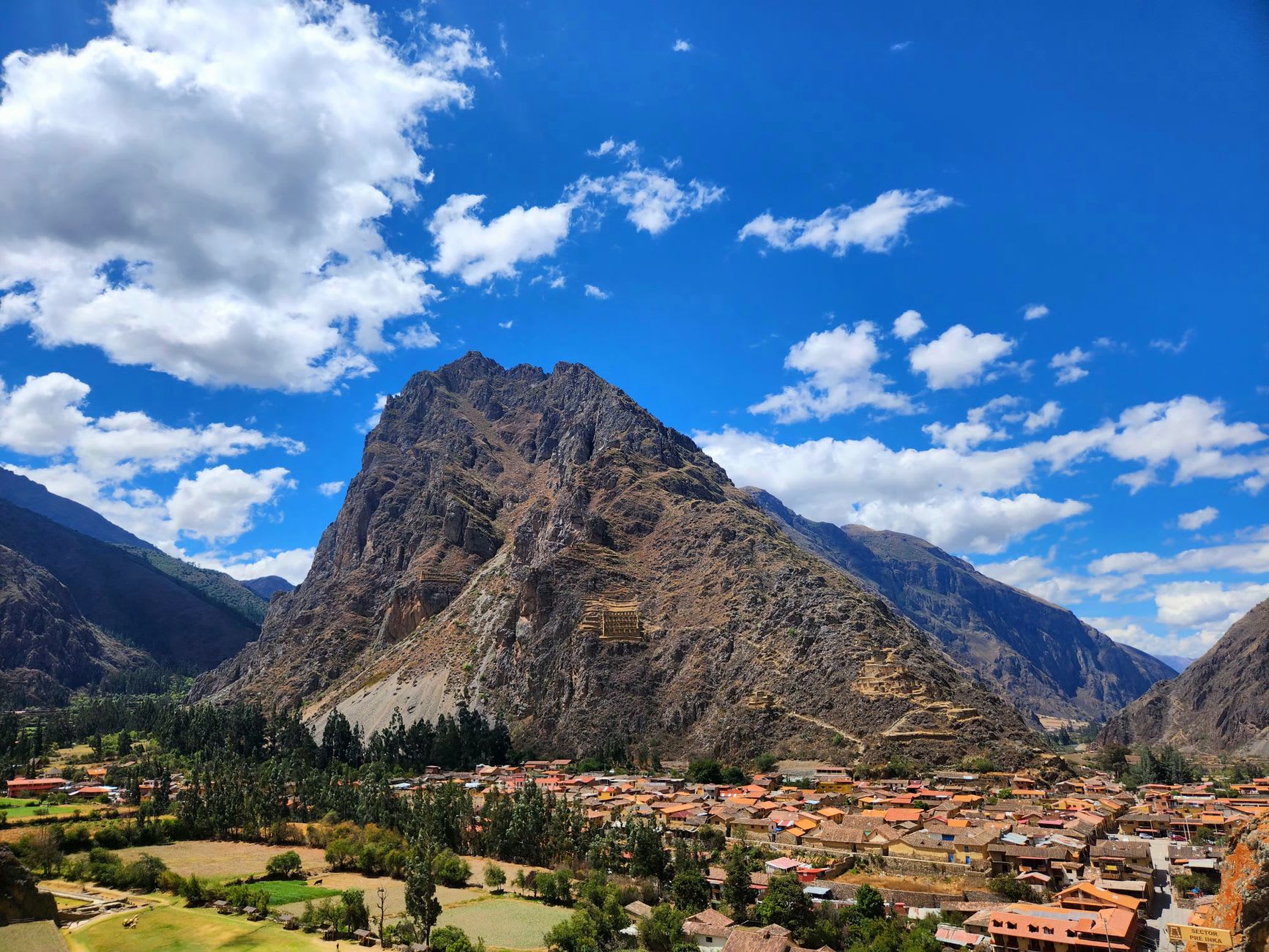
The fortress complex above the town is the thing most people come for, and rightly so. The ascending terraces of pink granite, each block enormous and fitted without mortar, rise steeply enough that the climb becomes a physical argument with the altitude. At the top, the Sun Temple — never finished, interrupted by the Spanish invasion — stands in a state of partial assembly that is more eloquent than completion would have been. The monolithic stone blocks, some of them six metres tall and weighing hundreds of tonnes, were quarried from a mountain across the river and transported without wheels or iron tools. The unfinished state of the temple gives it a raw, still-urgent quality, as though someone left the site for a moment and has not yet returned.
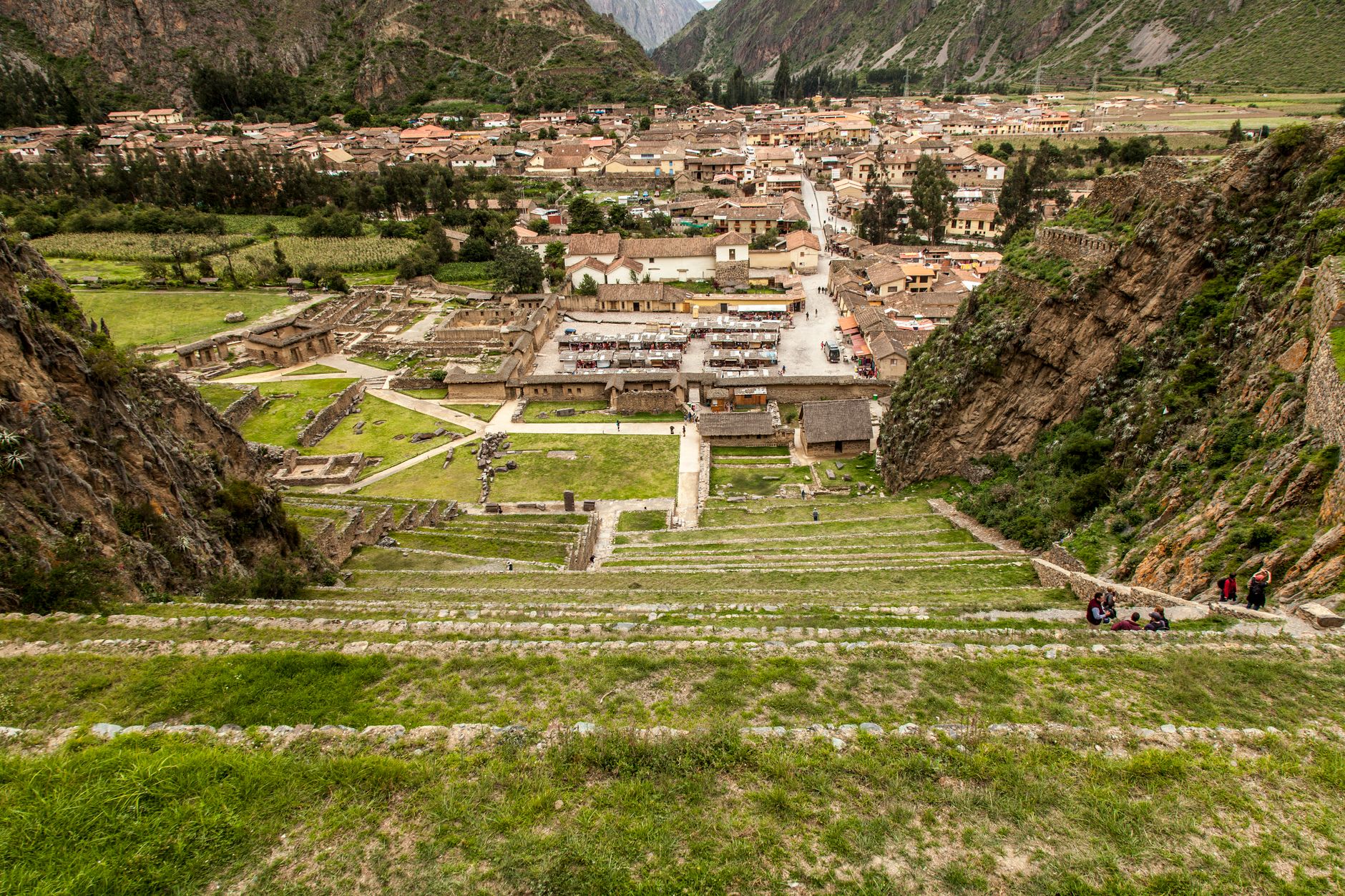
The town fills with transit traffic in the afternoon — hikers heading to Aguas Calientes, day-trippers from Cusco — but quiets by early evening into something genuinely local. There is a small covered market off the main plaza where the food is good and cheap and entirely unself-conscious: trout from the river, chicha morada in plastic cups, a fried dough thing I ate three of while pretending to deliberate. I walked back through the Inca streets after dark, the channels running in the silence, and felt the particular satisfaction of a place that keeps its integrity regardless of who is passing through it.
When to go: Ollantaytambo is worth a night or two rather than a rushed day trip. Arrive in the afternoon when day visitors are at their peak, walk the living town, then have the ruins to yourself the following morning before nine. May through October is dry season; the ruins and town are equally compelling in shoulder months when the valley is green and the light is softer.