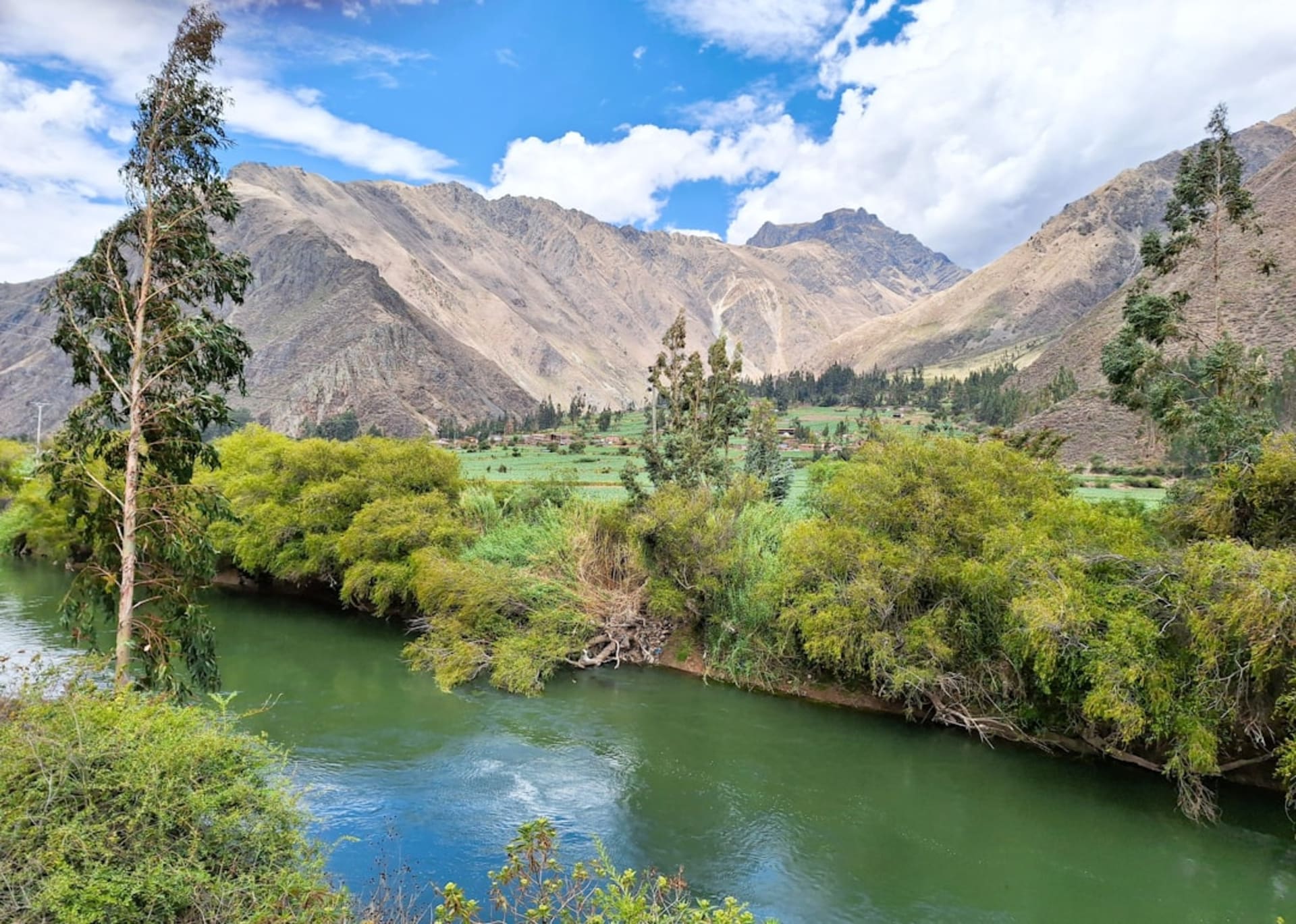
Chinchero
"The colours here come from the earth itself — cochineal, plants, minerals — and nothing in that process is decorative."
Chinchero sits on the altiplano at over 3,700 metres, which is higher than the Sacred Valley floor and noticeably feels it — the air sharper, the light flatter, the horizon wider than the enclosed valley below. I arrived by colectivo from Urubamba on a market day, and the first thing I noticed was the smell: eucalyptus smoke, damp wool, the particular mineral sharpness of highland air. The market here is divided in a way that clarifies itself quickly — one section sells produce, the other handicrafts — and the handicraft section is staffed almost entirely by women in traditional dress: wide-brimmed hats, layered skirts in deep reds and blacks, faces that carried the altitude in their cheekbones and the particular quality of calm that comes from not needing your approval.
The textiles in Chinchero are different from what you’ll find in Pisac’s tourist stalls. Many cooperatives here still use natural dyes — cochineal for the deep reds and pinks, indigo and other plants for blues, chinchilla and various roots for yellows and greens. Several of the women will demonstrate the process if you show genuine curiosity rather than shopping urgency. I watched the cochineal demonstration twice: the insect dried and ground to a pale pink powder that turns a shocking arterial red the moment you add lime juice. I couldn’t understand how someone discovered this the first time, and when I said so, the woman demonstrating laughed in a way that suggested she’d heard that reaction before.
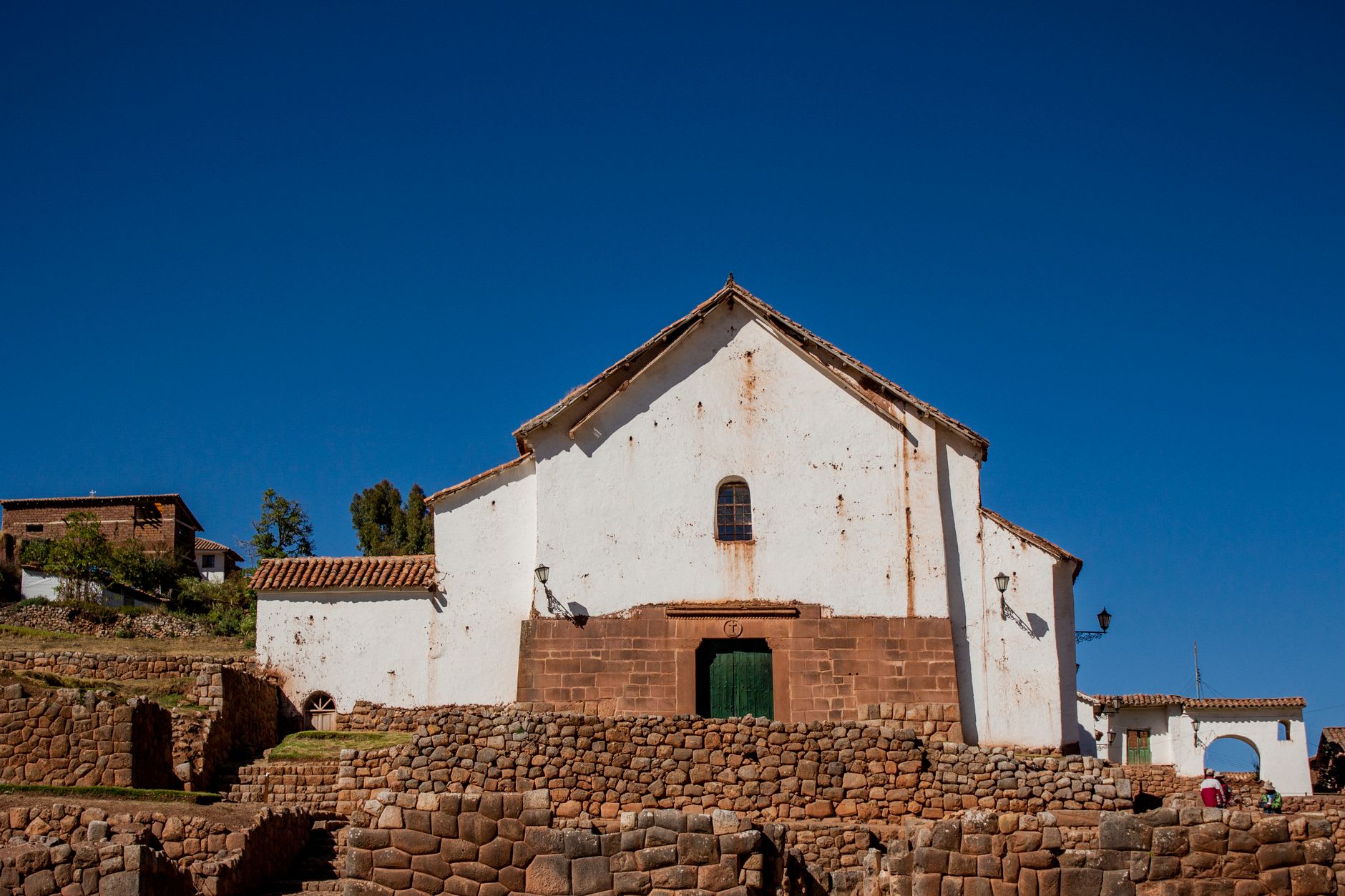
The colonial church at the top of the plaza is built directly on Inca foundations — the lower courses of stone, enormous fitted granite blocks, are clearly Inca work, and the Spanish colonial whitewashed church sits on top of them with a pragmatism that tells the whole story of the conquest in a single structure. Inside, the murals are vivid, the air is cold and still, and the mixing of visual languages — Christian iconography rendered in an Andean palette and Andean geometry — repays slow looking in a way that a more artistically coherent building wouldn’t. The ruins of an Inca palace terrace extend behind the church along the ridge, and the view from there down into the valley below is as long and clear as any in the region.

The town sits on the route between Cusco and the Sacred Valley, which means it often appears on tour itineraries as a one-hour stop. One hour is the wrong amount of time. Come for half a day at minimum, eat at one of the small restaurants near the plaza where the soup is thick with local tubers and costs almost nothing, and walk out to the edge of the ridge after the tour groups have moved on. The light on the plateau in the afternoon, with the peaks coming in and out of cloud, is worth the extra time alone.
When to go: Market days fall on Sunday, Tuesday, and Thursday — Sunday is the largest, Tuesday and Thursday are quieter and more locally oriented. The altiplano location means weather can change quickly; morning visits are more reliable than afternoons, which often bring cloud from the east. Year-round accessible, but dry season (May–October) gives the clearest mountain views from the ridge above the church.