Sinaia
"Peles Castle looks like it grew from the mountain forest, stone by storybook stone."
A royal mountain resort in the Prahova Valley, home to the extraordinary Peles Castle — perhaps the most fairy-tale royal residence in Europe.
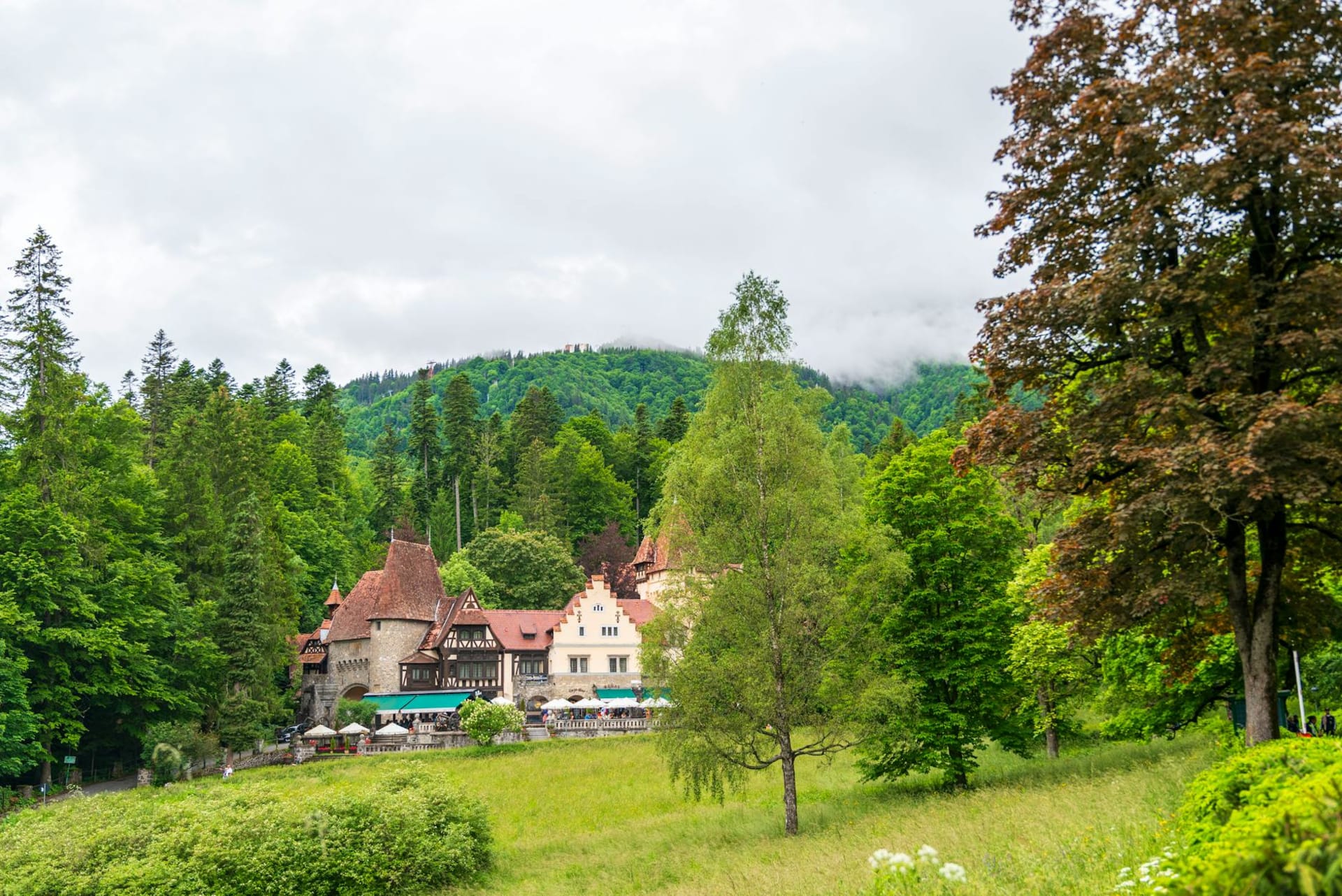
I had seen photographs of Peles Castle, of course — everyone has. But photographs flatten it, strip away the cold resin smell of the pines pressing in from every side, the way the carved wooden galleries appear story by story as you climb the slope from the town, as though the building is assembling itself in real time. When I finally rounded the last bend on Aleea Peles and the full facade opened up, I stopped walking. Lia kept going for three steps before she noticed I was no longer beside her.
A Castle That Earns Its Postcard
What makes Peles genuinely extraordinary is not its scale — though the 160 rooms and the German Renaissance extravagance of the exterior do their work — but the density of it. Every roofline carries another carved flourish. Every turret seems to answer a different architectural century. King Carol I had it built as a summer retreat beginning in 1873, and the result reads less like a single royal vision than like a conversation between a half-dozen European traditions, somehow made coherent by the weight of the mountains around it. Inside, the Moorish salon sits a corridor away from a Turkish lounge and a Florentine library. The tour moves slowly because there is too much to process in any single glance.
Below the castle, the smaller Pelisor — built for Crown Prince Ferdinand — is quieter and, in its own way, more moving. Queen Marie’s gold-and-art-nouveau bedroom, still hung with Byzantine icons, has the feeling of a room recently vacated rather than one preserved under glass.
The Town Below
Sinaia itself is a proper mountain town, not a museum. Along Bulevardul Carol I, the main artery running through the valley, you find pastry shops selling cozonac — the dense, sweet Romanian celebration bread — alongside cafes where the espresso is stronger than anything I expected this far into the Carpathians. The Casino building from 1912 still anchors the lower promenade, its faded Belle Epoque stonework glowing a particular amber in the late afternoon when the light drops low between the ridges.
I had not expected the hiking. A gondola lifts from just above town to Cota 1400, then a second one to Cota 2000, where the treeline drops away and the Bucegi plateau opens into something vast and wind-scraped and entirely unlike the royal confection below. The surprise was the contrast — fairy-tale architecture one hour, exposed alpine tundra the next.
Getting the Timing Right
When to go: Late May through June and September through early October offer the clearest mountain light and manageable crowds at the castle. July and August bring Romanian summer tourism in force; the castle queues lengthen and the town fills with noise that the valley’s acoustics amplify considerably.