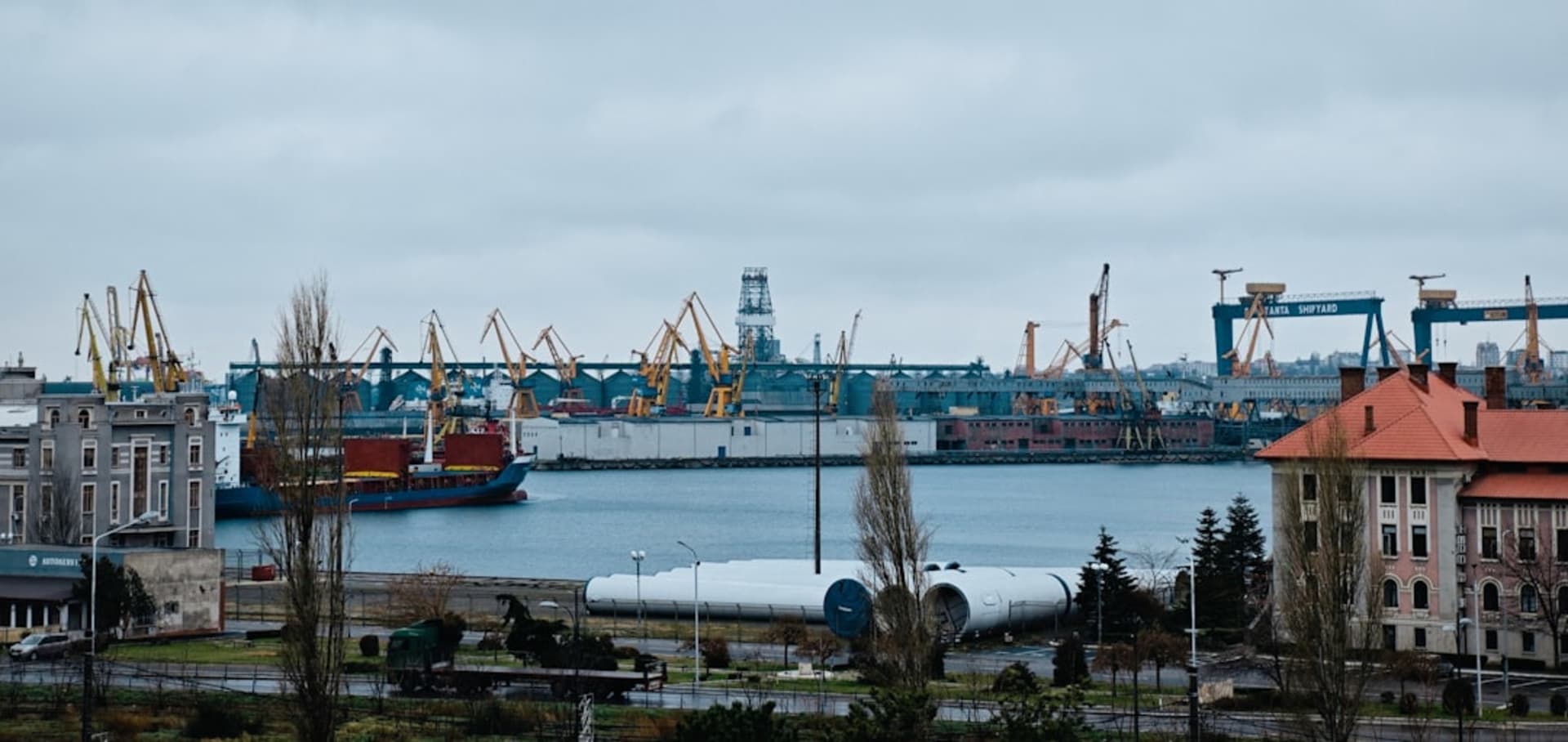
Constanța
"Ovid was exiled here. I arrived voluntarily and stayed longer than I planned, which is either the opposite of exile or exactly the same thing."
Most people pass through Constanța on their way to Mamaia or some other beach resort up the coast. This is understandable and also a mistake. The city itself — Romania’s main port, a place that was Greek before it was Roman before it was Ottoman before it was Romanian — has a layered, slightly disheveled character that I find more interesting than any beach.
The Old Town at Low Season
I arrived on a Tuesday in early June, which meant the old town was almost empty. The streets between the port and the archaeological museum have a particular texture: Ottoman-era houses with peeling plaster and iron balconies, Byzantine columns repurposed as gateposts, a mosque with a minaret you can climb for a view over the harbor. The smell shifts from diesel fumes near the port to fried fish near the waterfront restaurants to something older and harder to name in the residential streets — stone dust and warm sea air.
The Archaeological Museum is the main reason to come. It holds the Constanța Treasure, a fourth-century cache of carved gemstones found in the ground nearby — the kind of objects that make you recalibrate the depth of time you’re standing on. Two floors of Roman marble, Greek pottery, and Byzantine bronze. I spent two hours there and felt I’d rushed it.
Ovid’s Square and the Casino
The poet Ovid was exiled to Tomis — the ancient name for Constanța — by Augustus in 8 AD, for reasons that were officially vague and probably political. He spent the last decade of his life here, writing miserable letters home to Rome. The square named after him has a bronze statue of the poet looking suitably melancholy toward the west, his back to the Black Sea.
Behind the square, toward the water, the old Casino building stands in a state of perpetual mid-restoration. Built in 1910 in a style that splits the difference between Art Nouveau and operatic delusion — white cupolas, elaborate iron railings, a grand terrace over the rocks — it has been closed to the public for most of the last twenty years, perpetually about to be restored and never quite getting there. I pressed my face to a ground-floor window and saw plaster moldings slowly returning to dust. It is one of the more beautiful ruins I’ve encountered, and I use “ruin” loosely but honestly.
The Waterfront and Eating Fish
The waterfront promenade below the old town is where Constanța relaxes. Families walk in the evenings, teenagers sit on the sea wall, and the restaurants that line the path do a solid trade in grilled sea bass and dorada pulled from the Black Sea that morning. I ate grilled crap (carp — the Romanian spelling requires a moment of adjustment) at a place with plastic chairs and a view of the harbor mouth, and it was better than anything I’d had in Bucharest.
The Black Sea is calmer and less salty than the Mediterranean, and swimming off the rocks near the casino promontory has an eerie quality — you can see the bottom for a long way, the water is warm, and the city rises directly above you.
Mamaia and the Coast
The resort strip of Mamaia begins immediately north of the city and is relentless in the way that beach resorts tend to be — clubs, sunbeds, jet skis, ice cream of many colors. If that’s what you came for, it’s there. I preferred returning to the old town in the late afternoon and watching the light go orange over the port cranes. But Mamaia is ten minutes away by taxi if you want a day of something simpler.
When to go: Late May and early June are ideal — warm enough for swimming, thin on crowds, and the city’s restaurants are open without the high-season chaos. July and August are extremely busy (the coast is Romania’s main domestic beach destination) and prices double. September is excellent: the sea stays warm, the resort crowds thin, and the old town exhales. Avoid winter unless you’re specifically interested in an empty, windswept port city, which, honestly, has its own appeal.