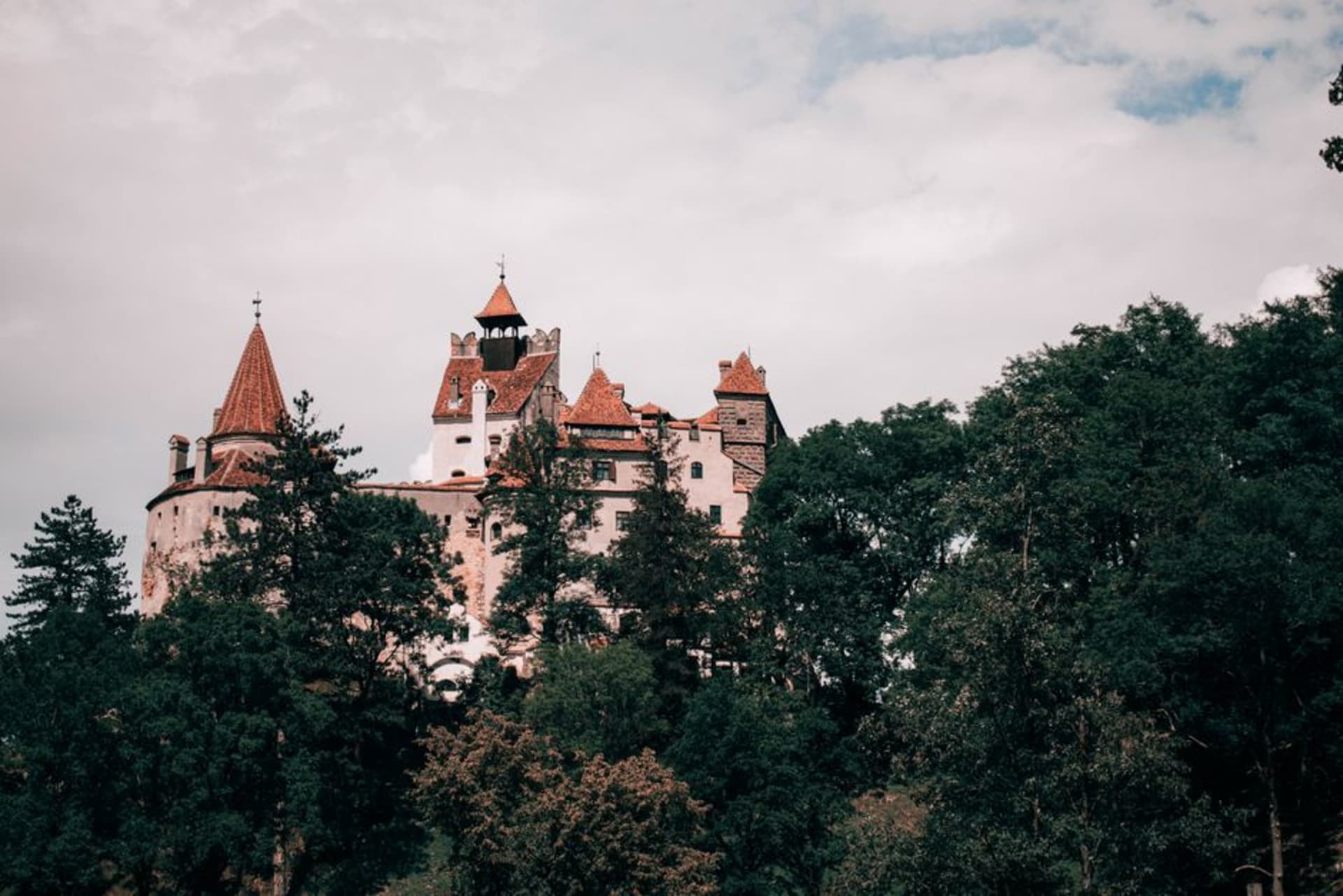
A white-walled fortress bristling on a rocky spur above Transylvania, half customs post, half myth, all worth the climb.
I’ll admit it: Lia and I booked our train to Brasov mostly because of the name Dracula. Everyone does. But the thing nobody tells you before you actually stand at the base of Bran Castle is how logical it looks up there, wedged onto its rock like it grew out of the stone. It was built between 1377 and 1388 by Saxon merchants from Brasov, and the moment you see where it sits — guarding the narrow route between Transylvania and Wallachia — the whole “customs post” story clicks into place faster than any vampire myth does. This was never really about fangs. It was about tolls, trade routes, and keeping an eye on whoever came through the pass.
We climbed up on a grey October morning, mist still sitting low in the valley, and the walk up through the trees to the entrance took maybe fifteen minutes — enough to catch our breath and notice how the towers seem to lean out over the rock in a way that photos flatten out. Inside, the corridors twist and drop through half-levels connected by narrow wooden staircases, and it’s genuinely disorienting in a way I liked. You lose your sense of which floor you’re on within minutes.
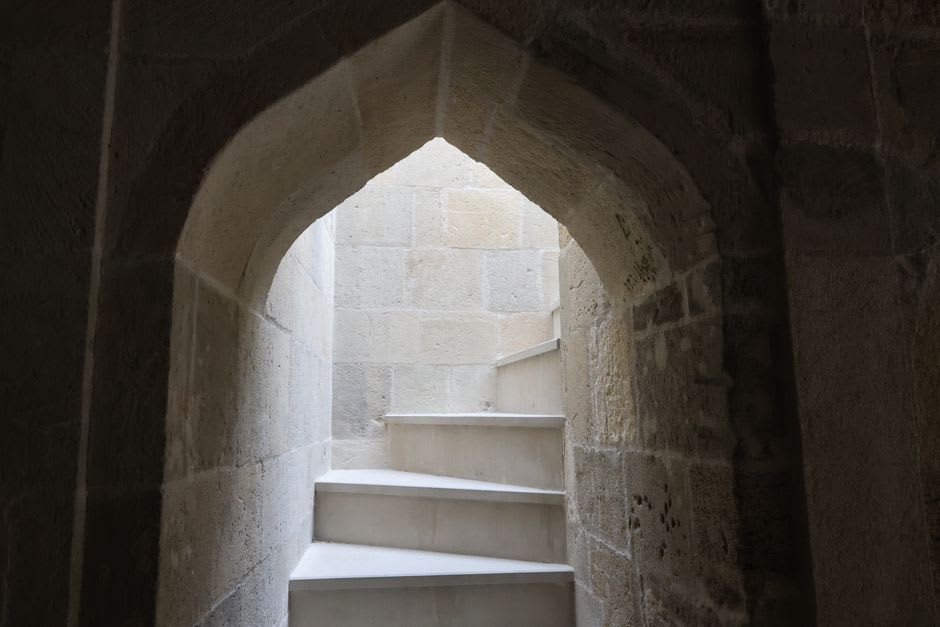
What surprised me most was how thin the Vlad the Impaler connection actually is once you’re inside reading the panels — historians will tell you his link to this specific castle is more legend than record. The real emotional center of the place turned out to be Queen Marie of Romania, who took it as a royal residence in the 1920s and had the interiors redone in Art Nouveau style. Standing in her old rooms, all soft curves and pale wood after the cold stone stairwells, I actually stopped thinking about vampires entirely. Lia kept pointing out the window frames, saying they felt more like a Paris apartment than a medieval fortress.
We ended up sitting outside afterward with cups of mulled apple juice from a stall near the exit, looking back up at the towers going grey-gold in the afternoon light, and I remember thinking the marketing had actually undersold the place — not because of the Dracula story, but in spite of it.
When to go: Autumn is the sweet spot — the crowds thin out and the hills around the castle turn into a proper wash of gold and rust that makes the walk up almost as good as the castle itself.