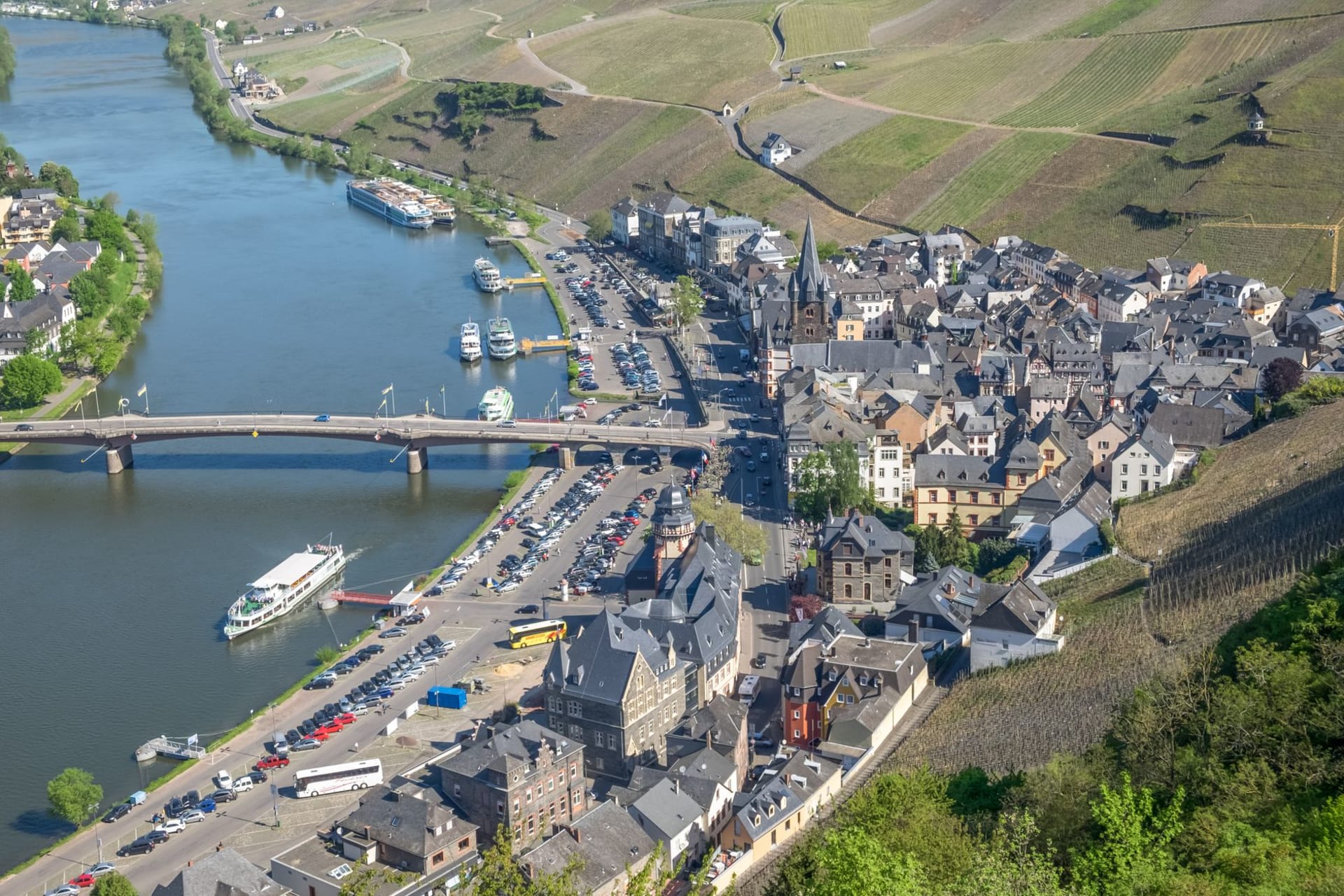
Rheinsteig Trail
"The Rhine looks entirely different from the trail — smaller in some ways, stranger in others, and completely real."
I walked the Bacharach-to-Kaub section of the Rheinsteig on a morning in late September, when the trail was empty enough that I spent two hours in the company of nothing but vine rows, birdsong, and the Rhine far below. The path moves through terrain that the tourist boats never see: above the castles rather than below them, at the elevation where the vineyards give way to mixed forest, where the valley opens and closes around you and the river appears and disappears through gaps in the trees like a secret that keeps deciding whether to tell itself.
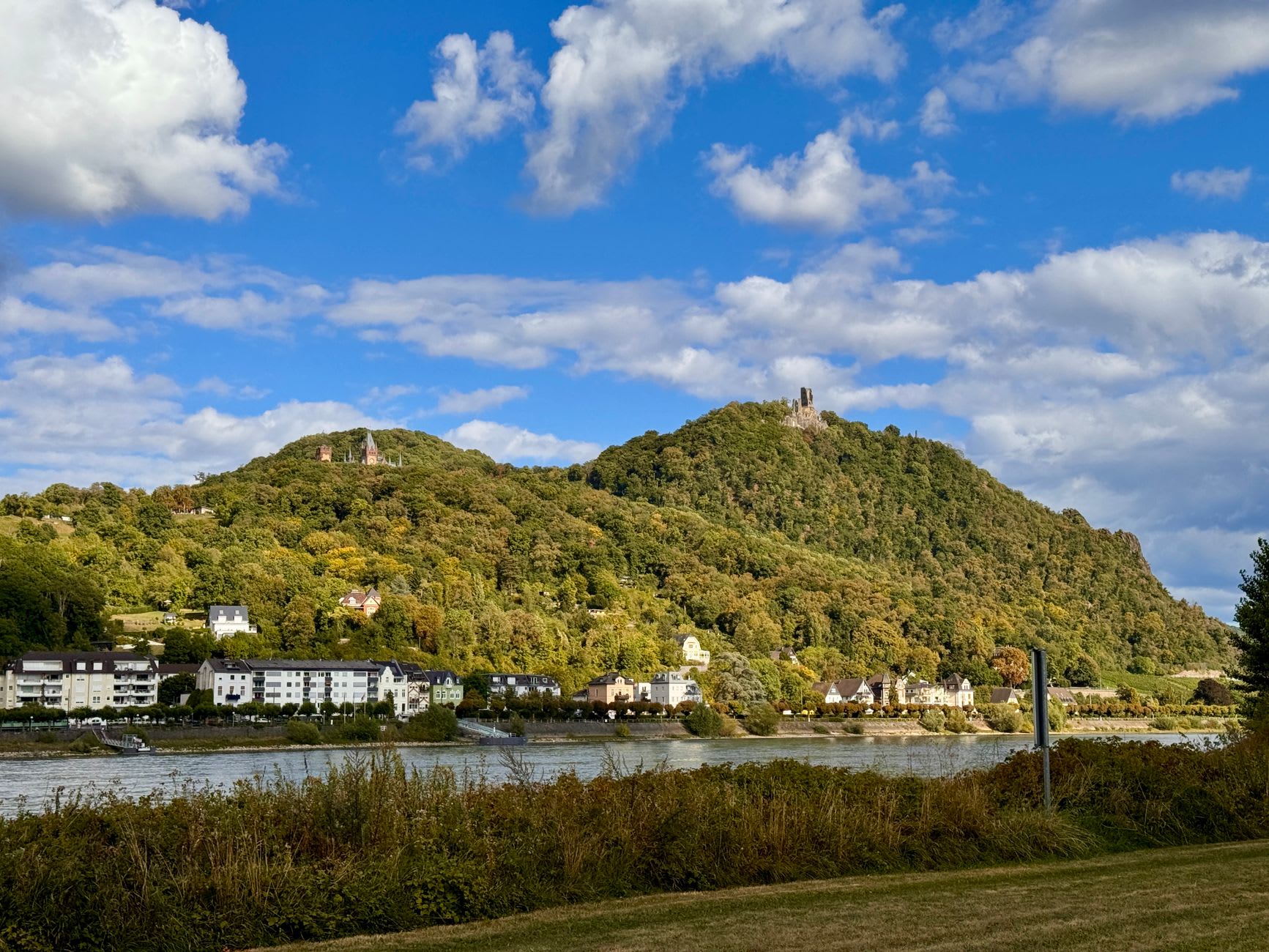
The Rheinsteig runs 320 kilometers along the Rhine’s right bank from Wiesbaden north to Bonn, passing through the heart of the Mittelrhein gorge in its central section. It is divided into fifteen day-stages of varying difficulty, the gorge stages being the most demanding — the path rises and falls sharply, the surface shifting from compacted earth to steep slate steps to forest boardwalk as the terrain dictates. At the viewpoints, which appear with gratifying regularity, the gorge arranges itself below in compositions that seem designed to confirm your decision to walk rather than take the train.
I stopped at a stone bench above the Loreley rock and ate a Butterbrot I had bought at the Bacharach bakery that morning — dark rye bread with butter and a slice of smoked ham, wrapped in paper that had grown pleasantly soft. Below, a river cruise passed the cliff, the commentary audible as a distant murmur but not intelligible. Up here, on the trail, the rhetoric was simpler: the grey-green water, the vine terraces, the sound of the wind through Riesling leaves that have been growing on this hillside for centuries.
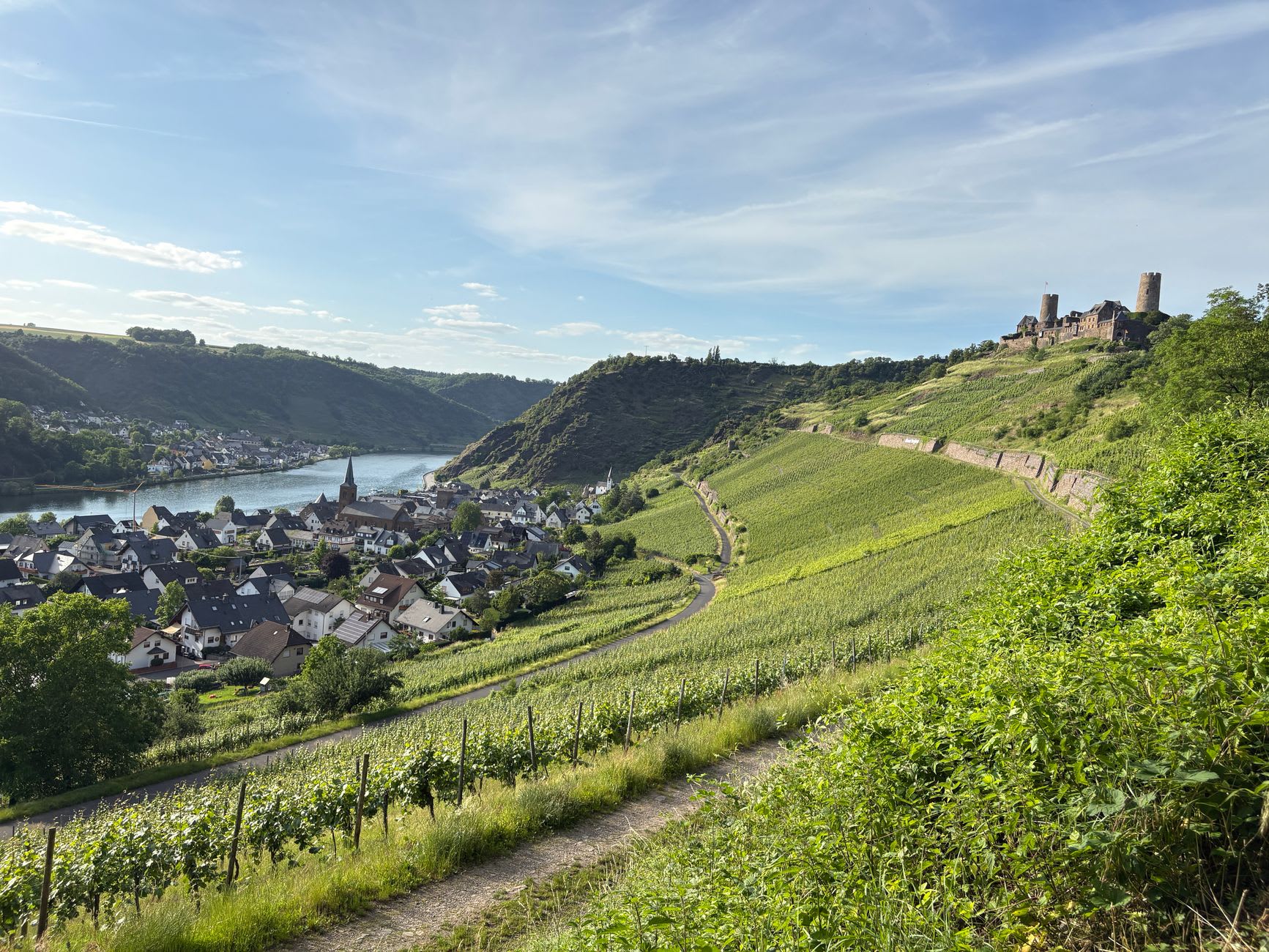
The natural rhythm of the multi-day hike is to walk a stage and finish in a village where there is a Gasthaus, a glass of local wine, and a room with a Rhine view. The ferry system means you can cross to the western bank at multiple points — St. Goar, Boppard, Bingen — creating loop options or the possibility of splitting between the two banks over several days. What the boats and trains give you is the Rhine as theatre. What the trail gives you is the Rhine as place — the smell of vine leaves fermenting in autumn, the sound of church bells in the valley below arriving slightly delayed by the distance, the physical fact of the gradient that the winemakers here navigate every working day. The slate steps cut into the hillsides are old enough to have worn smooth, and climbing them you are using the same footholds as the vintners who have worked these terraces for a thousand years. There is a continuity in that which no boat commentary can deliver, and no amount of scenic description can replace.
When to go: Late September and October are transcendent — the Riesling harvest turns the vineyards gold and the air smells of must throughout the gorge. May and June for wildflowers and long light. The best gorge section from Rüdesheim to Koblenz can be walked in four to five days, using trains and ferries for the returns to accommodation.