Europe
Rhine Valley
"The Rhine is the only river in Europe that looks like it was designed by a Romantic painter."
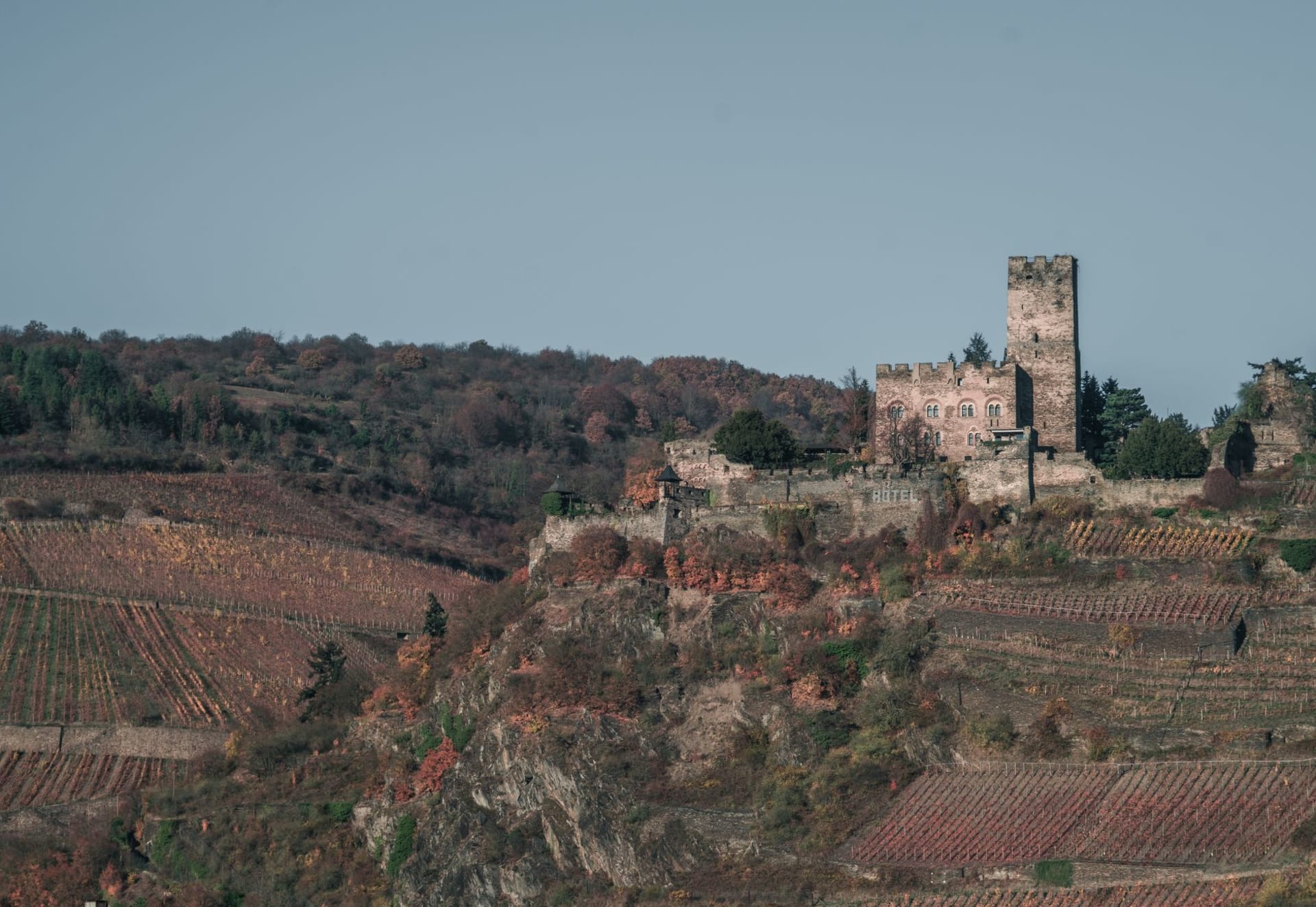
I arrived at Bacharach by train from Frankfurt, and nothing prepared me for the moment the gorge opens up — the river bending south through walls of terraced vineyard, and up on the ridgeline, the ruins of Stahleck Castle catching the last of the afternoon light. I had been expecting scenery. What I got was something closer to a hallucination. This stretch of the Middle Rhine, between Bingen and Koblenz, is barely sixty kilometers long, but it packs in more visual drama per kilometer than almost anywhere I have traveled in Europe. UNESCO gave it World Heritage status in 2002, which feels like the least they could do.
The castles are the obvious draw, but the Riesling is the reason to stay. The slate slopes of the Mittelrhein — poor, steep, stubbornly farmed — produce wines of a piercing minerality that you cannot find anywhere else. In the village of Oberwesel, I drank a glass of Schiefer Riesling at a table overlooking the river and ate a plate of smoked eel that the innkeeper had pulled from the water that same morning. The combination was so precisely right it felt almost choreographed. Smaller producers here — unlike the branded names of the Mosel — will often pour for you straight from the barrel if you knock on the right door. Ask at the Gasthaus and they will tell you which door.
The river traffic is constant: barges hauling aggregate south, tourist boats doing the Lorelei stretch with commentary in four languages. What the boats do not tell you is that the medieval towns strung along the banks — Boppard, St. Goar, Kaub with its absurd mid-river toll castle on a rock — are genuinely lived-in places, not open-air museums. The half-timbered houses are people’s homes. The vineyards are someone’s livelihood. Walk the Rheinsteig trail between villages at dusk, when the day-trippers have gone back to Cologne, and the valley returns to something older and quieter.
When to go: Late September to mid-October for the wine harvest — the vineyards turn gold and the Federweisser flows. May and June for long days and empty trails. Avoid July and August, when Rhine cruises deposit thousands onto the same narrow quays.
What most guides get wrong: They treat the Rhine Valley as a day trip from Frankfurt or Cologne, which is exactly how to miss it. The place only reveals itself slowly, at walking pace, over two or three days minimum. Book a room in Bacharach or Oberwesel, eat where the locals eat, and let the rhythm of the river set the pace. The Lorelei rock is not the point. The glass of Riesling at dusk is the point.