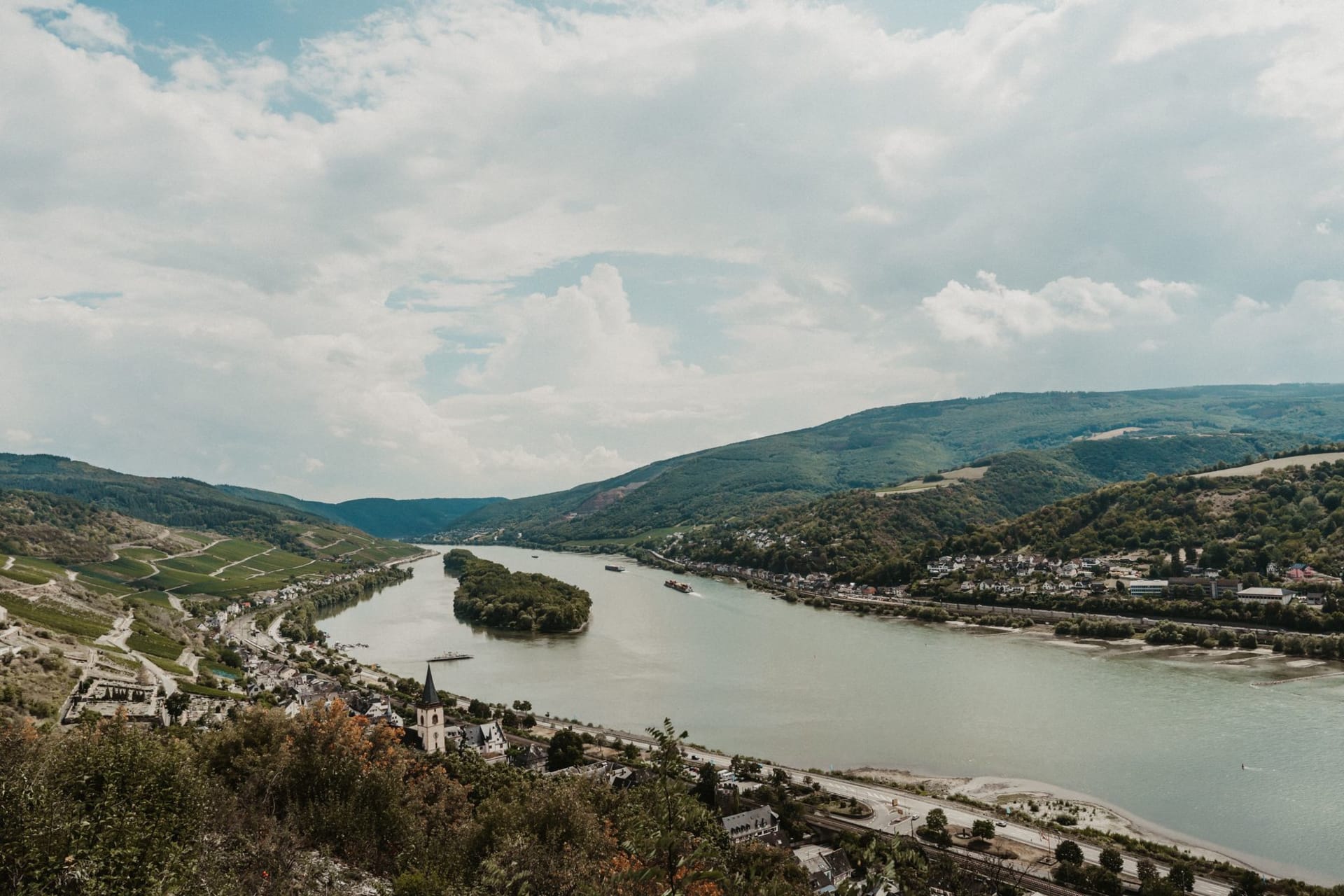
Oberwesel
"The smoked eel and the Schiefer Riesling arrived together, and I understood for the first time what the word pairing actually means."
The morning I left Bacharach for Oberwesel, I walked the Rheinsteig instead of taking the train — a forty-minute stretch through vineyard paths above the river, the Rhine glittering somewhere below the vine rows, the morning air carrying the chalk-and-flint smell of damp slate. Oberwesel announced itself from above: the old town walls winding along the hillside, sixteen of the original twenty-one towers still standing at full height, the red sandstone Schönburg Castle poised on its ridge like something from a fairy-tale illustration that nobody thought to correct.
Within the walls, Oberwesel moves at a tempo that feels defiantly unhurried. The market square fills on Saturday mornings with a small clutch of stalls — local honey, bundles of dried herbs, crates of Riesling from producers who will happily argue with you about whether 2018 or 2022 was the better vintage. I spent an hour at one such stall, drinking samples from plastic cups and learning more about schist soils than I had managed in my previous thirty-four years. The winemaker was seventy, built like a plowman, and deeply skeptical of anyone who preferred their Riesling with residual sugar. He was not wrong, and he knew it.
The town’s great Gothic church, the Liebfrauenkirche, is known locally as the Red Church — its stone tinted a warm rose-red that deepens in afternoon sun. Inside, the medieval carved altarpieces are unexpectedly vivid, the gold still bright against dark wood. I sat in a pew for fifteen minutes because the silence felt earned and because outside a dog was barking with unusual conviction and I was in no hurry to find out why.

At an inn near the northern gate, I ate what turned out to be a meal worth traveling for: smoked eel pulled from the river that morning, alongside a glass of Schiefer Riesling from a domaine just up the hillside. The eel was dense and smoky, faintly sweet; the wine ran cold and dry as a stone pulled from a mountain stream. The combination required no ceremony. The innkeeper brought it without commentary, the way you bring people things that explain themselves. I ate slowly and looked at the Rhine through the window and did not feel the need to do anything else.
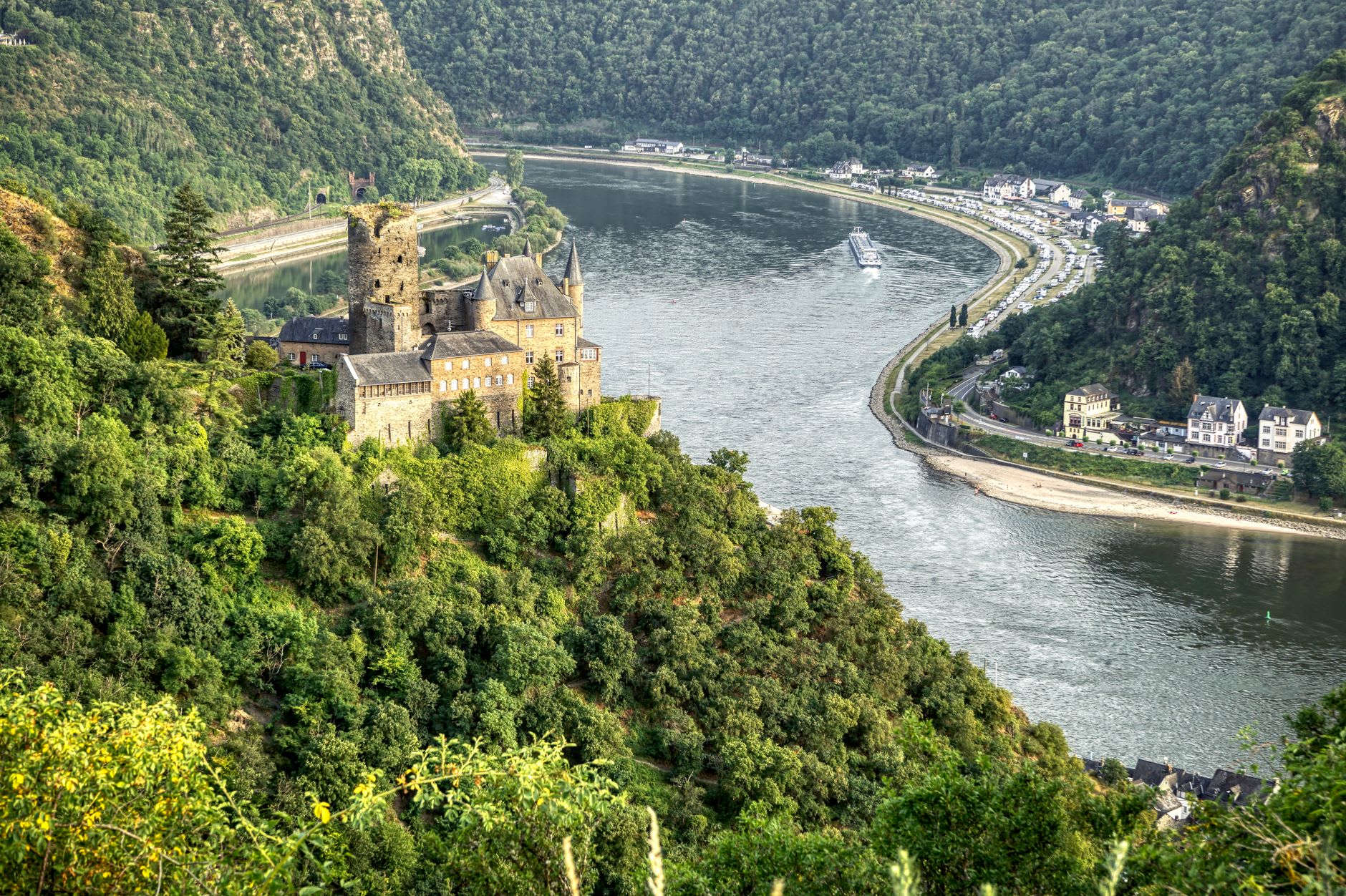
Schönburg Castle is now a hotel, and while I lacked the budget to sleep in a tower room, the views from the public terrace above the town are reason enough to make the climb. Below, the Rhine moved steadily south, a barge loaded with aggregate rounding the bend, and somewhere across the water, the Lorelei rock was waiting to be both overhyped and genuinely impressive at the same time.
When to go: Early October for the local wine festival — the whole town smells of must and woodsmoke, and several producers open their cellar doors to the public. June is quieter, with long evening light that catches the tower stones in shades of amber and the vine rows at their most vividly green.