
A 130-meter slate cliff above the Rhine's narrowest, fastest bend — the legend is a cliché but the hydraulics explain everything.

Every Rhine guide warns you about the Loreley rock being overhyped. I gave those warnings exactly the weight they deserved and arrived anyway by boat, upstream from St. Goarshausen, on a grey Tuesday morning when the tourist traffic had thinned to a few stubborn stragglers. The cliff emerged from river mist: 130 meters of pale slate, sheer-faced and severe, forcing the Rhine into its narrowest channel, the current doubling in speed as the water compressed between rock walls. I understood in that moment why medieval sailors feared this place. Not because of the siren’s song, but because of the physics.

The path to the summit begins at the base of St. Goarshausen and climbs through pine and scrub oak, taking about forty minutes at a walking pace that allows for thinking. At the top, an open plateau with a small amphitheater used for summer concerts, and then the edge: the Rhine coiling far below, barges looking absurdly small from this elevation, the valley walls rising on both sides into vine-terraced ridges that fade into haze upstream. I have stood on better-known viewpoints in Europe and felt less. There is something about the particular combination of scale, moving water, and gradient here that short-circuits the usual calculus of beauty.
The statue of Loreley herself — the siren of the myth — is a bronze figure near the cliff’s edge, installed in 1983 and aesthetically about what you would expect from 1983. She sits with her back to the view, which may be accidental or may be the whole point. Heinrich Heine’s poem, which cemented the legend in German culture, was written by a man who had never actually visited the gorge — he imagined it from Düsseldorf. The landscape turned out to be equal to the imagination, which is unusual. Most things are not.

Down in St. Goarshausen, the small town that sits at the cliff’s foot on the eastern bank, the rhythm is ordinary in the best possible way. A weekly market. A wine cooperative selling mixed cases from producers across the Mittelrhein. A ferry that crosses to St. Goar every ten minutes, the boats churning against a current that still commands respect from anyone operating on it. I took the ferry back across, stood at the bow, and watched the Loreley cliff recede into its mist as we pulled away. A barge passed, moving fast with the current, low in the water. The crew did not look up.
When to go: The Loreley Open Air concerts in late June and July bring outdoor performances against the cliff backdrop that feel improbably theatrical. For solitude and mist, come on a weekday in early November when the cruise season has ended and the valley is giving itself a quiet rest before the year turns.
Keep exploring
More from Rhine Valley
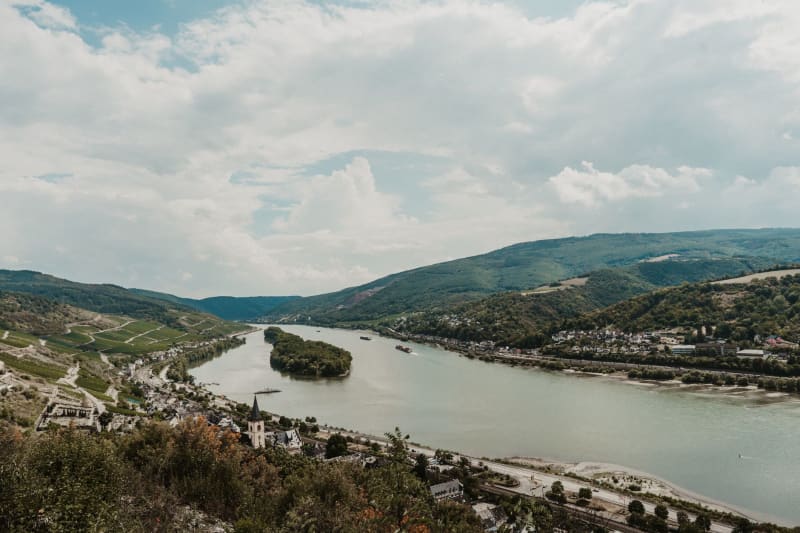 rhine-valley
 Oberwesel
A walled Rhenish town where sixteen medieval towers still stand and the Riesling tastes like mineral rain on warm slate.
Explore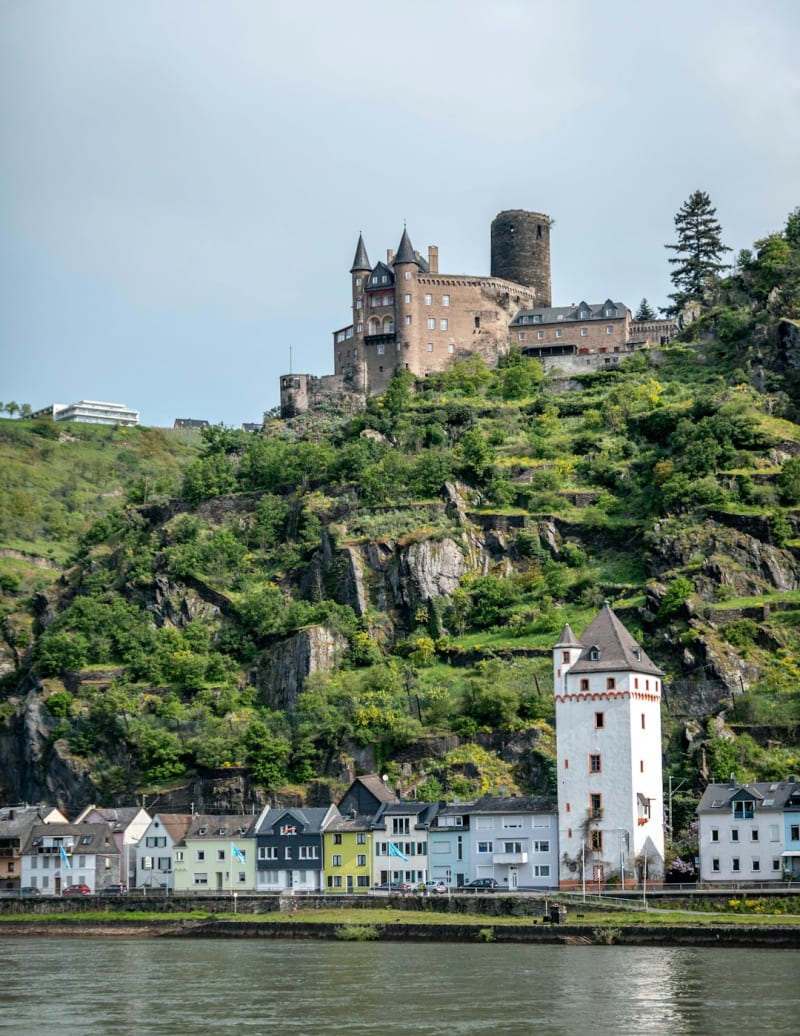 rhine-valley
 Rheinfels Castle
A ruined fortress above St. Goar that once withstood a fourteen-month siege, now open to wander through tunnels and broken towers over the Rhine.
Explore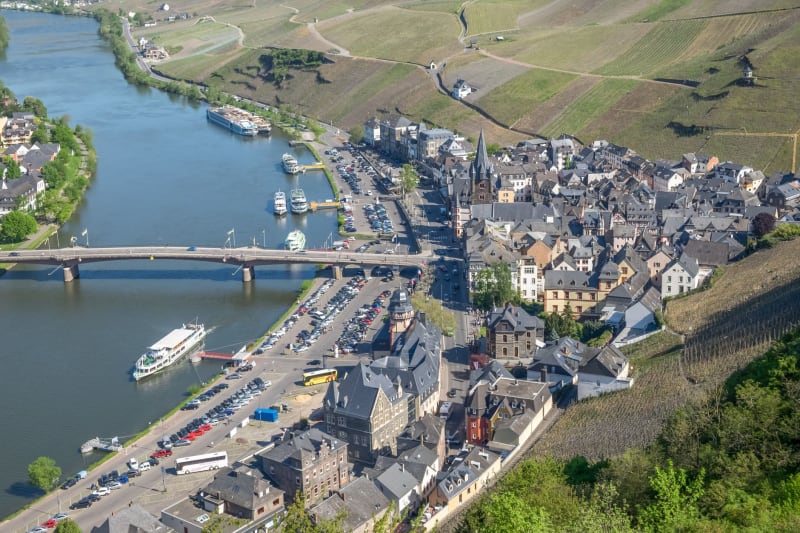 rhine-valley
 Rheinsteig Trail
A 320-kilometer hiking path along the Rhine's eastern bank where the gorge reveals itself at walking pace, one vineyard terrace at a time.
Explore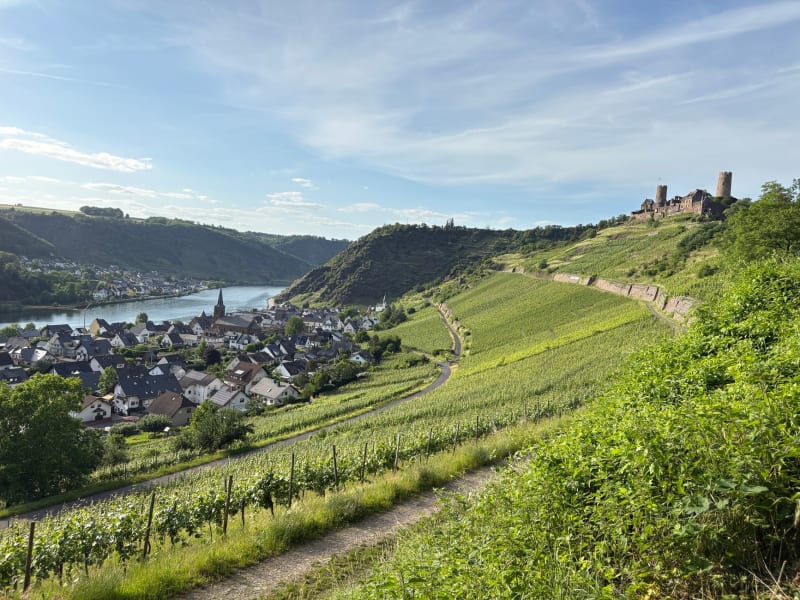 rhine-valley
 Rüdesheim am Rhein
The tourist-facing gateway to the Rhine gorge, where the Drosselgasse is everything you fear and the surrounding vineyards are everything else.
Explore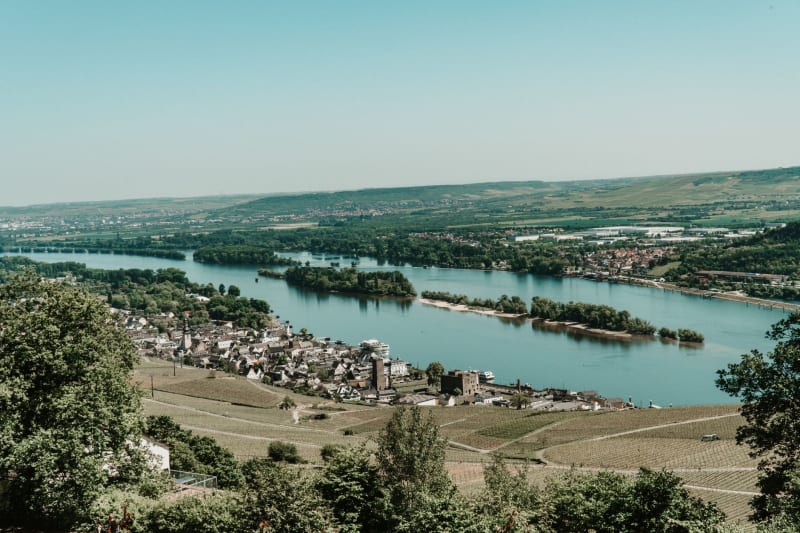 rhine-valley
 St. Goar
A small Rhine town beneath Germany's largest castle ruins — Rheinfels half-collapsed above the gorge like a dream about the nature of power.
Explore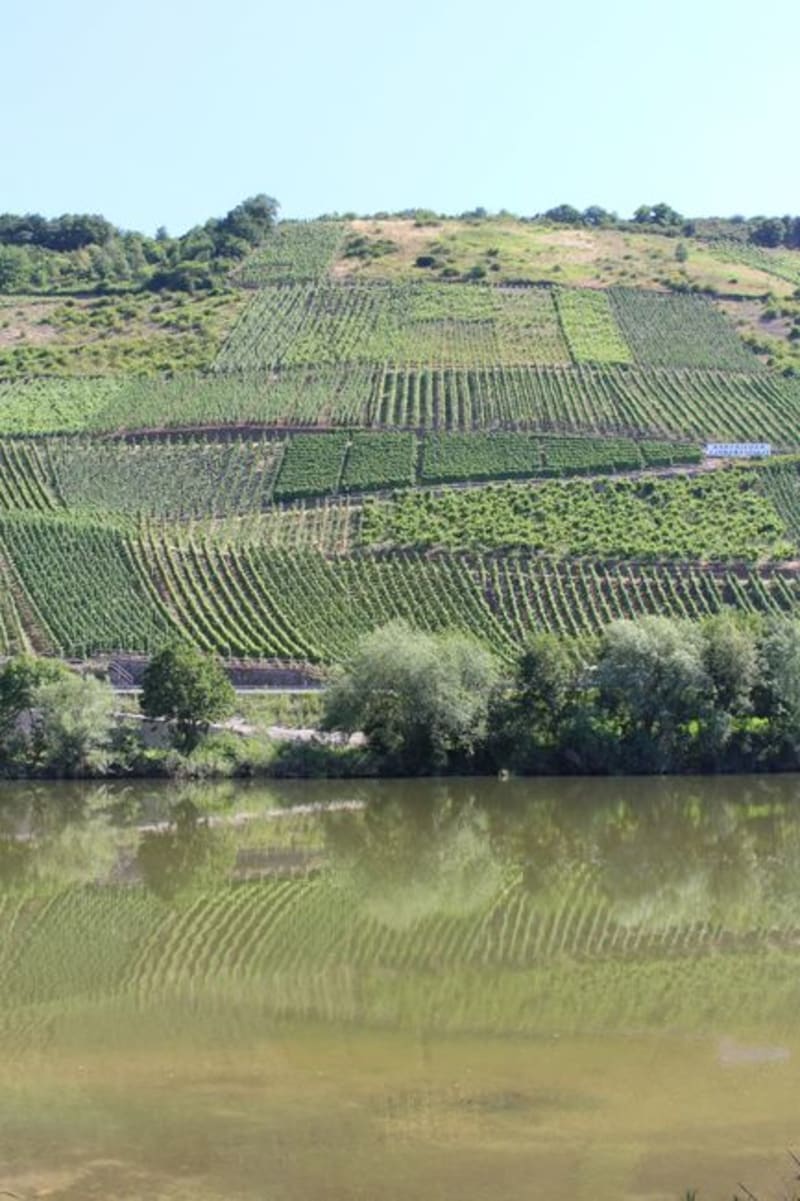 rhine-valley
 Assmannshausen
A red-wine village on the Rhine's quiet bank, where Pinot Noir vines climb a steep slope beneath a medieval church tower.
Explore