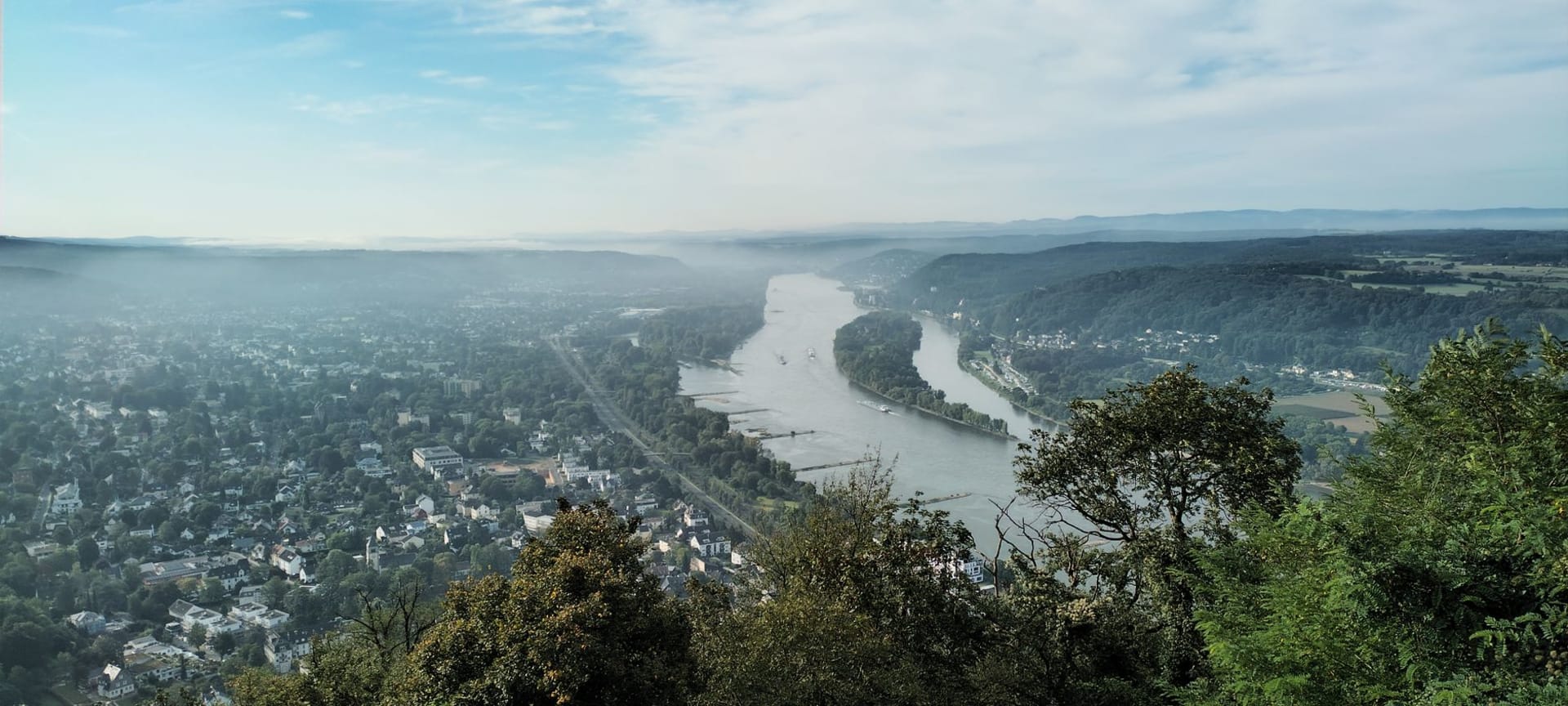
Bingen am Rhein
"The Mäuseturm sits in the middle of the Rhine like a full stop at the beginning of a very long sentence."
Bingen is where the gorge begins, which is to say it is the threshold — the place where the Rhine stops being a wide, placid floodplain river and forces itself through the Rhenish Massif in a display of hydraulic impatience that continues for sixty kilometers north. Standing on the Bingen promenade and looking into the gorge from its mouth, you feel the change in the landscape’s register: the hills rising steeply from both banks, the water darkening, the towers of Bacharach barely visible in the middle distance like something half-remembered. It is like standing at the entrance to a different country.
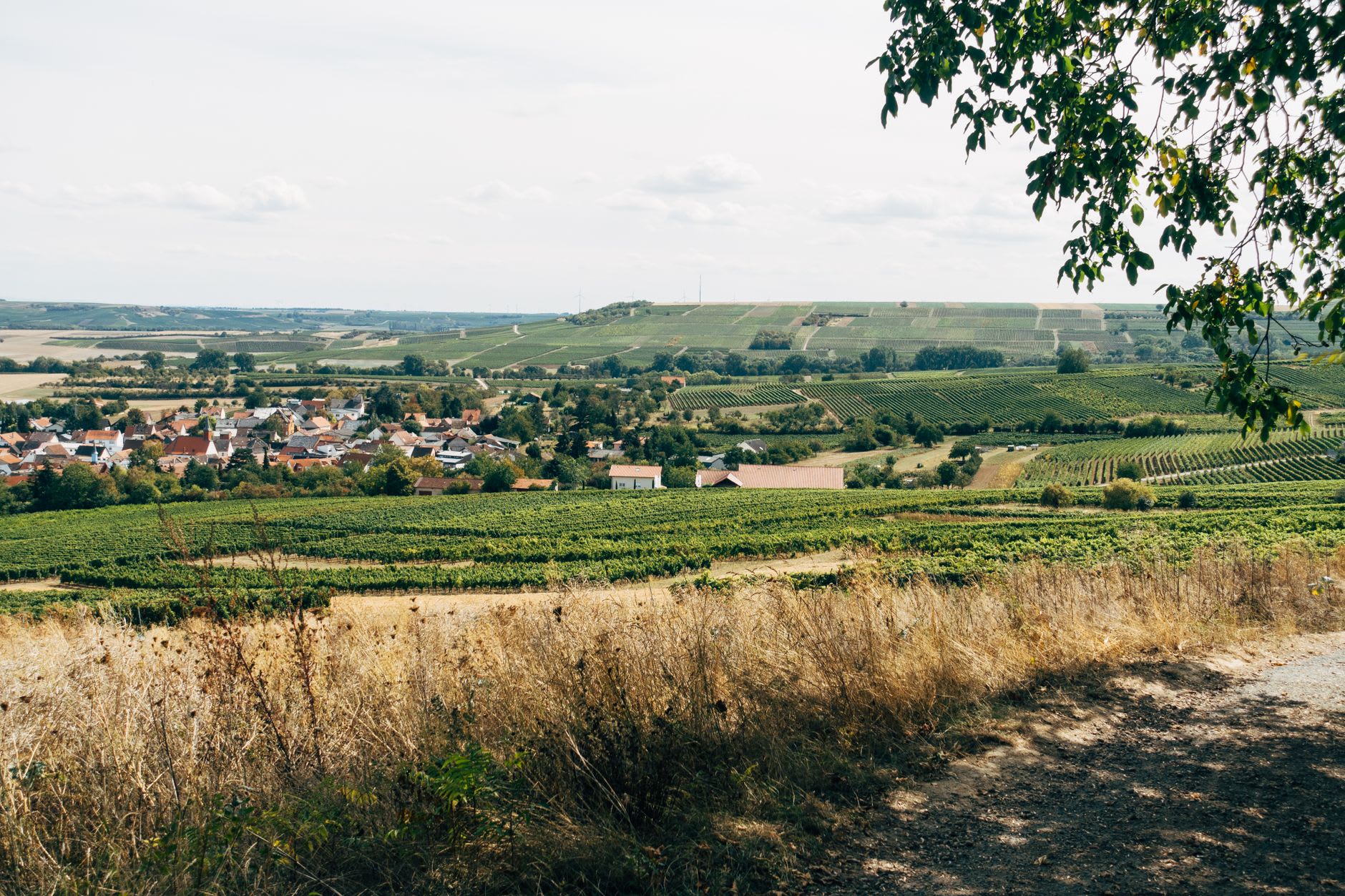
The Mäuseturm — the Mouse Tower — rises from a small island in the Rhine just where the Nahe tributary arrives from the west, a medieval watchtower isolated by the current, its reflection shimmering in the fast water. The tower’s name comes from a legend about a cruel bishop devoured by mice as divine punishment; the actual history is more mundane — it was a toll station and signal tower — but the legend is more interesting, as legends tend to be. On the hill above Bingen, the Klopp Castle commands what may be the best single view of the gorge entrance: the Rhine splitting around the Mäuseturm island, the Rüdesheimer Berg vineyards on the far shore, and the gorge drawing the eye north into its narrowing shadows.
Bingen has another claim that dwarfs most things on the Rhine: Hildegard von Bingen, the twelfth-century abbess, mystic, composer, and natural philosopher, founded her Rupertsberg monastery just north of the town (the original long since destroyed) and produced here a body of work — theology, music, herbalism, natural science — that remains extraordinary in its range and internal coherence. The local museum devotes substantial space to her, and there is something moving about being in the landscape she described in her visions: this gorge, these vines, this particular quality of Rhine Valley light in autumn. She died in 1179 at the age of eighty-one, which was either a miracle or a testament to the air here.

In the evening I ate at a Gasthaus near the Nahe bridge: fresh pike-perch from the river, grilled with a caper-butter sauce, alongside a bottle of Nahe Riesling from the hillside across the tributary. The Nahe wines are lighter and more floral than the Mittelrhein Rieslings, and they made sense with the delicate fish the way things make sense that have been arriving at the same table together for a long time. A barge moved through the last of the light on the Rhine, south-bound, and the lights of Rüdesheim came on across the water.
When to go: Late June and September for the clearest light at the gorge entrance. The Hildegard pilgrimage season draws visitors to Eibingen Abbey — where her relics are kept — through September and October, which makes for a good pairing of landscape and history in a single visit.