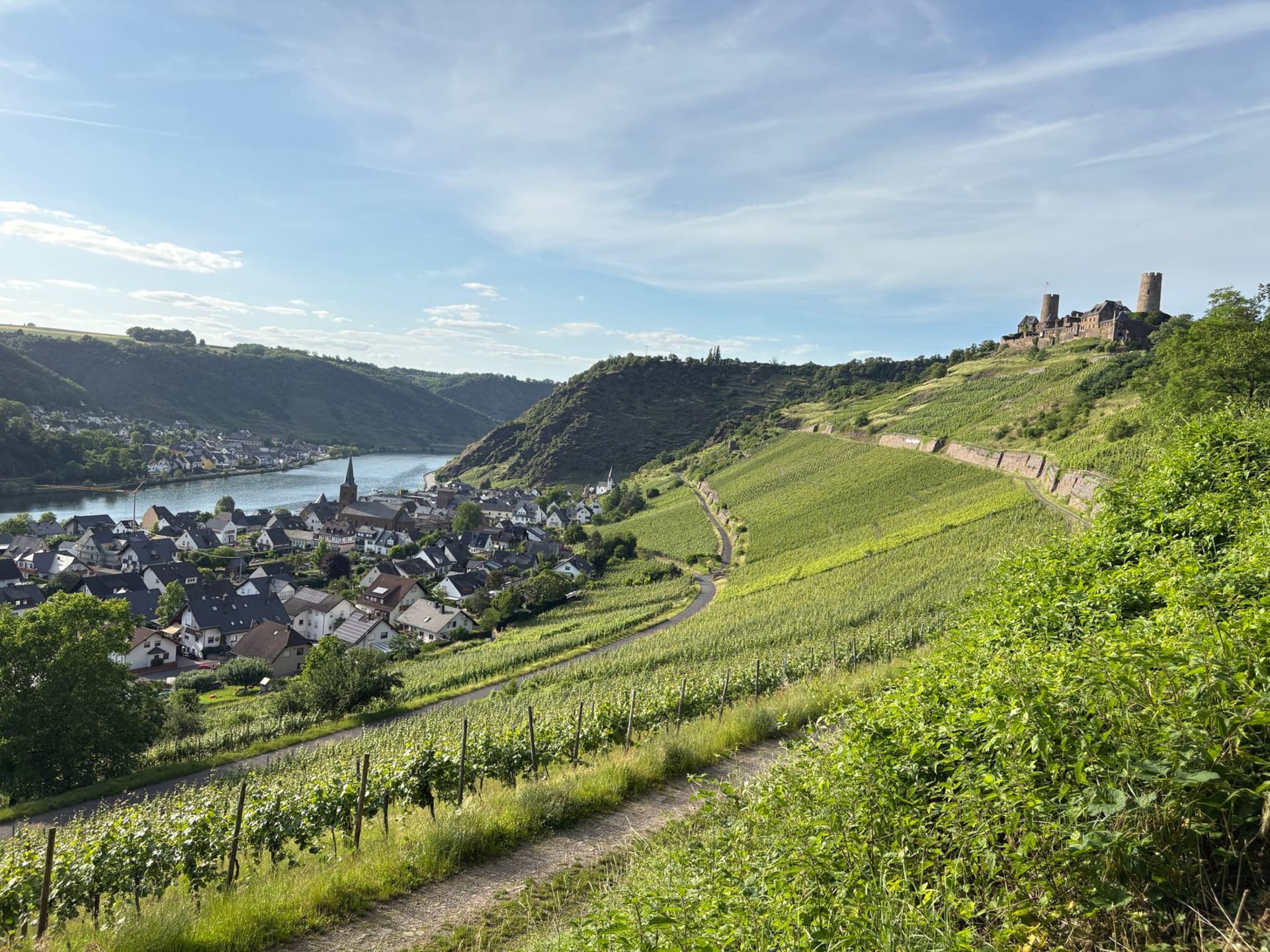
Bacharach
"Bacharach is the kind of place that makes you question why you ever live anywhere else."
A medieval Rhine town so intact it makes you question whether the last five centuries actually happened here.

I arrived by train from Frankfurt just as the afternoon light was turning amber, the Rhine gorge narrowing around the train windows like the pages of an illustrated book slowly closing. Bacharach appeared suddenly: a tightly wound cluster of half-timbered houses behind a curtain wall, and above it, on a vine-covered bluff, the pale towers of Stahleck Castle. I stepped onto the platform with my bag and stood still for a full minute, because sometimes a place arrives all at once and you need a moment just to absorb it.

The town fits inside its medieval walls with room to spare. Peterstrasse, the main commercial street, is lined with Fachwerk — the German half-timbering style — in shades of ochre and cream, the wooden beams darkened with age. The Werner Chapel, a Gothic ruin open to the sky since the Thirty Years’ War, stands in the middle of it all like a polite reminder that beauty and catastrophe are not incompatible. I walked through its roofless nave at dusk, pigeons settling on the broken arches, and felt the particular gravity of a place where history has not been tidied away or explained into submission.
The wine here is not an afterthought. The slate soils of the Mittelrhein produce Rieslings of an almost uncomfortable intensity — dry, mineral, with an acidity that feels structural rather than sharp. At the Gasthaus Jägerstube, I ordered the house Riesling by the Schoppen and drank it alongside a Sauerbraten that had been marinating since at least Tuesday. The sauce was dark and sweet with raisin and vinegar; the wine cut through it cleanly. The couple at the next table had been coming every September for twenty-two years and could name every winemaker on the hillside. I listened without shame.
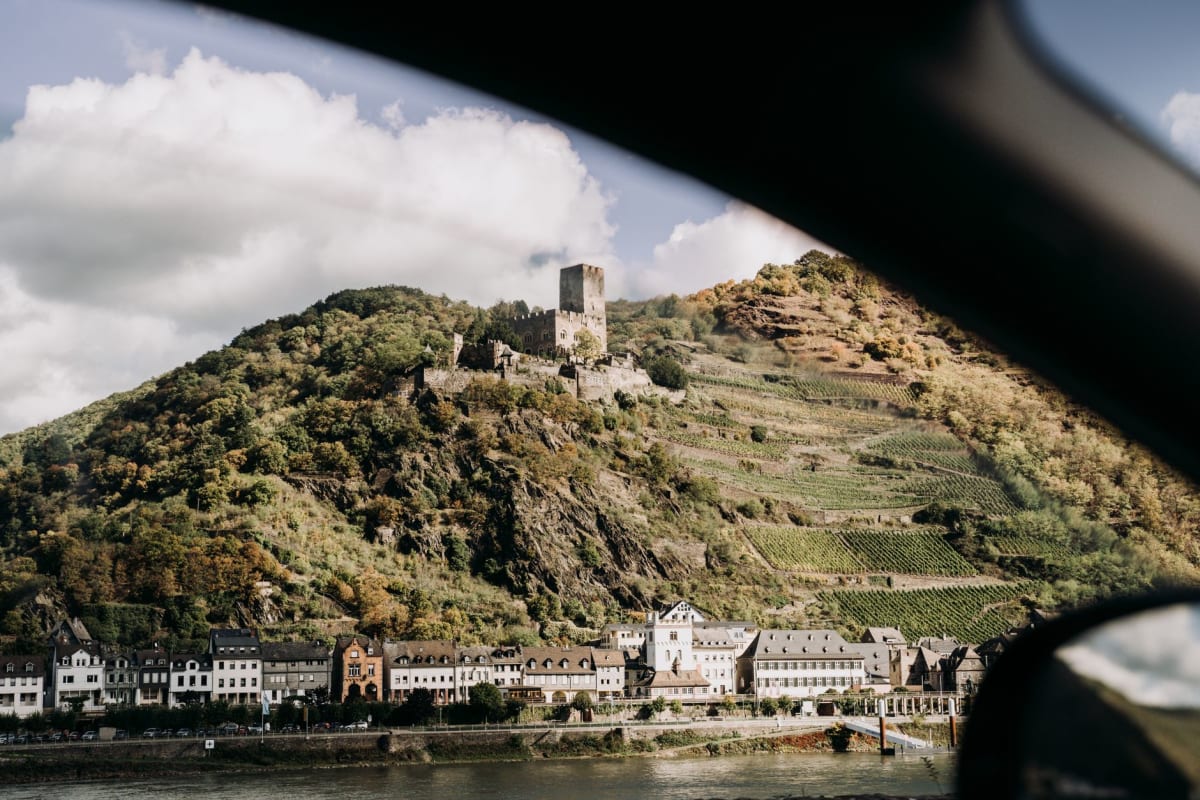
Stahleck Castle now operates as a youth hostel — a fact I find entirely charming — and the climb up through the vineyard path takes twenty minutes from the town gate. From the battlements, the Rhine bends south through its gorge in a single sweeping arc, barge traffic moving below like slow punctuation. The vineyards fall away in terraces so steep you cannot imagine who maintains them. Someone does, though. Someone always does in this valley, generation after generation, holding on to these impossible slopes as if something important depended on it — and I suppose it does.
When to go: Late September through mid-October for the harvest. The Federweisser — partially fermented new wine — appears at every Gasthaus table, and the hillsides glow copper-gold. May is quieter and cooler, with the vineyards freshly green and the gorge largely to yourself before the cruise season begins.
Keep exploring
More from Rhine Valley
 rhine-valley
 Bingen am Rhein
Where the Rhine gorge begins and Hildegard von Bingen's medieval world meets the river's most treacherous current.
Explore rhine-valley
 Boppard
A genuine Rhine town with Roman walls beneath its streets and a river bend so dramatic it appears on every map of the valley.
Explore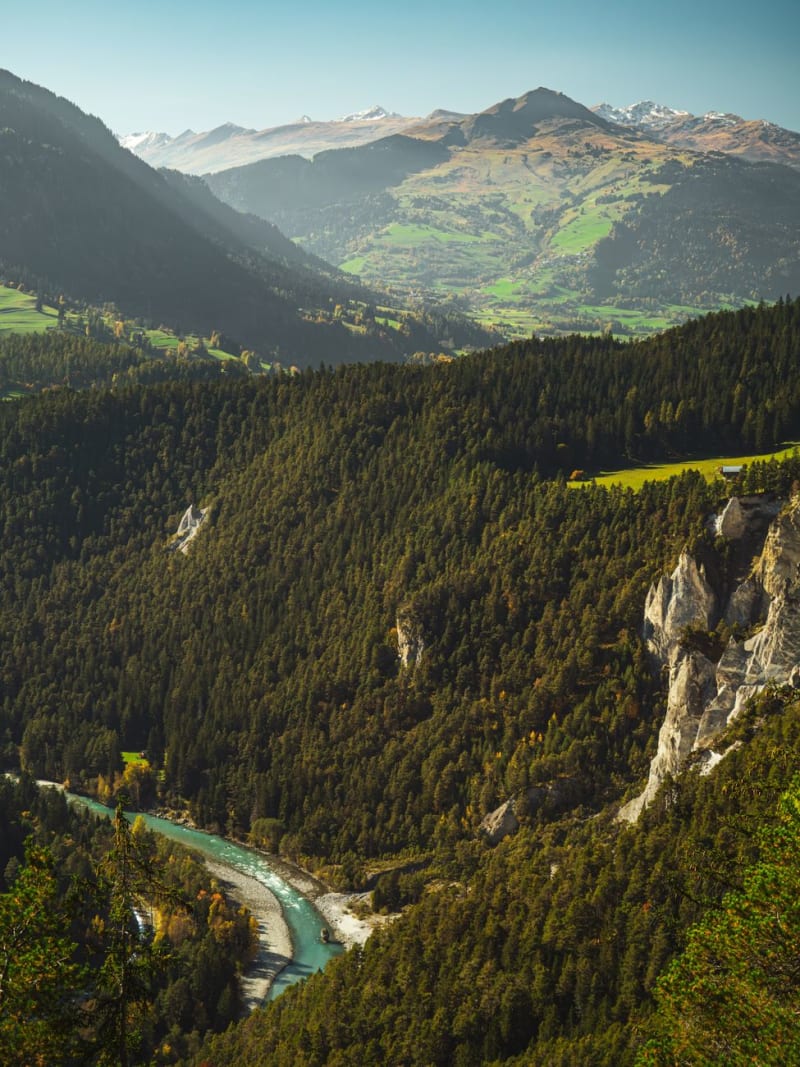 rhine-valley
 Braubach
A half-timbered village beneath Marksburg, the only hilltop castle on the Rhine never to have been destroyed, still bristling with medieval menace.
Explore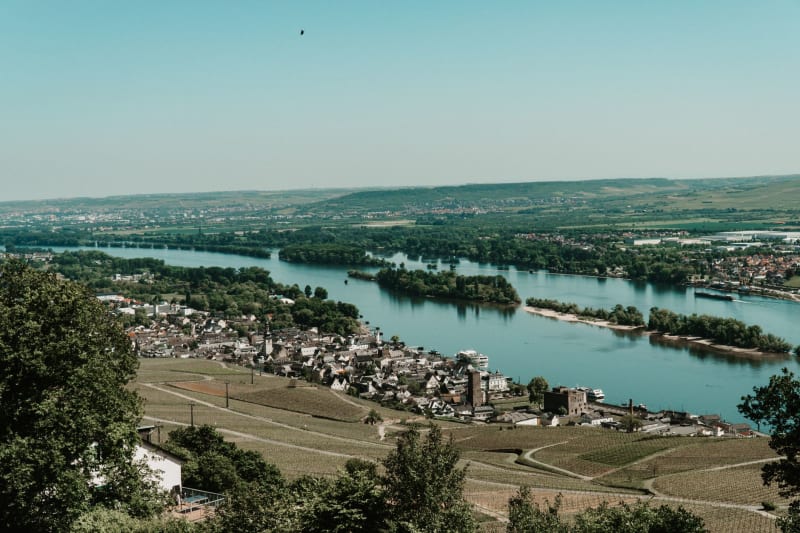 rhine-valley
 Kaub
A small Rhine village guarding the valley's most improbable fortress — a medieval toll castle built on a bare rock in the middle of the water.
Explore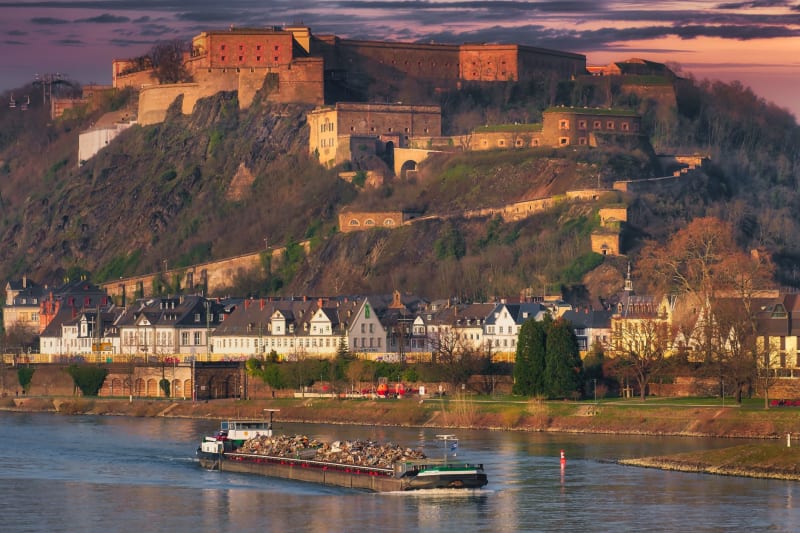 rhine-valley
 Koblenz
Where the Rhine meets the Moselle at the Deutsches Eck — a city of confluences, fortresses, and unexpectedly good wine-town energy.
Explore rhine-valley
 Loreley Rock
A 130-meter slate cliff above the Rhine's narrowest, fastest bend — the legend is a cliché but the hydraulics explain everything.
Explore