Assmannshausen
"Every other village on this river pours Riesling. Assmannshausen pours something red, and it changed how I see the Rhine."
A red-wine village on the Rhine's quiet bank, where Pinot Noir vines climb a steep slope beneath a medieval church tower.
We almost skipped Assmannshausen. Lia and I had spent three days working our way down the Rhine drinking Riesling in every village that offered it, and by the time we reached this bend in the gorge I remember thinking we’d basically figured the region out. Then a waiter in Ruedesheim mentioned, almost as an aside, that just around the corner was a village that grew red grapes on slopes so steep you’d swear they were built for goats, not vines. That was enough. We drove the few minutes over and I’m still a little embarrassed we nearly missed it.
Assmannshausen is technically a district of Ruedesheim am Rhein, tucked on the river’s right bank, but it feels like its own place entirely. The Hollenberg slope rises directly behind the village, terraced and walled in a way that looks almost architectural from below, and it’s been planted with Spatburgunder — what the French in me insists on calling Pinot Noir — since the Middle Ages. Standing at the bottom of it with a glass in hand, watching the afternoon light catch the leaves, I kept thinking about how strange it is that one slope, in a sea of Riesling, decided centuries ago to do things differently and just kept at it.
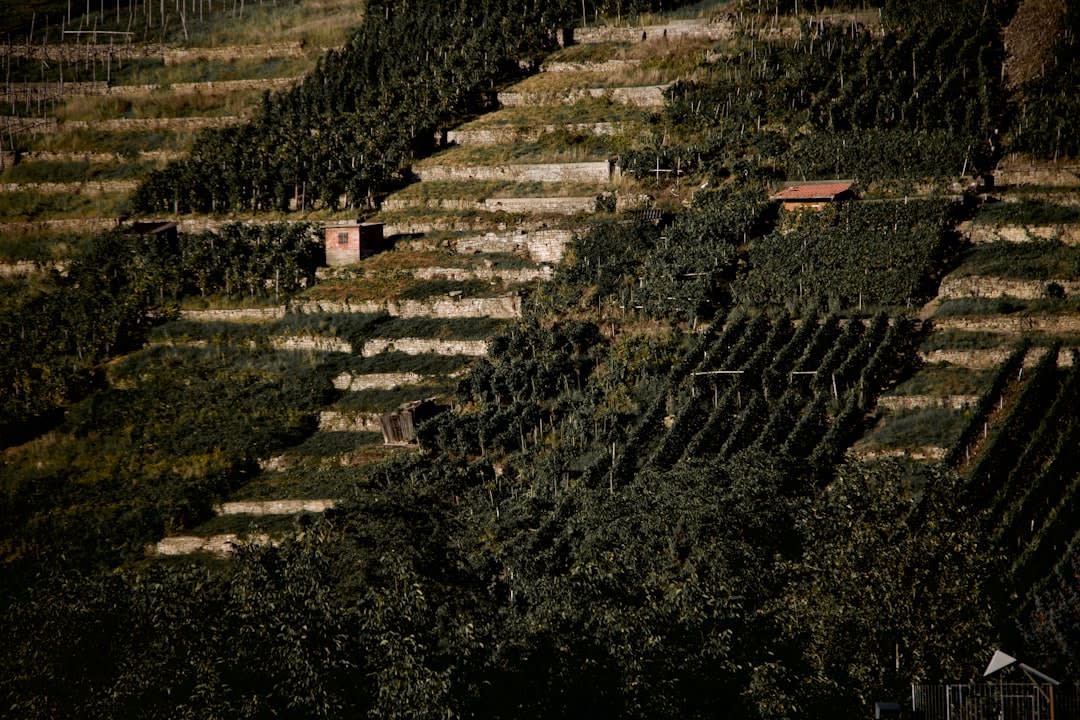
We wandered into the village itself before dinner, and the parish church tower stopped me — it’s from the 15th century, squat and stone and slightly out of proportion with everything built around it since, the kind of building that makes you go quiet for a second without quite knowing why. From there it’s a short walk to the base of the cable car station, the one that carries visitors up to the Niederwald Monument on the ridge above. We didn’t ride it that day, we were too happy sitting still, but I remember watching the little cabins glide up over the vines and thinking I’d come back just for that view.
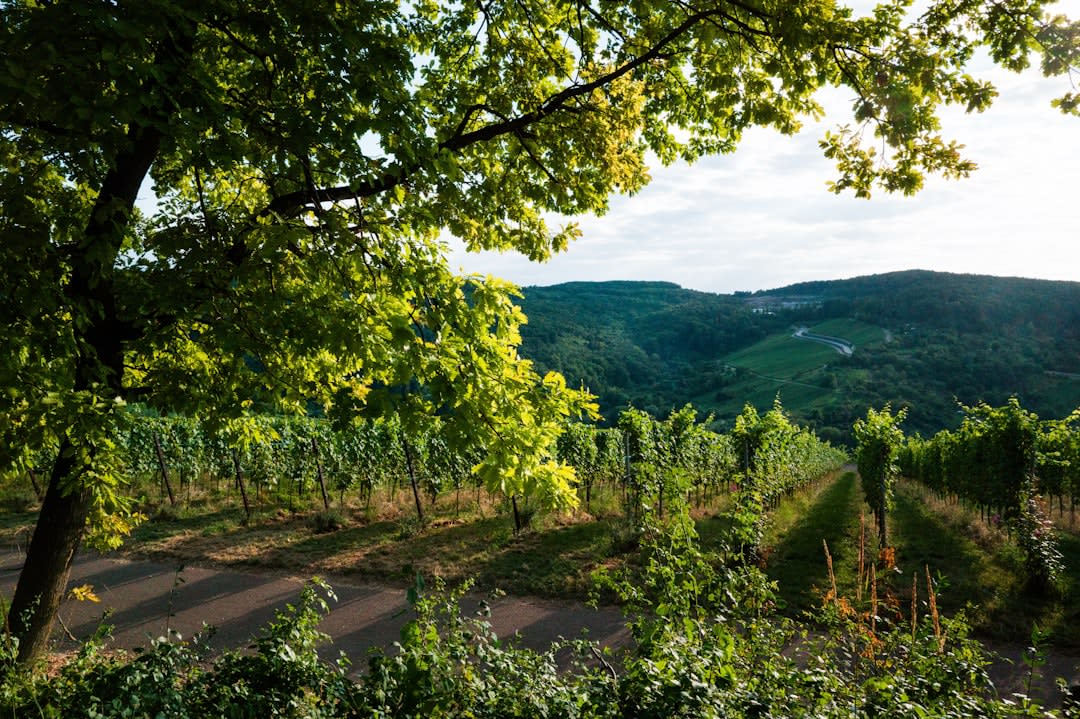
What I love most about Assmannshausen is the bend. This is where the Rhine tightens into the narrowest part of the gorge, and from the terrace where we sat you can watch barges disappear around the curve like the river is folding itself into a smaller space just for the drama of it. Lia ordered a second glass. I didn’t argue. It’s one of those spots that rewards doing absolutely nothing for an hour.
When to go: September and October are the months to aim for, when the harvest is underway and the village’s small wine festivals spill out into the lanes below the church — that’s when Assmannshausen feels most like itself.
Keep exploring
More from Rhine Valley
 rhine-valley
 Bacharach
A medieval Rhine town so intact it makes you question whether the last five centuries actually happened here.
Explore rhine-valley
 Bingen am Rhein
Where the Rhine gorge begins and Hildegard von Bingen's medieval world meets the river's most treacherous current.
Explore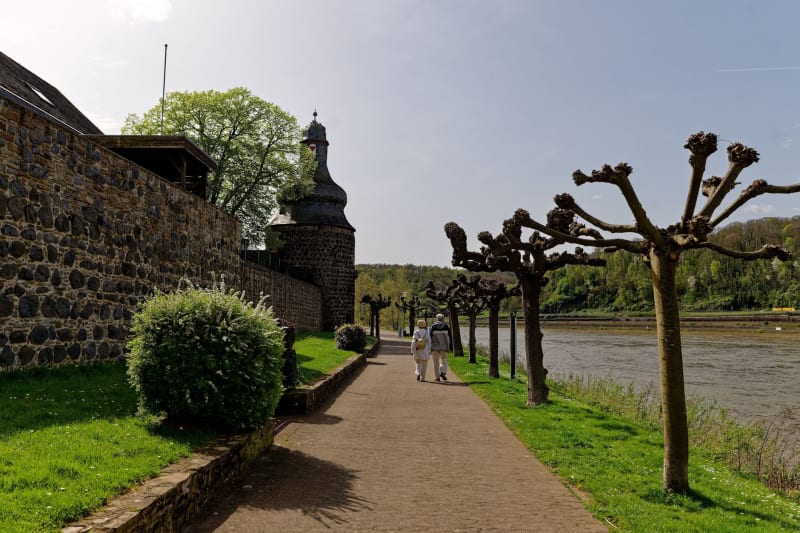 rhine-valley
 Boppard
A genuine Rhine town with Roman walls beneath its streets and a river bend so dramatic it appears on every map of the valley.
Explore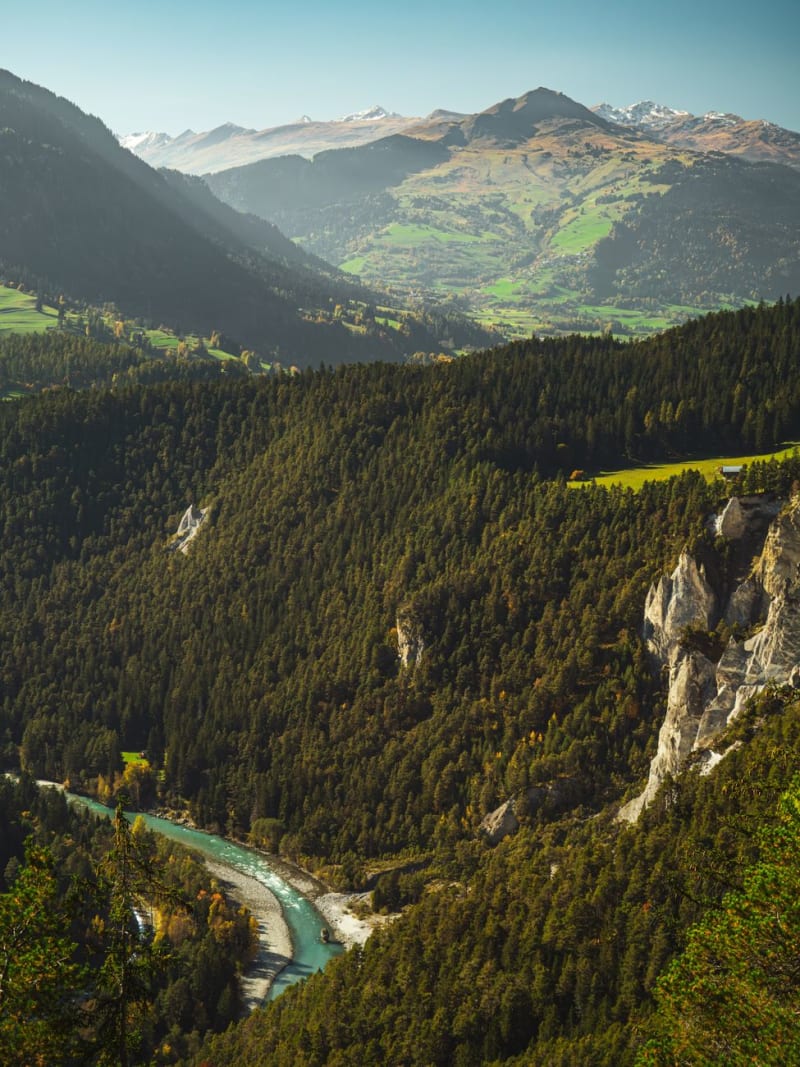 rhine-valley
 Braubach
A half-timbered village beneath Marksburg, the only hilltop castle on the Rhine never to have been destroyed, still bristling with medieval menace.
Explore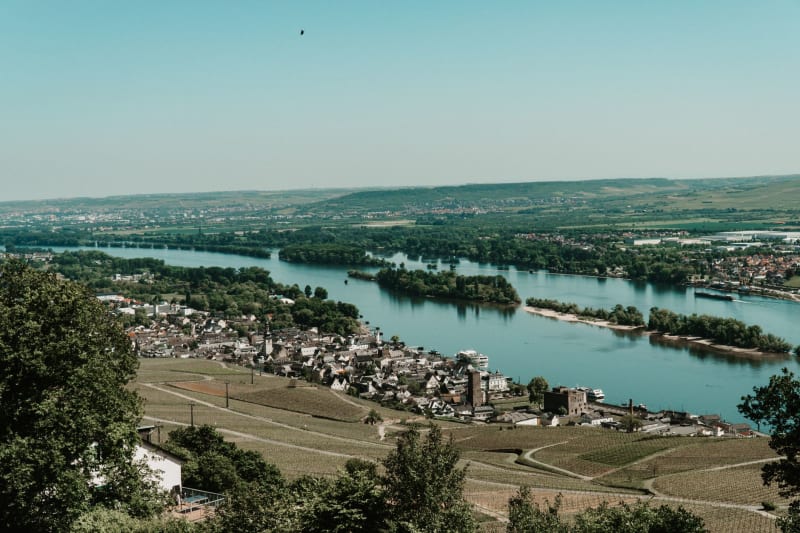 rhine-valley
 Kaub
A small Rhine village guarding the valley's most improbable fortress — a medieval toll castle built on a bare rock in the middle of the water.
Explore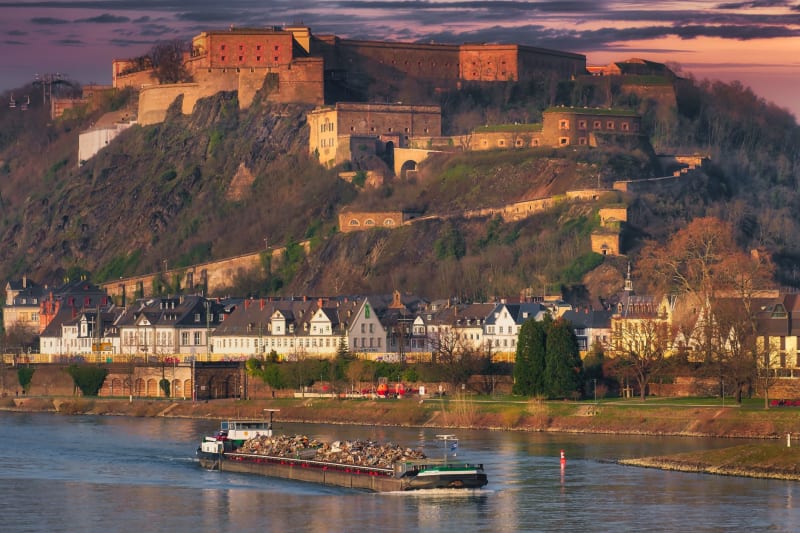 rhine-valley
 Koblenz
Where the Rhine meets the Moselle at the Deutsches Eck — a city of confluences, fortresses, and unexpectedly good wine-town energy.
Explore