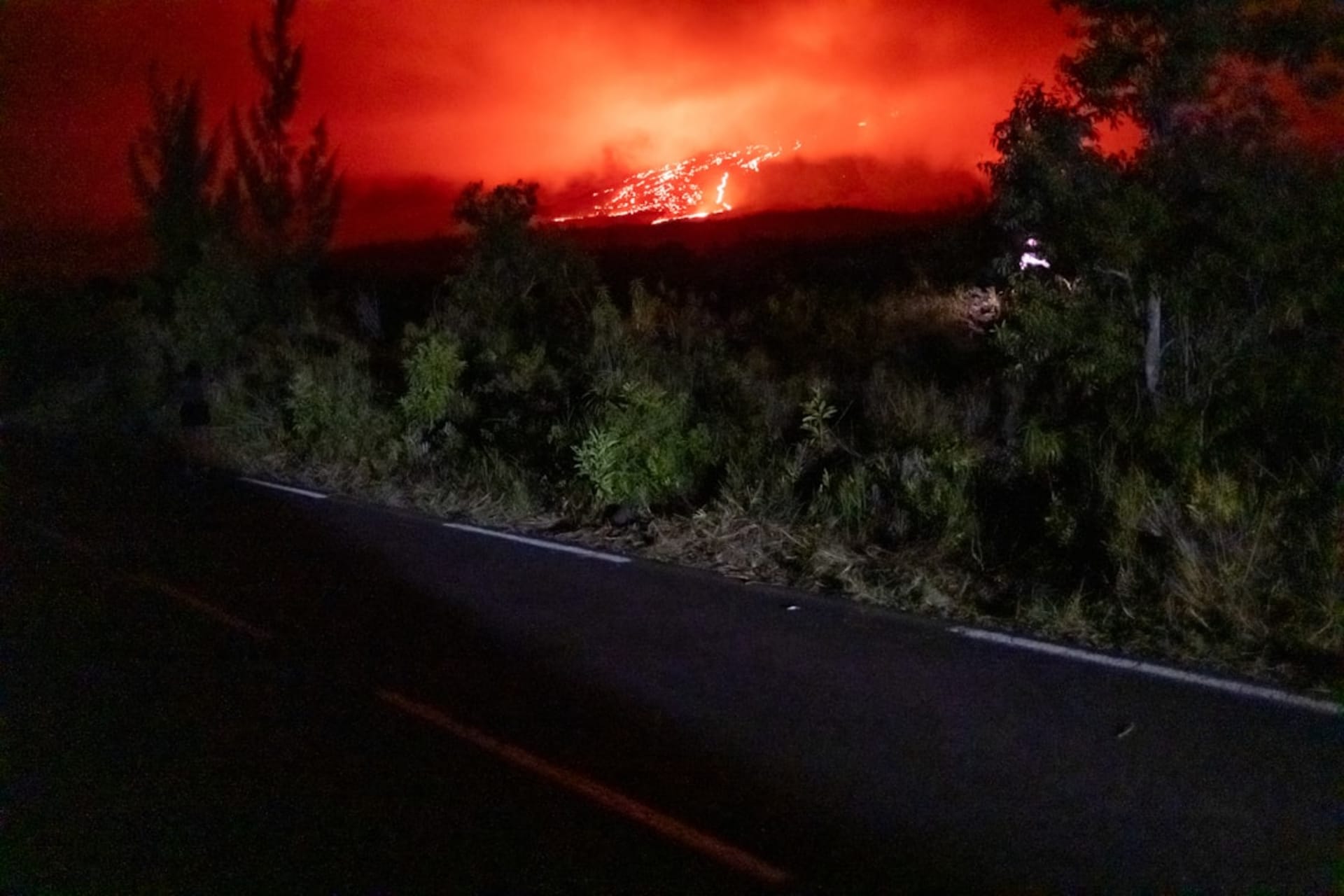
The east coast of Réunion is the wet side. Rain comes off the ocean in bands, the vegetation turns almost cartoonishly green, and the cliffs drop straight to black rock where the Atlantic would put a beach in most other places. Sainte-Rose sits in this landscape, a small commune that had an ordinary existence as a fishing village until 2007, when Piton de la Fournaise erupted and sent a lava flow down toward the sea, covering the coastal road and stopping — with the kind of precision that becomes legend — just at the threshold of the church of Notre-Dame des Laves.
I drove there from Saint-Denis on a Tuesday, the road climbing and narrowing as it moved toward the east. The vegetation changed visibly: banana plants, vanilla vines climbing wooden poles, stands of casuarina near the coast. Then, approaching Sainte-Rose from the north, the road passes through a section of rebuilt highway built on top of the 2007 flow, and on both sides the lava extends to the ocean — a black apron of solidified basalt, utterly barren, with the sea crashing white against its edge.
Notre-Dame des Laves
The church is small and white and unremarkable as a building. What makes it worth standing in front of is what surrounds it: the lava field comes right to the edge of the property on both sides, following the road, then abruptly stops. The contrast is total. On one side: black, glassy, airless rock. On the other: the church, some grass, a small garden with flowers someone tends regularly.
Whether you’re religious or not, the image is hard to dismiss. The people of Sainte-Rose attribute it to the intercession of the Virgin Mary. Geologists point to the topography — the road and the church grounds sit on a slight rise that deflected the flow. Both explanations are true simultaneously, which seems right.
Inside the church, the walls are covered with ex-votos — plaques and photographs left in gratitude by people who feel they’ve been protected. They cover decades, not just 2007. I stood in the cool interior for a while and read a few, which is something I find myself doing in small churches all over the world. The specificity of gratitude is always interesting.
The Lava Field Walk
A path leads from the church across the 2007 flow to the coast, maybe twenty minutes each way. The surface is uneven and the color is extraordinary — not uniformly black but shading from matte charcoal to oxidized red to a silver-green where the first mosses are colonizing the cracks. Nothing else grows here yet. The rock is still essentially new.
At the coast, the lava shelf drops directly to the ocean with no beach intermediary. Waves break against the edge and spray reaches thirty meters inland in a good swell. I stood at the rim longer than was entirely comfortable — the spray was cold and the wind was strong — but the sound of the ocean hitting volcanic rock fresh enough to still be called recent felt like something worth staying for.
Vanilla Country
Sainte-Rose sits at the edge of what locals call the Bourbon vanilla region. The vanilla grown here — Vanilla planifolia, cured in the traditional Bourbon method — is considered among the finest in the world, and the smallholder farms that grow it are scattered across the hillsides above the coastal road. One farm near Sainte-Rose offers visits: you walk through the vine-covered poles, see the hand pollination process explained, and leave with a small packet of pods wrapped in paper. I bought two. The smell in the car for the rest of the day was, without exaggeration, extraordinary.
When to go: The east coast receives rain year-round, but April through October gives you the best odds of dry windows. The lava field is interesting in any weather — mist and cloud can actually enhance the strangeness of it. Avoid February, when heavy rainfall can make the coastal road hazardous and some sections close.