Saint-Leu sits on a stretch of Réunion’s west coast where the volcanic cliffs ease into a small bay and the ocean does something unusual: it stays calm enough, in certain conditions, for humpback whales to come close to shore. I didn’t know this before I arrived. I found out when I saw a pair of tourists on the clifftop walkway above town training binoculars on a patch of water that looked identical to every other patch of water, and then one of them made a sound usually reserved for much higher altitudes.
The blow was unmistakable once I knew what I was seeing — the columnar exhale, then the gray-black arc of a dorsal fin catching the afternoon light. Two whales, maybe two hundred meters out. I watched for twenty minutes and missed lunch.
The Surf Break
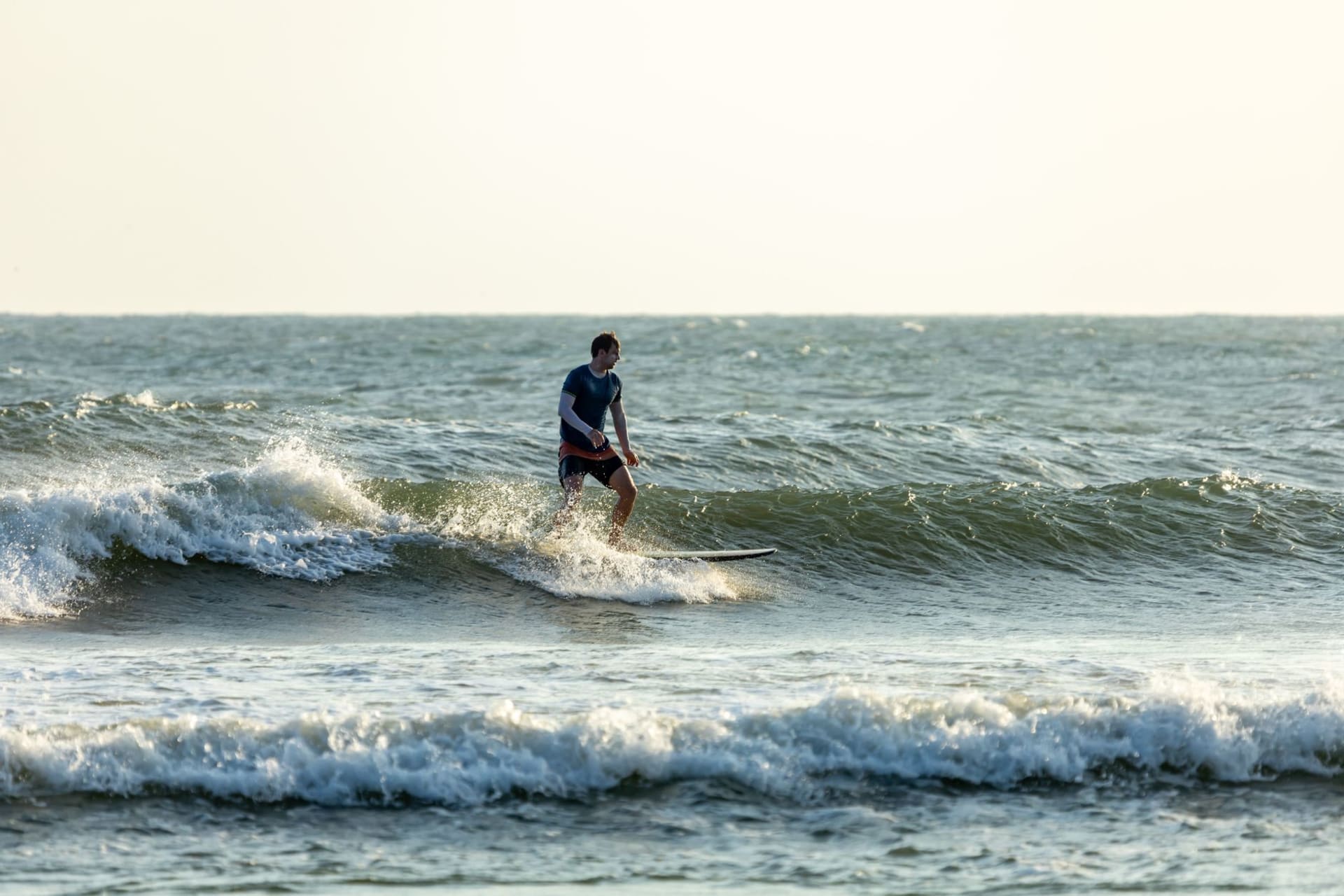
Saint-Leu’s point break is one of the reasons professional surfing came to Réunion. The wave is a long right-hander — long by surf standards means you can stay on it for several seconds before it closes — and it works best on a south swell with the wind coming from the east. On those days, the lineup fills with people who know what they’re doing. The rest of the time it’s approachable for intermediates, which described me accurately enough.
I rented a board from a shop on the main road and paddled out on a morning when the swell was small but clean. The water here is warm — around 25 degrees in austral summer — and the reef drops steeply, so the wave breaks sharply rather than mushing over sand. I caught four waves and fell off three of them. The fourth I rode long enough to actually turn on, which felt disproportionately satisfying.
Whale Season
Between July and October, humpback whales come from Antarctica to the warmer waters around Réunion and Madagascar to give birth and nurse their calves. Saint-Leu happens to sit along one of their favored coastal routes. You can watch from the cliff walk or take a whale-watching boat from the small harbor — the latter gets you significantly closer, though the operators here follow distance guidelines seriously, which is the right call.
I went out on a zodiac with eight other people and a guide named Yannick who had been doing this for twelve years. Within thirty minutes we had two females with calves. The sound they make at close range — the exhalation, like something enormous letting out a long-held breath — is not something I can describe well. Lia said it made her feel the size she actually is, which I thought was as precise as language gets.
The Clifftop Walk and the Town Below
Saint-Leu is a working town rather than a resort, which is why I liked it. There’s a church square, a Tuesday market selling local vegetables, a few bar-restaurants where the menu is written on a blackboard. The clifftop promenade runs north from the center and offers the best whale-watching vantage point on the island — a paved path with benches positioned at the lookouts, popular with people of all ages doing evening walks.
Below the cliffs, the coastline shifts between small black-sand beaches and rocky shelves where people fish with hand lines in the late afternoon. I sat on one of those shelves for an hour one evening watching a man catch nothing in particular with an expression of complete contentment. The sun went into the ocean. The sky went pink. The man wound up his line and walked home. I followed at a respectful distance.
When to go: For whale watching, July through October is non-negotiable — they simply aren’t there otherwise. For surfing, the south swell is most consistent May through September. The town itself is worth visiting year-round, but the west coast’s dry season (April–November) makes every day more reliable. December and January bring humid heat and occasional cyclone warnings.