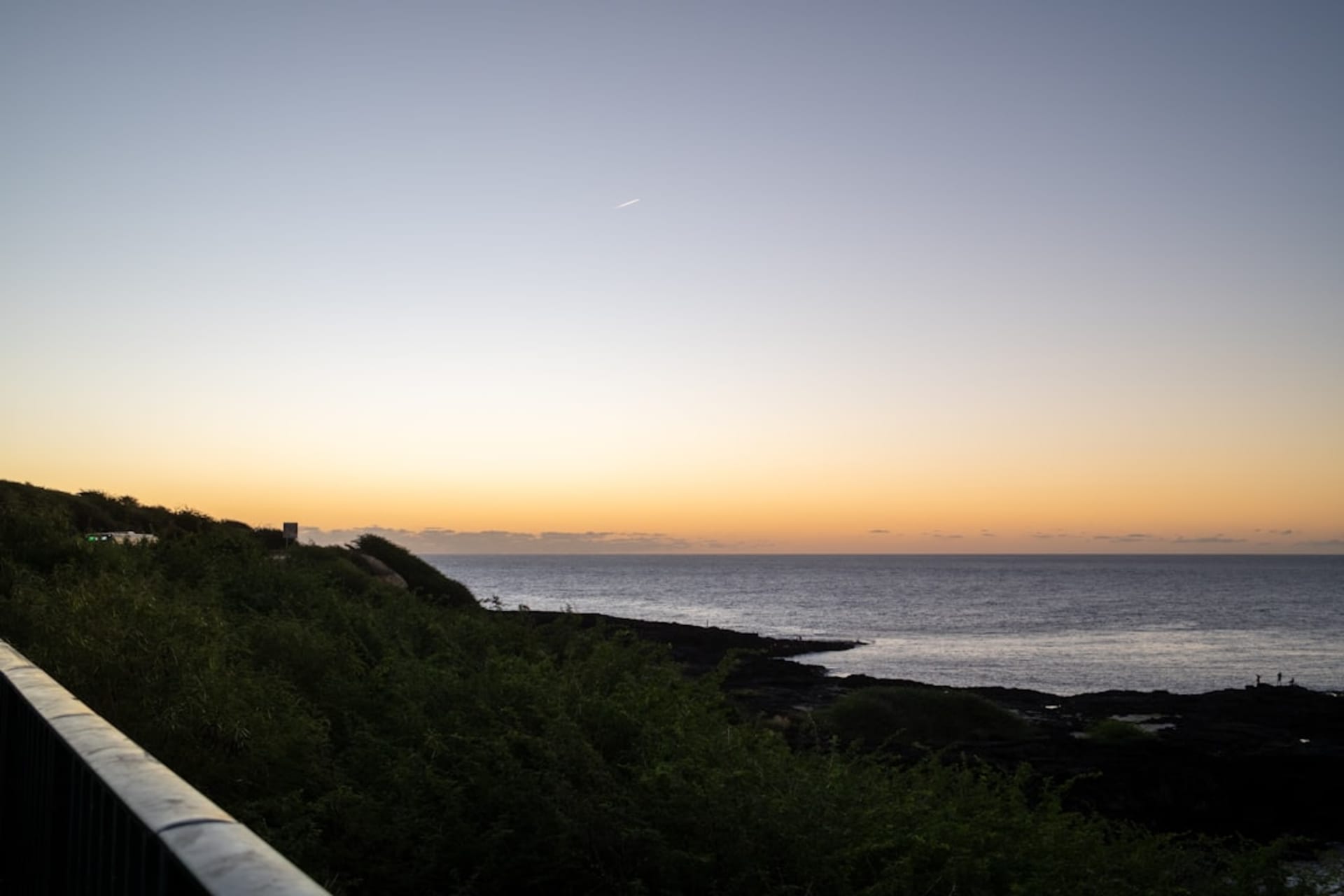
Saint-Gilles-les-Bains
"The lagoon is the color of a swimming pool, except it was here first."
I came to Saint-Gilles expecting to be underwhelmed. Beach towns in French overseas departments often feel like they’re trying to be both the Caribbean and the Côte d’Azur and succeeding at neither. Saint-Gilles manages something different: it’s genuinely Réunionnais, which means Indian Ocean rather than Atlantic, Creole rather than metropolitan French, with a fishing port that still operates beside the marina and a produce market that isn’t performing authenticity for tourists.
The beach at L’Hermitage, just south of the main strip, runs along a barrier reef lagoon. The water is shallow and improbably turquoise and protected from sharks by the reef itself — no small detail on an island where shark attacks have made headlines in recent years. Families, snorkelers, beginners on SUPs. I spent a morning doing nothing in particular at the water’s edge and didn’t feel guilty about it.
The Port and What It Sells
Saint-Gilles’ fishing port is where I went the morning after arriving. The boats come back early and by seven a.m. there are coolers of tuna and wahoo and parrotfish laid out on the quay. Some of the catch goes directly to the roulottes — the food trucks that park along the waterfront in the evening and serve grilled fish plates with rice and rougail sauce for less money than any restaurant in town.
I ate at a roulotte three of the four nights I was there. The system is simple: you choose your fish by pointing, it’s grilled over charcoal while you wait, and it arrives on a metal tray with condiments you add yourself. The queue for the best one moves slowly and nobody minds. People bring their own wine from the supermarket. By ten the roulottes close and the town’s bars take over, which I mostly observed from a distance.
Snorkeling the Reef
The reef at L’Hermitage and Saint-Gilles is a marine reserve and some of the most accessible coral snorkeling I’ve found anywhere. No boat required — wade out from the beach at L’Hermitage until the water reaches your chest, pull the mask down, and you’re immediately over parrotfish, sergeant majors, triggerfish, and occasional sea turtles moving through the sea grass. The coral is bleached in places from warming events but the fish density remains high.
I rented gear from a shop on the beach road for seven euros for the day. At low tide, you have to be careful about standing on the coral — the water shallows quickly and I spent most of my time horizontal. An hour in, I surfaced to find a group of schoolchildren doing the same thing, with a teacher counting heads every few minutes. It felt like the right kind of field trip.
Eating Your Way North and South
Saint-Gilles sits roughly midway along the west coast, which makes it a useful base for day trips north to Saint-Paul’s enormous Friday market and south to Saint-Leu’s surf break and the clifftop road above Étang-Salé. The main road running parallel to the coast is fast and well-marked. Lia and I rented a car for three days and found that most places worth visiting on this coast were within forty minutes.
The restaurant I’d go back to specifically: a small Creole place on a side street near the harbor, run by a man who makes cari cabri — goat curry — that took most of the afternoon to reduce. I asked when he started cooking it. He said Tuesday. We were eating on Thursday.
When to go: The west coast stays drier than the rest of Réunion year-round, but the sweet spot is May through November. Austral winter (June–August) brings cooler temperatures — sweater weather in the evenings — and almost no rain. Avoid February and March when cyclone season peaks and some beaches close intermittently.