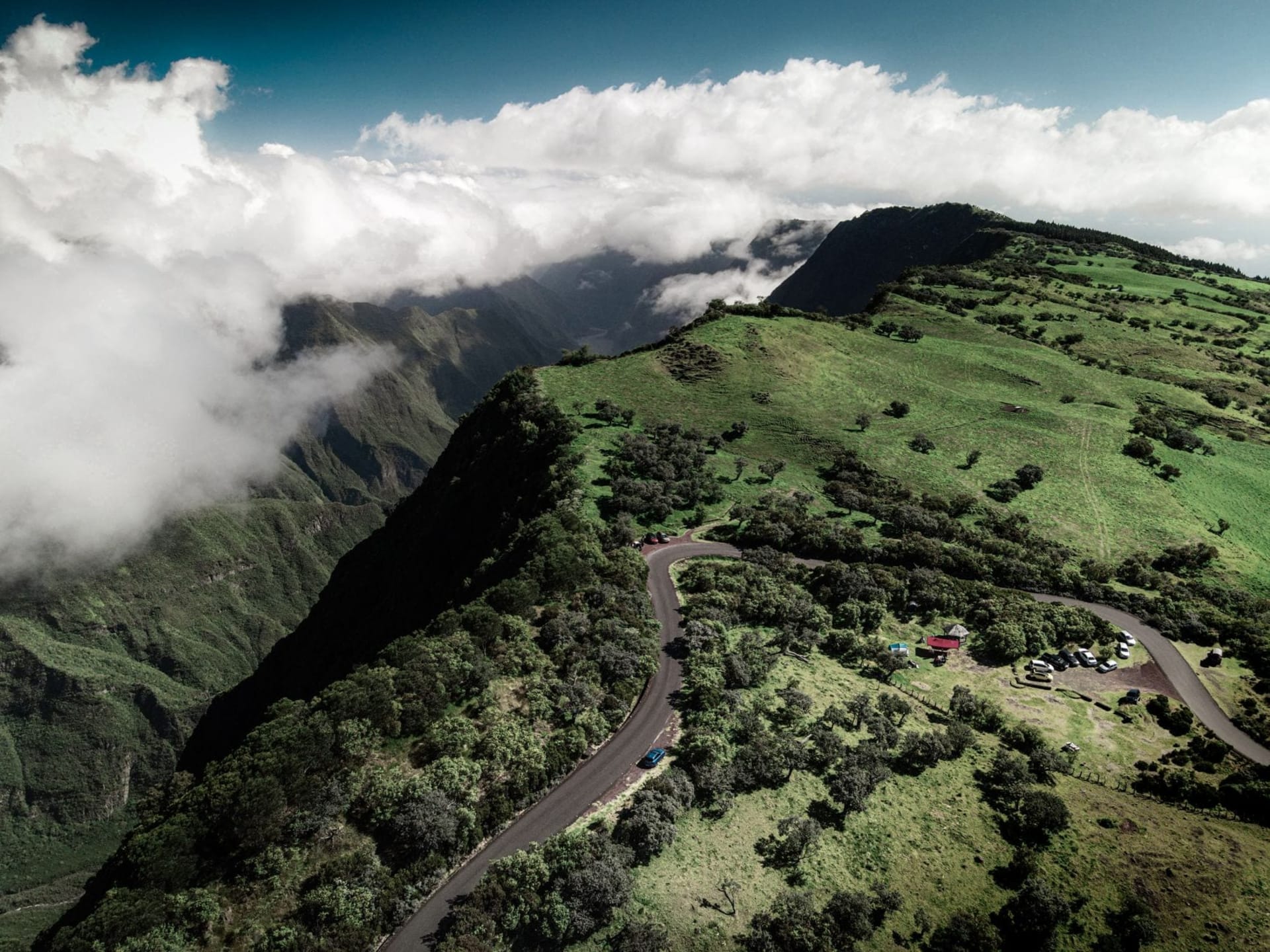
A dramatic collapsed volcanic caldera sheltering a mountain village famous for its lentils and thermal springs.
I counted maybe forty of the bends before I gave up and simply watched the cliff face scroll past the window like a slow reel of geology. The RN5 from Saint-Louis climbs into the Cirque de Cilaos through tunnels blasted into basalt and across bridges that look like afterthoughts above thousand-meter drops. By the time the road spits you out into the village center, you feel you have been somewhere.
Arriving Inside the Caldera
The cirque is not a crater in the Hollywood sense — no smoking rim, no drama of that sort. It is more like a bowl someone left out in the clouds, the walls so steep that afternoon shadow arrives early and stays. The village of Cilaos proper is compact: the Rue du Père Boiteau runs through the center past the thermal bath complex, the church with its slightly too-large spire, and a handful of restaurants where the menu boards are written in Creole and the handwriting is old-fashioned. The air smells of wood smoke and wet fern. After weeks of coastal Réunion — the vanilla heat, the traffic of Saint-Denis — the coolness here felt like a held breath finally released.
Lentilles et Vin
Cilaos grows two things with particular pride: its lentils, the small greenish variety that stays firm after hours of cooking and carries a faint mineral earthiness I have not found anywhere else, and its wine, a semi-sweet local production that most serious oenophiles would dismiss but that tastes exactly right after a morning of walking the Sentier de la Chapelle. Lia ordered the lentil stew at a table terrace on the Rue des Ecoles and spent the better part of lunch trying to identify what made it different from any Puy lentil she had ever eaten. We eventually decided it was the water — the same volcanic aquifer that feeds the thermal baths feeds the kitchen pots. You taste the mountain in it.
The surprise came in the afternoon. We had walked past the Établissement Thermal expecting a municipal facility, some faded 1970s concrete, and found instead a quiet Belle Époque building surrounded by hibiscus, a handful of elderly visitors soaking in iron-rich water that runs orange at the edges of the pools. No queue, no crowds. The attendant handed us towels with the unhurried manner of someone who has never had to rush anything in his life.
Light Before the Clouds Close
The cirque walls trap weather. By three in the afternoon most days, cloud rolls in from the east and the ridgelines disappear into white. The hour before — when the sun is still high enough to clear the western rim and light the terraced gardens of the Route de Bras-Sec in full gold — is the hour to be walking. Everything else can wait.
When to go: The dry season runs from May through November, when the road is least likely to be blocked by cyclone-season landslides and the light in the cirque holds longer into the afternoon. Avoid February and March entirely.