Ras Mohammed National Park
"The wall just keeps going down, and somewhere below the point where the light gives out, the reef keeps going without you."
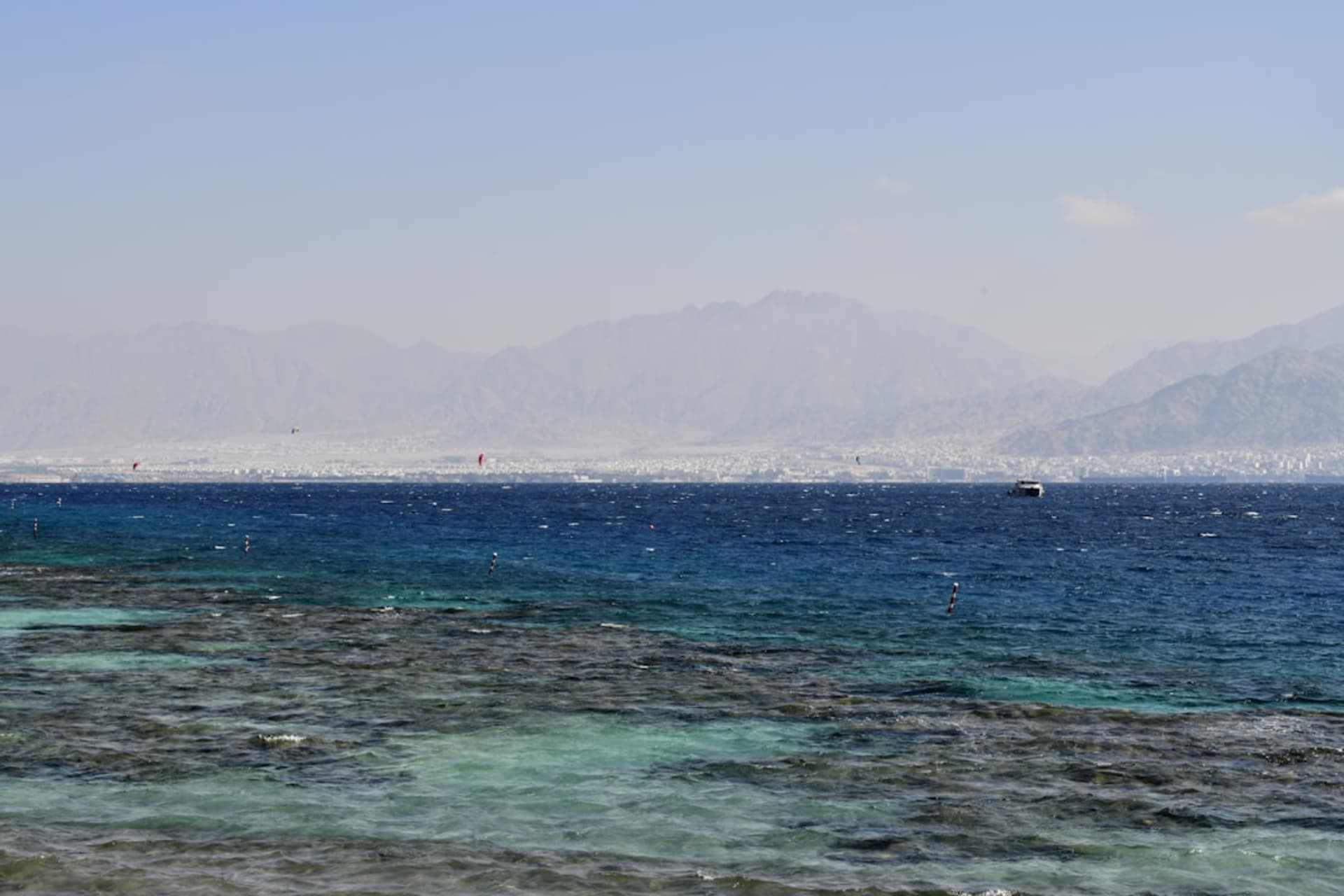
The boat left Sharm el-Sheikh at seven in the morning, and by eight we were approaching the tip of the Sinai peninsula from the water — that dramatic point where the rock runs out and two bodies of water, the Gulf of Suez and the Gulf of Aqaba, meet in a confusion of competing currents. From the surface, Ras Mohammed looks like a geological argument. The headland drops sheer into the sea, the cliffs orange-brown in the morning light, and below the waterline the wall begins — a near-vertical reef face that descends past recreational diving depth into a darkness you can see the edge of but not the bottom.
I had done wall diving before, but Shark Reef changed my sense of scale. You drop in, equalize, and find yourself hovering alongside a surface of living coral — fans, sponges, hard corals in configurations that look more like architecture than accident — while the wall simply continues below you, disappearing into deep blue at the limit of visibility. The fish life is bewildering in its density. Napoleon wrasse the size of dogs, barracuda in stacked silver columns, grey reef sharks moving through the water column with the unhurried purpose that makes apex predators so unsettling to watch. I had sixty-five minutes of bottom time and spent roughly forty of them not writing anything in my logbook afterward, just staring at the page.

Above water, the national park has its own distinct character. There is a road from Sharm that brings day-trippers in cars — families with coolers, the occasional tour bus — but they mostly cluster near the beach. Walk fifteen minutes in any direction and the landscape returns to itself: wind-sculpted rock, the extraordinary silence of desert at sea level, occasional osprey nests on the cliff tops, and mangrove channels along the northern shore where the water turns brackish and herons stand motionless in the shallows. The mangroves feel improbable here, a green tangle in all that stone and salt.
Yolanda Reef, named for a freighter that sank on the site in 1980, has scattered its cargo across the seafloor in a way that has acquired a strange beauty with time. Toilets, sinks, and bathroom fixtures now serve as substrate for coral growth — a surrealist garden of barnacled porcelain among the fish. It sounds absurd, and it is slightly absurd, but it is also one of the most photographed dive sites on the Red Sea, for reasons that become obvious the moment you are hovering over a coral-encrusted toilet at twenty meters.

The park closes to overnighters — you come by boat or by road as a day visit — which keeps the numbers manageable and means the dive sites have a chance to breathe between groups. Get there early. The currents at Shark Reef run strong by midday and the best light on the wall is morning.
When to go: Year-round diving, but October through May is ideal for currents, visibility, and reasonable air temperatures on the surface interval. March through May sees the best schooling fish activity. Summer diving is possible but the surface is hot and the boat ride from Sharm is occasionally rough.