Middle East
Red Sea Coast
"The sea that made me forget I was standing on Africa."
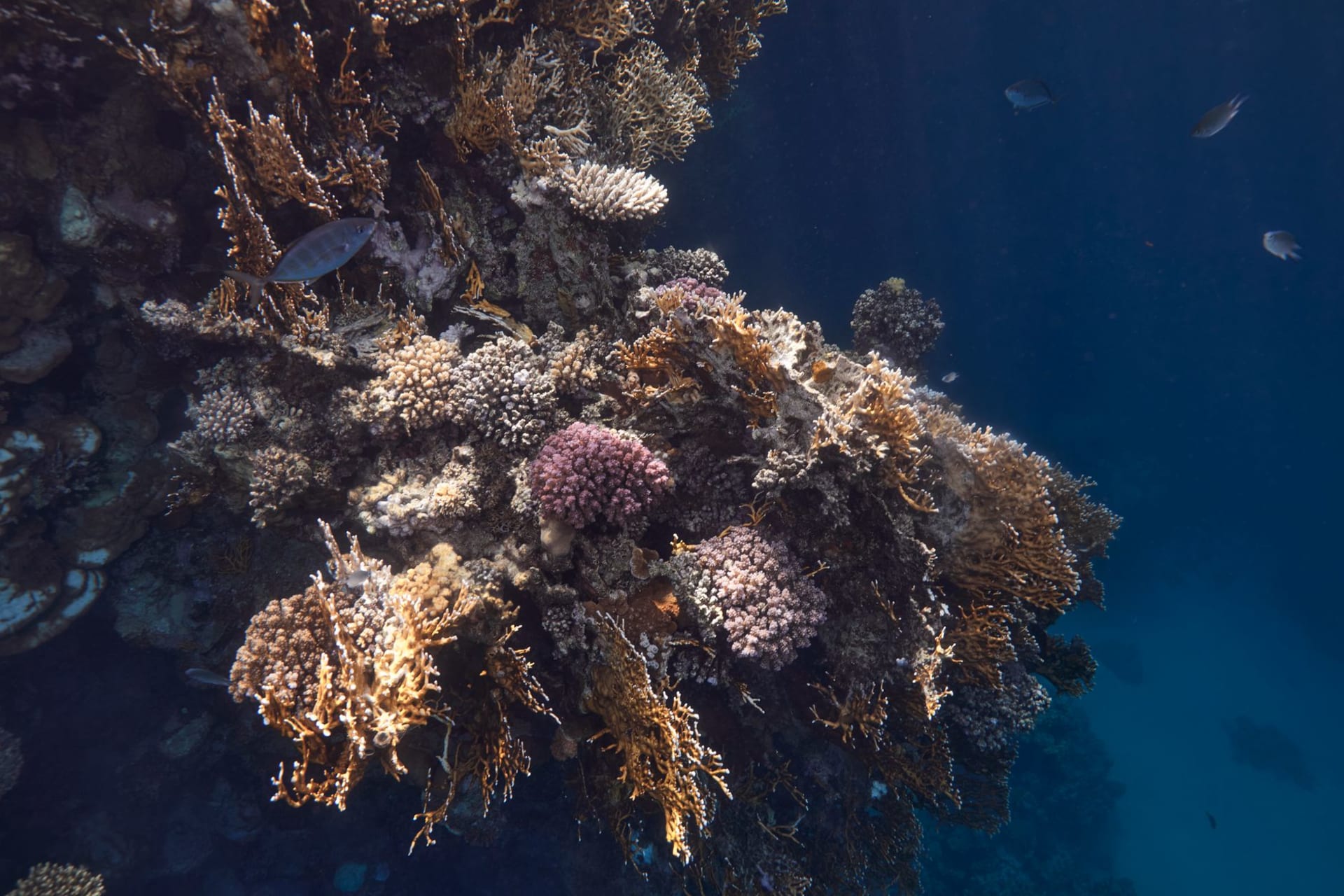
I arrived in Dahab at noon in July — which, in retrospect, was exactly the wrong time to do anything except get in the water. The bus from Sharm el-Sheikh dropped me at the main drag, the sun was absolute, and I walked directly through the first dive shop I saw and straight into the Gulf of Aqaba. Nothing could have prepared me for the visibility. I’ve snorkeled in Thailand, in the Yucatán, in the Azores. None of it looked like this. The coral starts almost immediately from shore and descends into blue so deep it goes dark before you can trace its edge. Schools of sergeant majors and parrotfish moved around me like traffic that had decided, as a group, not to care about pedestrians.
Dahab is the strange one on this coast — a former Bedouin fishing village that became a backpacker haunt in the eighties and never fully transitioned into the resort economy that swallowed Hurghada and Sharm. The Blue Hole is fifteen minutes north by pickup truck: a submarine sinkhole ringed by a coral arch at twenty-six meters that has earned its reputation as a place where overconfident divers make poor decisions. I sat at the café above it every morning, drinking weak Nescafé, watching the sun hit the water at an angle that made the hole look like a bruise in the sea floor. Marsa Alam, further south, is quieter still — dugongs in the seagrass beds, hawksbill turtles nesting on the beach, dive operators who actually limit group sizes. The Egyptian coast north of Sudan gets almost no international coverage, and that is precisely why it remains extraordinary.
The Sinai interior is worth a day if you’re in Dahab — a jeep into the mountains at dawn to watch the light break over the St. Catherine’s Monastery, the oldest Christian monastery in continuous use on earth, before the tour groups arrive. There is something deeply strange about sitting in the silence of the Sinai mountains at five in the morning, coffee thermos in hand, the monastery walls golden below you, knowing that the Red Sea is two hours east and the Nile is three hours west and you are, technically, standing at the hinge of two continents.
When to go: September to November and March to May offer warm water, mild air, and better visibility than summer. August is brutal — forty degrees, baking stone, and dive boats stacked at every mooring. Winter (December to February) brings cooler, windier conditions that some divers actually prefer for the clarity.
What most guides get wrong: They send you to Hurghada or Sharm el-Sheikh because the resorts there are easy to book. Both cities are essentially mall complexes with a beach. The Red Sea that will actually stay with you is further south — Dahab for character, Marsa Alam for the marine life, Ras Mohammed for the coral walls. You’ll need to piece together the logistics yourself, which is mildly annoying and completely worth it.