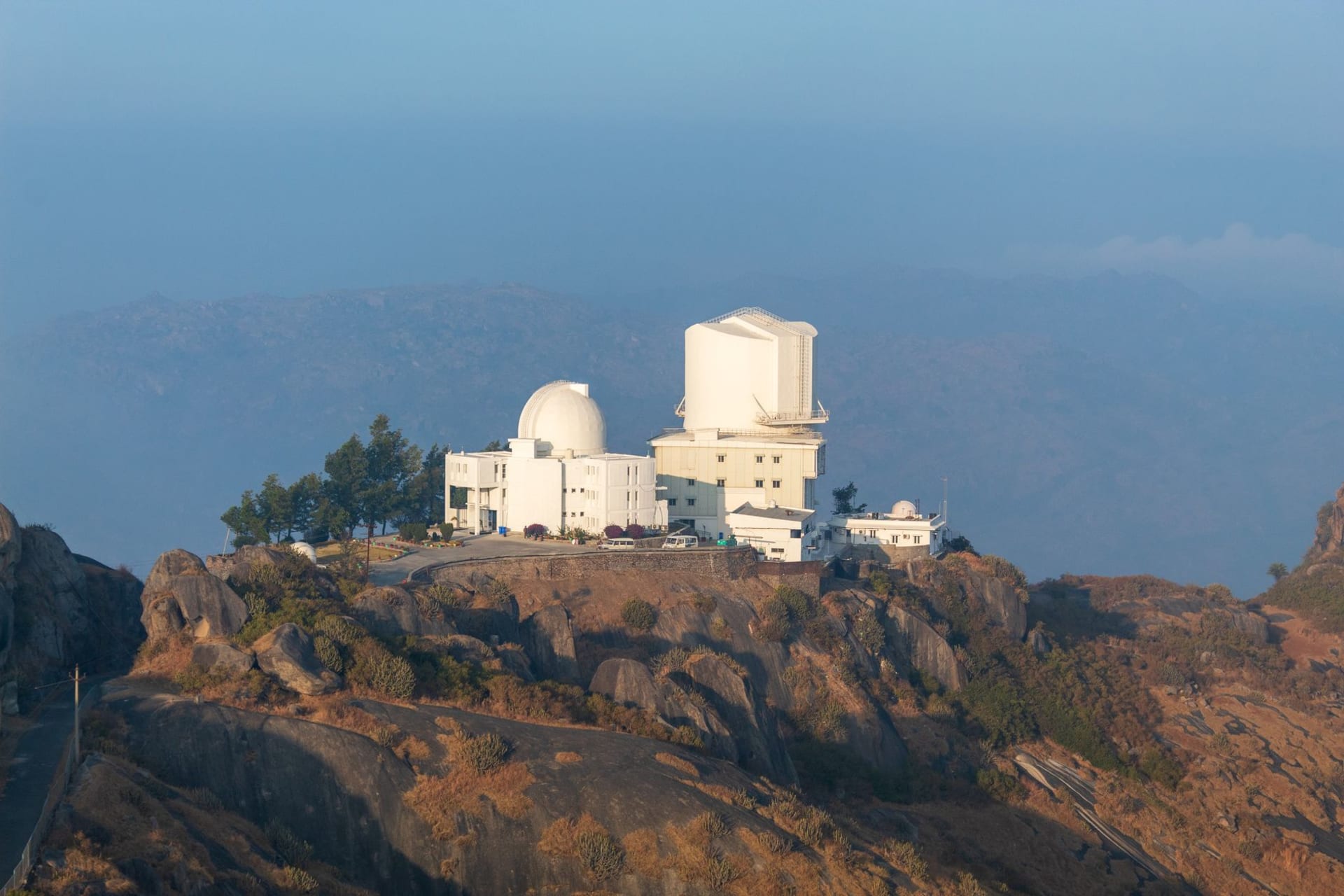
Mount Abu
"The marble ceiling of Vimala Vasahi temple made me think the stone had not been carved so much as persuaded into a different form."
The drive up from the plains is the first part of the experience, and it is more abrupt than I expected. You leave the flat Rajasthani landscape — sandstone-coloured, dry, horizontal — and the road starts to climb through the southern Aravallis, the world tipping at a new angle, the air cooling by degrees as the altitude increases. By the time I reached Mount Abu, the temperature had dropped enough to feel genuinely different — not cold, but the specific relief of cool air after heat, like exhaling slowly after holding your breath. The Aravalli hills here are forested rather than barren, the slopes covered in dhok trees and conifers, and the whole atmosphere has a quality that feels incongruous until you remember the state is larger and more varied than its desert reputation suggests.

The Dilwara Jain temples, three kilometres outside the town, are what justify everything else. Built between the 11th and 13th centuries, they are in white marble — five separate temples, each dedicated to a different Jain tirthankara, each with an interior so elaborately carved that calling it ornate is a failure of language. The ceiling of the Vimala Vasahi temple (completed 1031) is a pattern of concentric marble rings dropping from a central lotus cluster, each ring carved with a density of human and celestial figures that competes for attention with every adjacent ring. I stood beneath it for a long time looking upward in a way that makes the neck ache but doesn’t feel worth stopping. The stone is not quite translucent but close enough to it that in direct sunlight the panels glow from within. The craftsmen who produced this worked over fourteen years; I could believe three times that figure.
Nakki Lake, at the centre of the hill station town, is the other gravitational point — a small artificial lake surrounded by hills and rowboats and couples and children and the general domestic pleasure of a place that exists primarily for Indian holiday-makers rather than foreign tourists. I rented a boat on a Tuesday afternoon, which meant I had much of the water to myself, and rowed out to the centre and sat there watching the Toad Rock formation above the treeline and the Aravalli light going orange, and felt the specific contentment of being somewhere that expects nothing from you.

The town itself has the easygoing air of a hill station that takes its job seriously: tea stalls and corn vendors and sugarcane juice and a mall road lined with shops selling the aggressively cheerful souvenirs that Indian domestic tourism produces. I bought a small marble elephant that was three times overpriced and still felt like the right decision.
When to go: March through June, when Mount Abu serves as an escape valve for the desert heat — busy but animated. October and November offer the most comfortable temperatures and the post-monsoon greenness. Avoid peak summer weekends (May/June) when accommodation fills entirely with families from Rajasthan and Gujarat.