Asia
Rajasthan
"The place where history is still something you can ride a camel through."
I arrived in Jaisalmer on a night train, and by the time I stepped out onto the platform, the fort was already glowing against a sky the color of burned clay. That’s the thing about Rajasthan — it does not build up to anything. The scale and the drama are immediate. You do not discover the golden city; it hits you at once, fully formed, the way an old legend hits you when you finally find out it is true.
Rajasthan is often sold as a backdrop for palace hotels and Instagram camels, and those things do exist, relentlessly, but they are the surface of something older and stranger. Jodhpur is the blue city, yes, but spend a morning inside the Mehrangarh Fort and you start to understand how a dynasty thinks about power — the cannon marks on the gate from the Jaipur army’s last attack, still there, unfilled, like a scar the city decided to keep. Udaipur sits on a lake so still in the mornings that the City Palace floats rather than stands. And Bikaner, which most tours skip, has a rat temple, a camel research station, and street food — kachori stuffed with spiced lentils, fried in oil that has been going since before my grandfather was born — that I still dream about.
The food here changed what I thought I knew about Indian cooking. Dal baati churma, the Rajasthani triad of lentil soup, wheat dumplings roasted over dung fire, and crushed sweet wheat mixed with ghee, is the kind of dish that exists in complete opposition to the idea of light eating. It is hearty in the medieval sense, built for people riding horses through deserts. I ate it in a family home in a village outside Jaipur, sitting cross-legged on the floor, and I understood immediately why no restaurant version has ever satisfied me since.
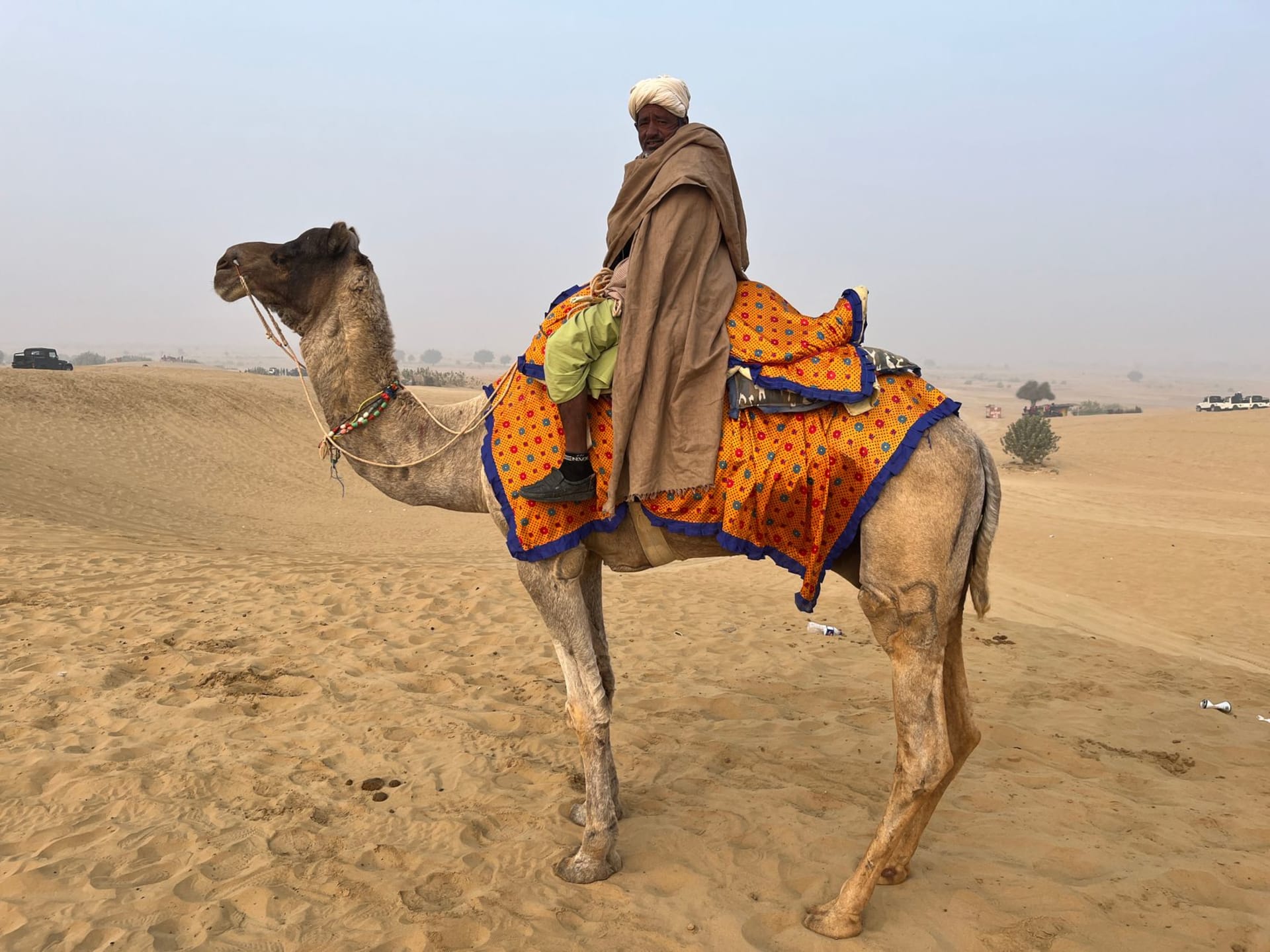
When to go: November to February is the window. The desert nights are genuinely cold — bring layers — but the days are dry and clear and manageable. The Pushkar Camel Fair happens in November and is the most extraordinary spectacle of organized chaos I have witnessed, tens of thousands of camels and traders descending on a small holy town. Avoid April through June entirely: the Thar Desert earns its reputation in summer.
What most guides get wrong: They send you to the same four cities on the same loop — Jaipur, Jodhpur, Udaipur, Jaisalmer — and back out in ten days. It is possible to do this and believe you have seen Rajasthan. But the state is larger than France, and what lives between those cities — the villages, the painted havelis of Shekhawati, the forts nobody has restored yet — is where you stop being a tourist and start being a traveler. Give it three weeks, rent a car and driver, and say yes whenever someone invites you to sit down.