I arrived in Bundi by bus from Kota and walked out of the small station into a town that immediately felt like something I wasn’t supposed to know about — narrow lanes, crumbling blue-washed walls, a general atmosphere of benign neglect that suggested the tourist infrastructure had arrived, taken one look, and left again. There were three guesthouses, two restaurants, and a scattering of travellers who all seemed to have the same quietly pleased expression. I checked in, dropped my bag, and went looking for the step well.

The Raniji Ki Baori is the finest step well in Rajasthan and possibly in India, a 17th-century descending structure that goes down forty-six meters into the earth in tiered flights of stairs flanked by carved sandstone columns and pillars. The light inside changes as you descend — full sun at the top, then shadow, then a particular pale aqueous glow near the water at the bottom where the light bounces off the surface and up the carved walls. The carvings are worn but legible: gods and celestial dancers and animals proceeding in friezes around the pillars. I went down to the water level and sat there for a while listening to the specific quiet of a deep enclosed space, which is different from ordinary silence in a way that’s hard to articulate.
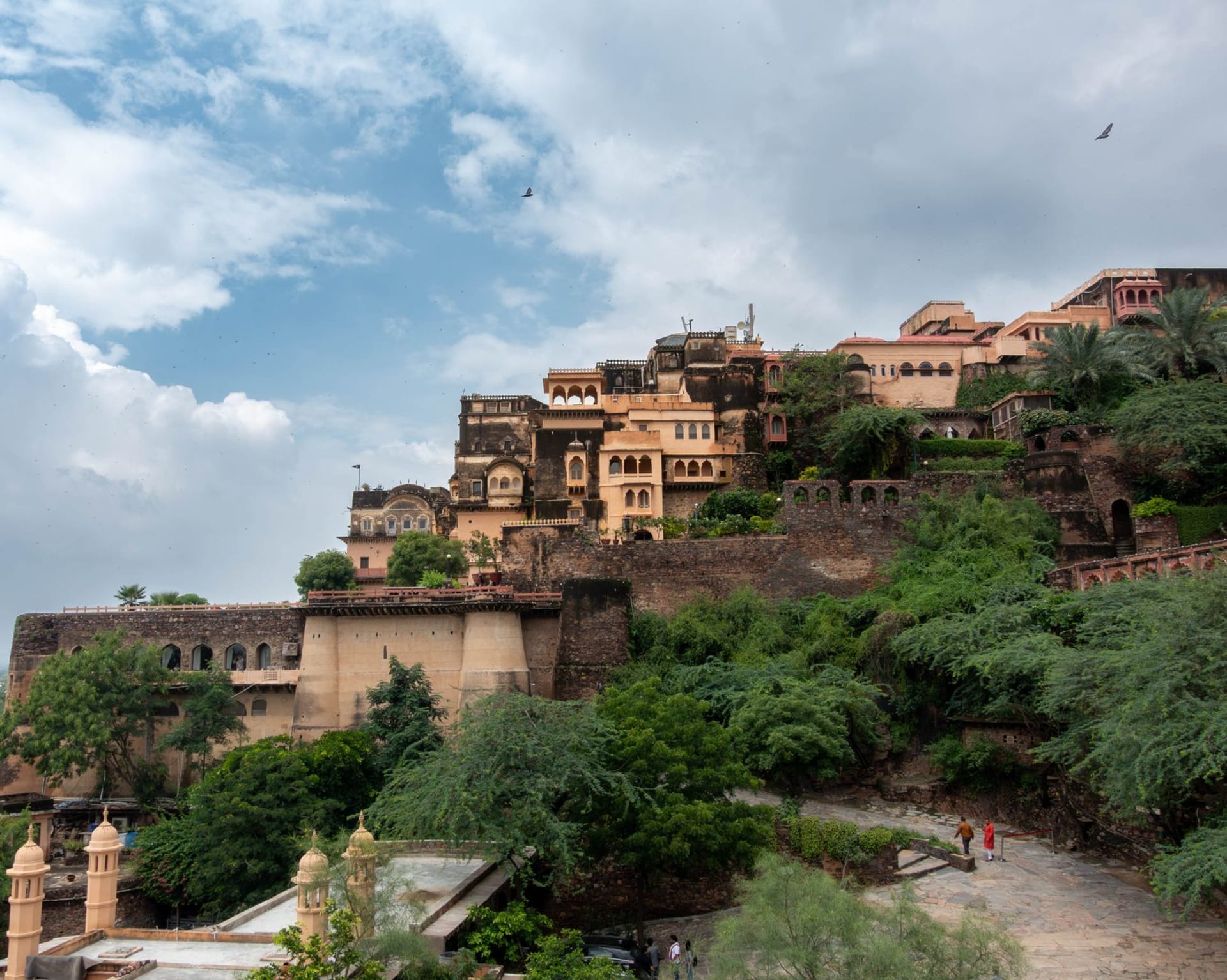
Taragarh Fort above the town is the less-restored cousin of the grander forts at Jodhpur and Amber — crumbling in places, overgrown, haunted by a substantial monkey population who treat the battlements as their personal territory and seem entirely unconcerned with yours. What it lacks in polish it compensates in views: the whole of Bundi spreads below, blue-grey and compact in the valley, the Nawal Sagar lake a dark mirror at its centre, the Aravalli hills closing off the horizon. Inside the Bundi Palace, the Chitrasala — a roofless courtyard covered floor to ceiling in 17th and 18th-century murals — shows a miniature world of hunting parties and royal processions and gods in their heavens, all of it faded to the colours of old silk but still readable in their entirety. Rudyard Kipling spent time in Bundi and wrote about it warmly; the town has changed less than it might have.

The food in Bundi is straightforward guesthouse cooking — rajasthani thali, dal, fresh roti from the communal kitchen, the kind of eating that is less about revelation and more about sustenance. The pleasure of Bundi is not culinary but spatial: the scale is human, the town rewards wandering, and the odds of turning a corner and finding something remarkable are considerably higher than the number of tourists would suggest.
When to go: October through March. Bundi has fewer visitors than most of Rajasthan and is honest about its infrastructure — this is not a place for luxury hotels. Come for two or three nights, walk everything, and leave before the town starts to feel small.