Pianemo
"The water in that lagoon is a color that has no name in French or Spanish. I checked."
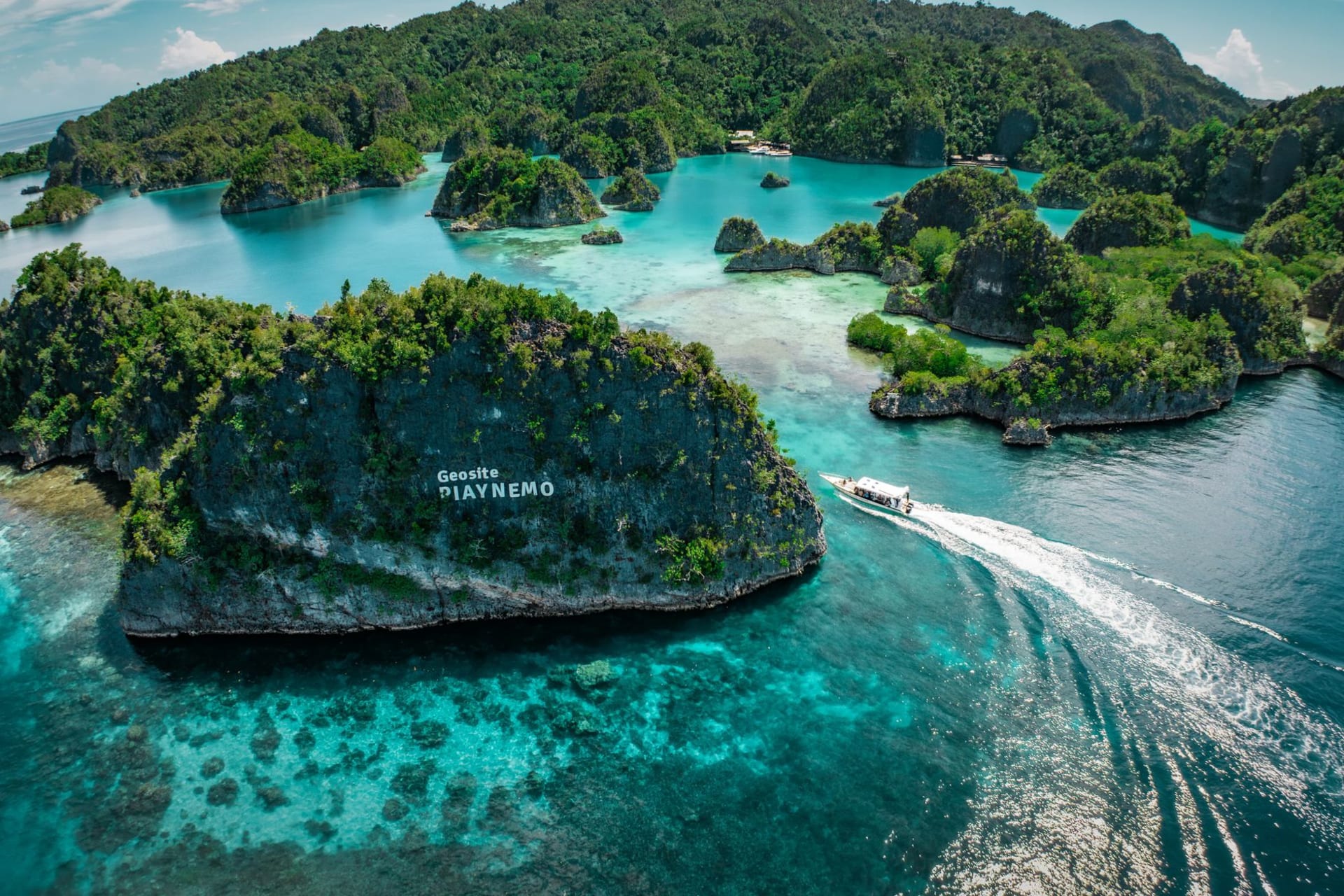
I had seen the photograph so many times — those limestone towers circling a turquoise pool, the shot taken from some elevated angle — that I had convinced myself the reality would disappoint. Photographs of places this iconic always precede you, having already told only the best version of the truth. I stepped off the boat at the Pianemo Islands on a flat-calm morning in November and climbed the wooden stairs built into the karst rock and arrived at the viewing platform at the top and looked down and understood, immediately and completely, that the photographs had not been exaggerating. If anything, they had been modest.
The Pianemo lagoon is enclosed by five or six limestone islands arranged in a loose horseshoe, creating an interior pool of water so still and so deeply turquoise that the color seems to come from inside the water rather than from the sky above it. The karst walls are vertical and covered in the dense tropical vegetation that clings to every available surface in this part of the world — fig trees with roots cascading like waterfalls of wood, pandanus with their spiral crowns, unnamed flowering plants pushing out from cracks in the rock. At the surface of the lagoon the light does something I cannot quite describe: it refracts and shifts in a way that makes the water seem almost solid.

The descent from the platform leads to a narrow beach at the lagoon’s edge where you can enter the water directly. No current here, no urgency — just a slow drift through water warm and clear and home to small coral formations and the occasional flash of a parrotfish. I floated face-down for perhaps twenty minutes without moving much, watching a hawksbill turtle navigate slowly between two coral heads with the focused expression of someone who has an appointment. The underwater topography here is gentler than the dive sites of the open strait — shallower, calmer, built more for observation than for the vertigo of a wall dive.
There was one other boat when we arrived. By ten o’clock there were five. The wooden platform is not large. Pianemo is the most accessible of the karst viewpoints in Raja Ampat — closer to the guesthouses on Mansuar, reachable without the early-morning start required for Wayag — and this accessibility is both its virtue and its limitation. Come early, take your time at the top, stay in the water as long as possible after the tour groups leave. The lagoon empties out again by midday.

The boat crew packed lunch for the return: a container of rice, some fried tempeh wrapped in banana leaf, and an avocado that someone on the crew had a personal investment in me trying. I ate it with a spoon, sitting in the bow on the way back to Mansuar, and it was the sweetest, fattiest avocado I had eaten since a market in Oaxaca eighteen months earlier. The crew member nodded approvingly. The competitiveness of avocados is universal.
When to go: October through April for calm waters and clear skies. Arrive before 8 a.m. to have the platform to yourself for at least forty-five minutes. Pianemo makes a full day trip from most guesthouses in the central archipelago — bring lunch, sunscreen, and at least four hours of snorkeling time you will not regret using. The light in the late afternoon, if you can stay, turns the water a different color entirely.