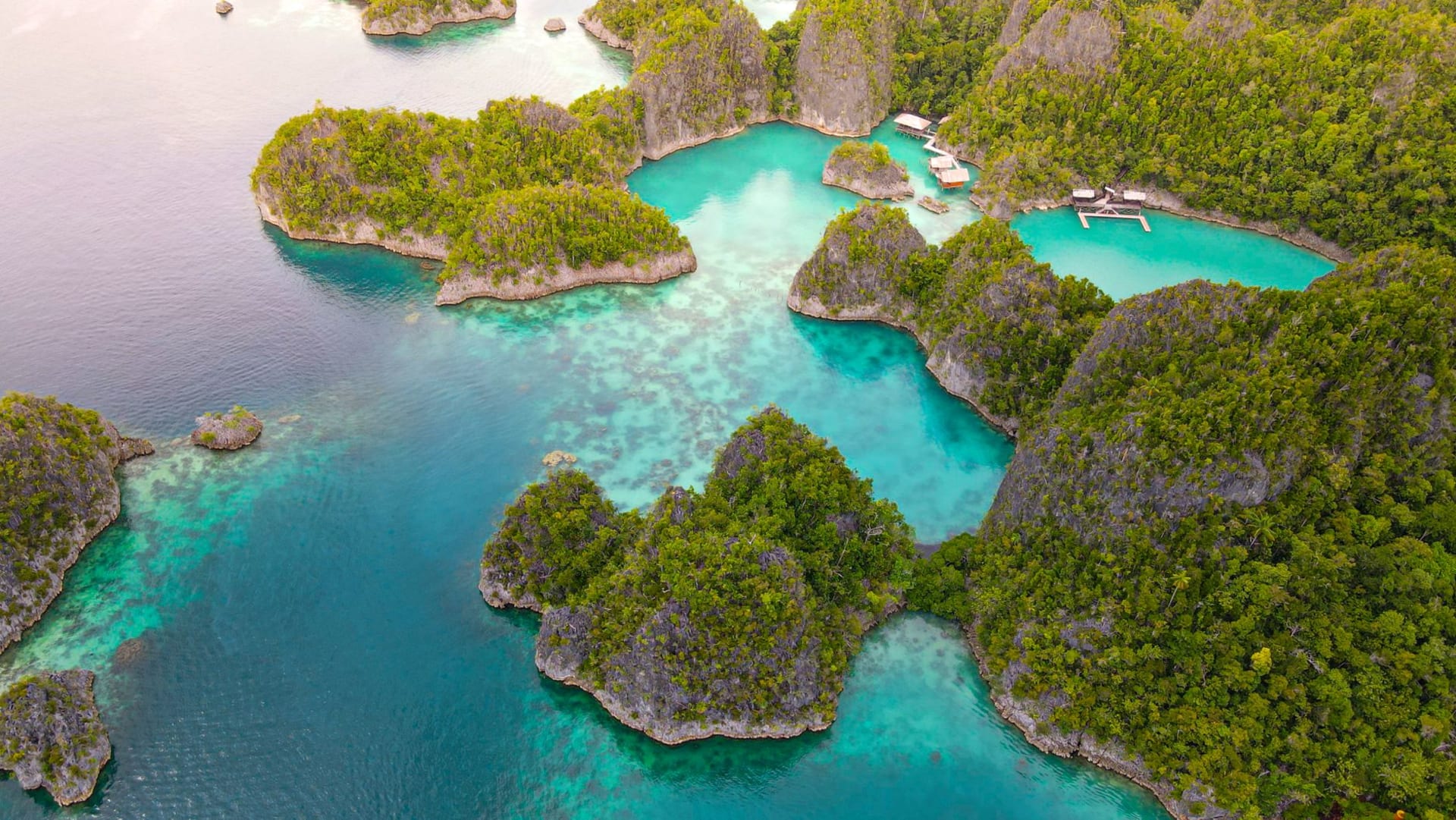
I asked the skipper how many boats he thought had visited the Fam Islands that month. He considered the question seriously — he was a man who took questions seriously — and said two. Both were his. He had brought a pair of researchers from a marine biology station in Sorong the week before, and me now. He said this without emphasis, as if it were simply a fact about the distribution of boats in the world, which it was.
The Fam Islands lie north of Waigeo, accessible by a two-hour speedboat journey along Waigeo’s northern coast and then across a stretch of open water. They are a cluster of small, forested islands arranged around shallow reef systems that have had very little contact with recreational diving or consistent human pressure beyond the subsistence fishing of the nearest villages. The reef here is what I imagine the more visited parts of Raja Ampat looked like thirty years ago — coral coverage so dense there is essentially no visible substrate, fish biomass at a level that makes the water feel genuinely thick.

We anchored for two nights in a bay on the eastern side of the largest island. There was no other boat. At night the only light pollution was a faint glow from the direction of Waisai on the horizon, and the sky above — I am not exaggerating — was the most star-laden I have seen outside of the Mexican desert. The Milky Way was not a suggestion here. It was a feature, dense and textured, bright enough to cast a faint shadow on the deck of the boat.
The diving was the best of my life. A manta ray appeared on the second dive and stayed with the group for twenty minutes, making slow figure eights with the patient and slightly amused air of a tour guide waiting for the slower members to catch up. On the same dive, the skipper — who also dove — pointed out a pygmy seahorse on a sea fan at six meters: a centimeter-long creature the color of the fan it clung to, visible only because he had the eye for it. I would not have found it in ten years of looking on my own.
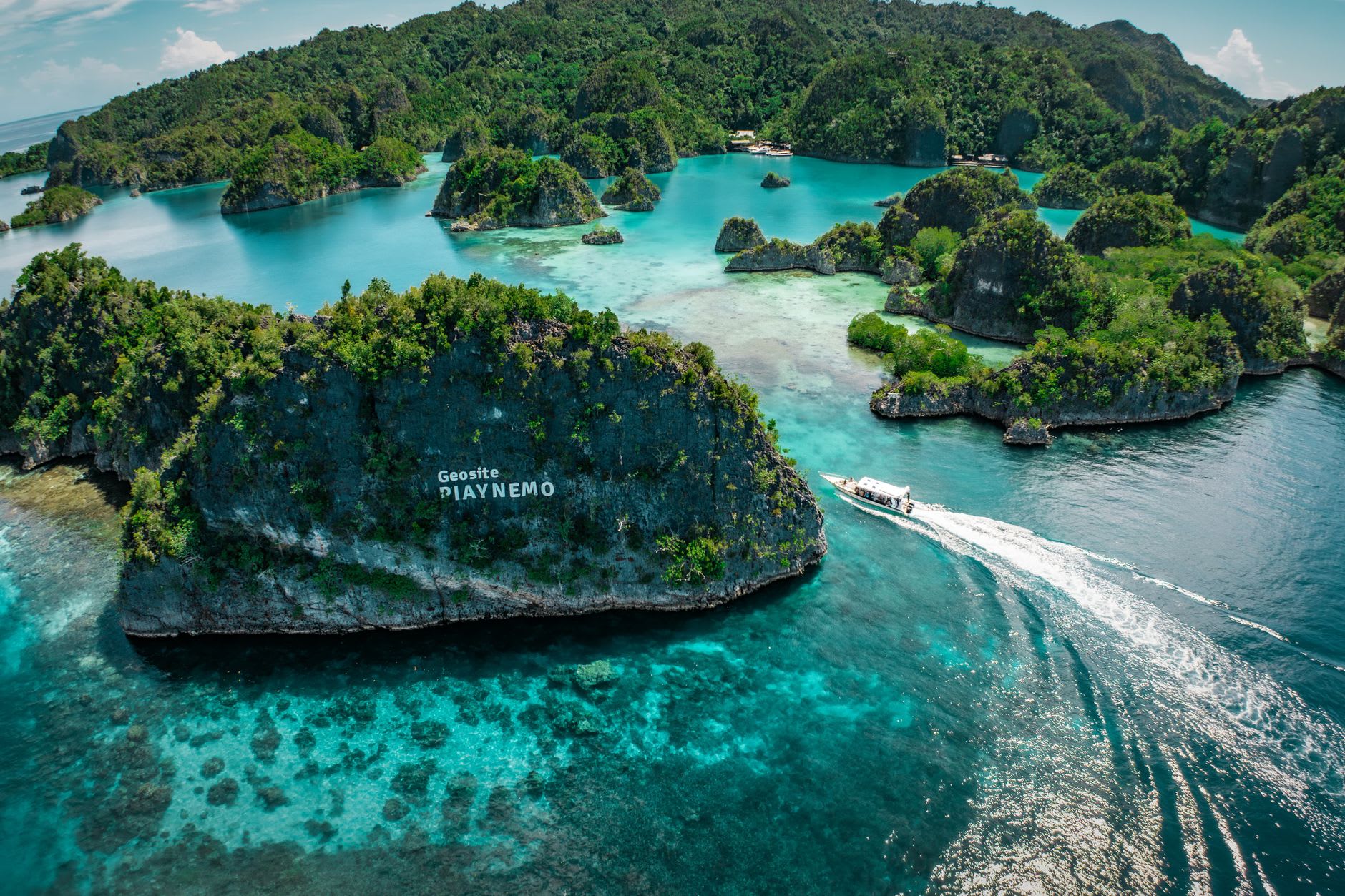
The islands themselves are uninhabited. The forest runs to the waterline, the beaches are white and unmarked, and the birds in the canopy wake you before any alarm you might set. On the morning we left, a pair of eclectus parrots — the female red and blue, the male an improbable solid green — landed in the tree above the boat and argued with each other about something in the particular way parrots have of making an argument sound simultaneously important and profoundly silly. I watched them for ten minutes. I thought about what the word “remote” actually means and whether it describes a place or a state of being.
When to go: October through April is the only practical window — the open-water crossing north of Waigeo in southeast swell season, May through September, is rough and potentially dangerous in a small speedboat. The Fam trip requires a liveaboard or multi-night boat charter; there is no accommodation on the islands themselves. Budget at least three nights — this is not a destination you approach as a day trip.