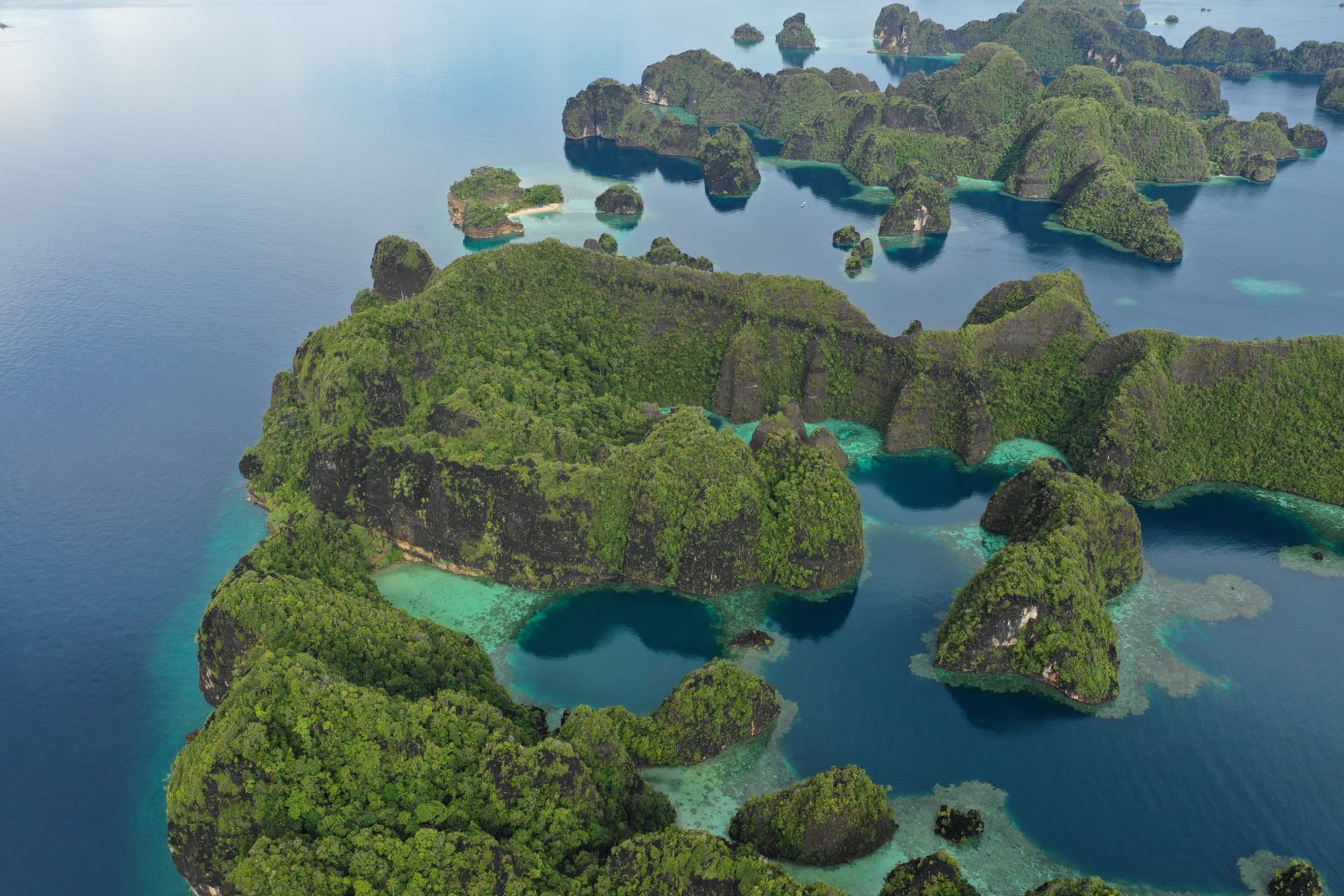
Batanta
"I saw a Wilson's bird of paradise from six meters. It had no interest in being photographed and I completely understood."
Of the four main islands that give Raja Ampat its name — the Four Kings, Waigeo, Batanta, Salawati, and Misool — Batanta is the one almost nobody talks about. There are no famous dive sites tagged at Batanta on any travel platform I checked. There are no Instagram locations with thousands of pins. The speedboat operator in Waisai looked at me with polite confusion when I asked for a transfer to Batanta’s east coast rather than one of the guesthouses on Kri or Mansuar. He confirmed the destination twice. He was perfectly correct to confirm it twice.
Batanta is a large island — the second largest of the four kings — covered almost entirely in primary rainforest. The interior is essentially uninhabited and largely unmapped for casual visitors. The coast has a handful of small fishing villages and a few guesthouses that have opened in recent years, serving hikers and birders rather than divers. I came for the Wilson’s bird of paradise, which Batanta shares with Waigeo and which is, by any standard, one of the most absurdly beautiful animals that evolution has produced.

The guide from the village woke me at 4:30 a.m. We walked forty minutes in darkness along a root-tangled forest trail with headlamps, arriving at a small clearing as the sky began to lighten. The Wilson’s bird of paradise is small — about the size of a starling — and the male is carrying approximately three weeks of evolution’s most extravagant experiments on his body: a yellow and black back, a scarlet mantle, a pale blue crown that appears to be lit from within, a pair of curled violet tail feathers, and a turquoise face with a texture like hammered metal. He was twelve meters away and he was dancing on a cleared patch of forest floor that he apparently maintained himself, bouncing and spinning and displaying for a female who watched from above with studied disinterest. The display lasted eleven minutes. I made no sound and barely breathed.
The Selayar waterfall is a two-hour hike from the nearest village through forest that opens occasionally to views of the Dampier Strait below. The waterfall drops about thirty meters into a pool of cold, absolutely transparent water. There was a moment, waist-deep in that pool after two hours of sweating through jungle, when I thought with complete sincerity that this was precisely the right temperature for water to be and that everything else had been an approximation.

The guesthouse meals were the most traditionally Papuan food I ate during my entire Raja Ampat visit: papeda, a stiff sago porridge eaten with a specific jerking motion of the wrist, served with fish in a yellow turmeric broth. It requires a technique I did not master. The family hosting me found this amusing and patient in equal measure and eventually just gave me a spoon.
When to go: The birding hikes are best from October through April when the birds of paradise are most active in display and the forest trails are drier. The waterfall hike is possible year-round but the jungle paths get genuinely slippery in heavy rain. Come with at least two nights — one is not enough to absorb what Batanta offers. The island rewards patience in proportion to how much you bring.