The Whitsundays
"The sand at Whitehaven stays cool in the sun because it's 98 percent pure silica — even the chemistry here is showing off."
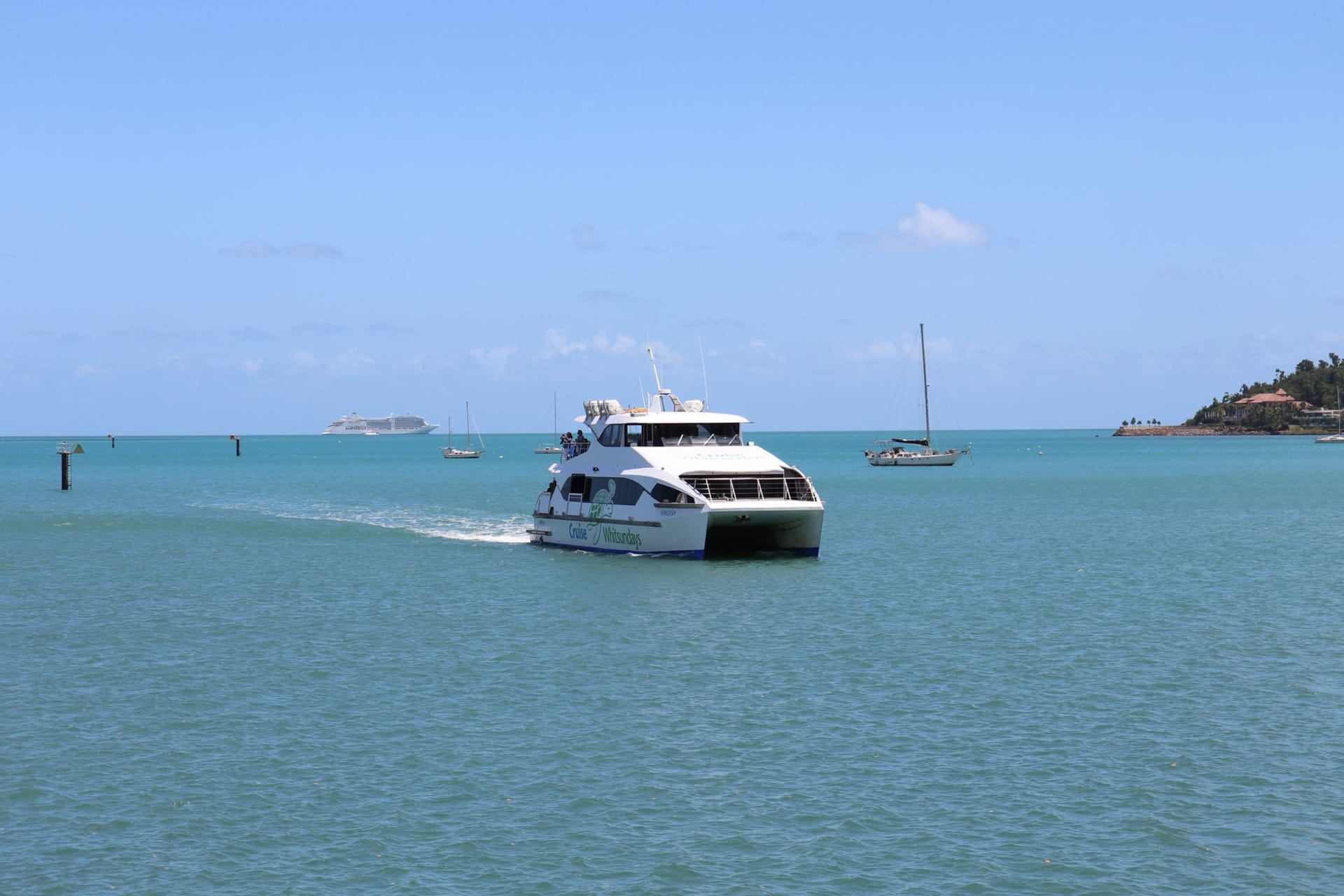
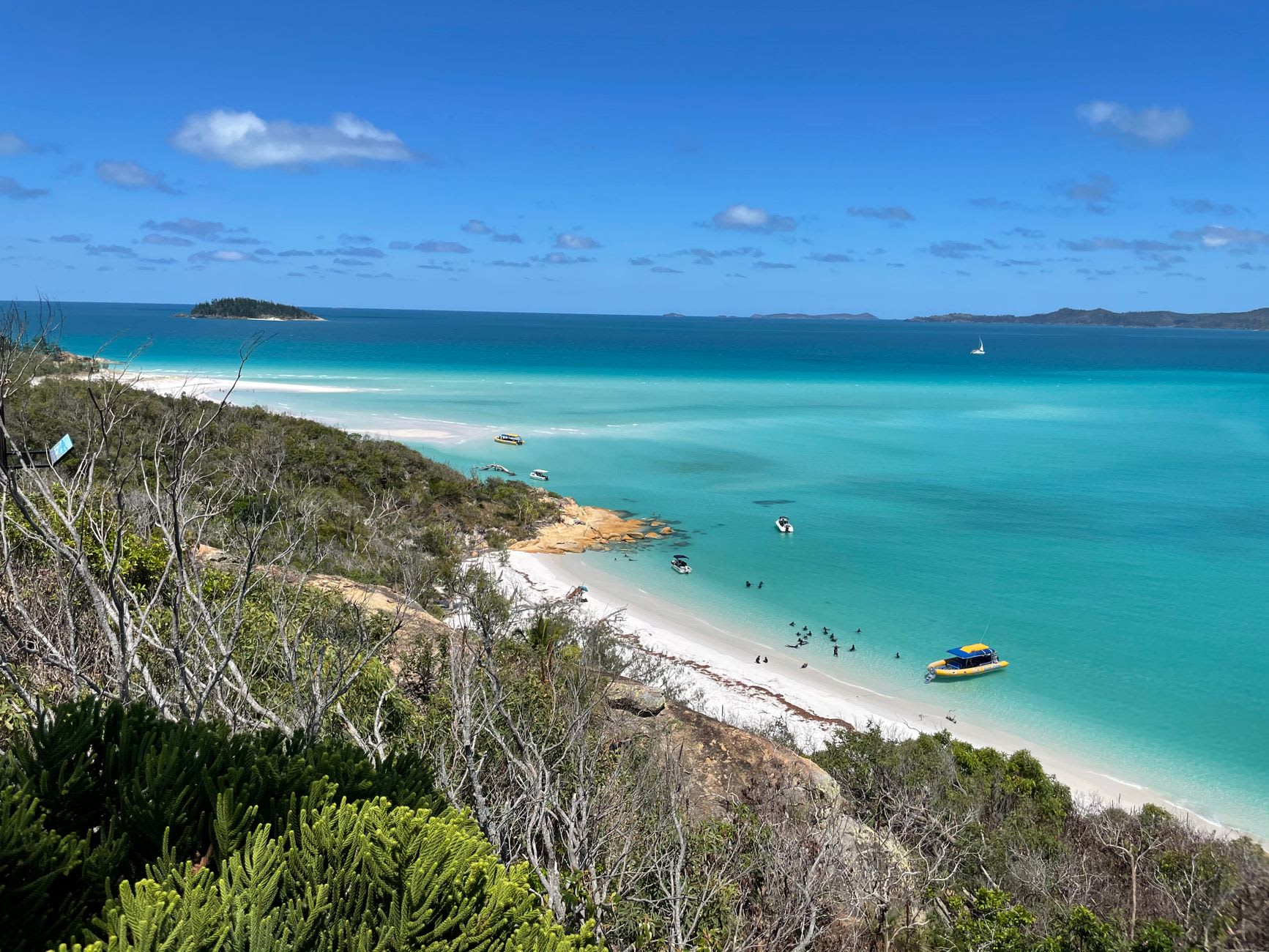
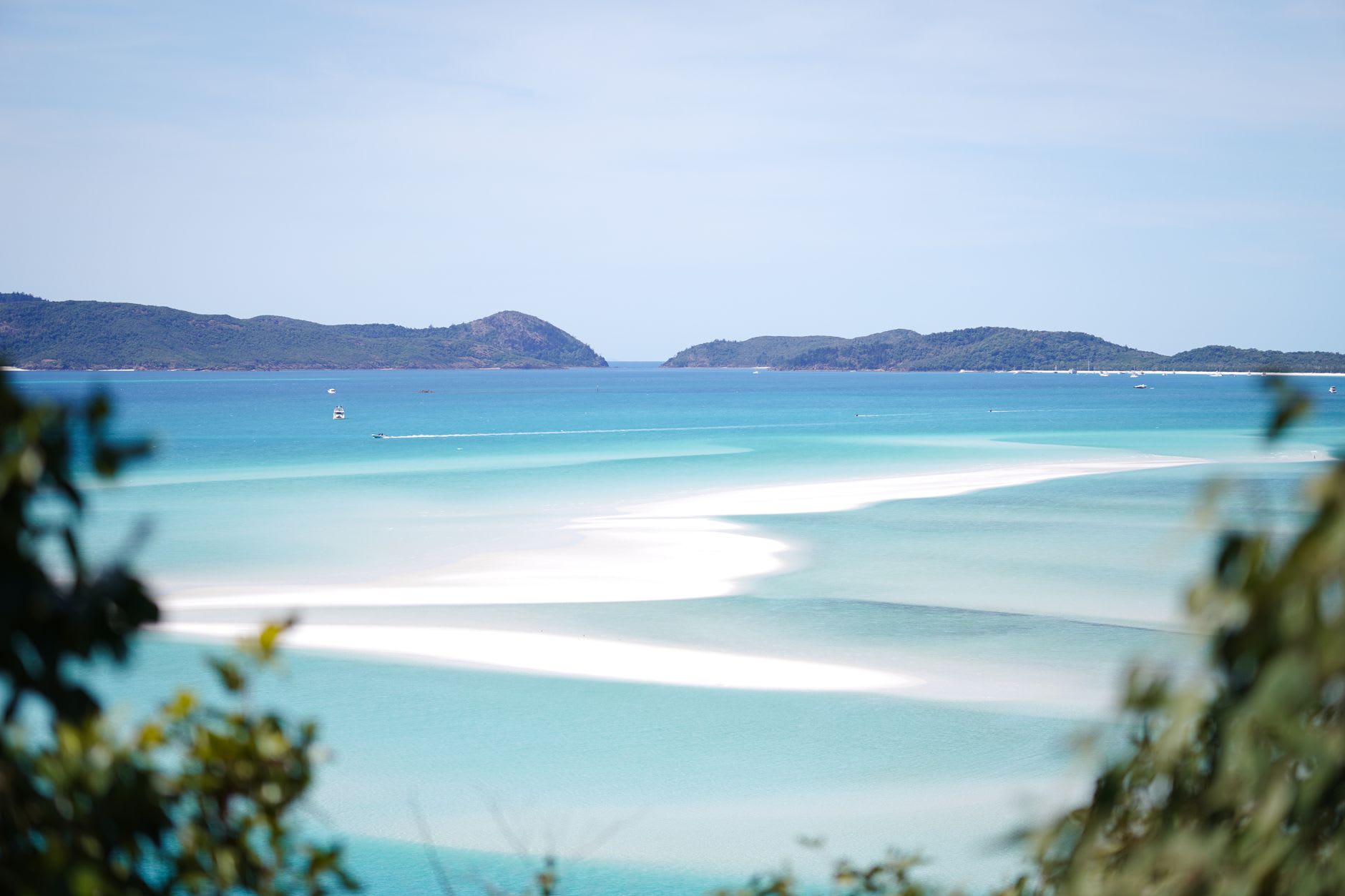
I came to the Whitsundays on a catamaran that smelled of salt and diesel, the kind that runs tourist groups out before sunrise so they can stand on the deck and wait for Hill Inlet to reveal itself. That first view from the lookout — white silica sand swirling through green water in patterns that look deliberate, almost architectural — is one of those travel moments where you make a small involuntary sound and then feel briefly embarrassed about making it. The sand at Whitehaven Beach is 98 percent pure silica. It stays cool in direct sun because it cannot conduct heat, a fact that becomes deeply personal when you sink your bare feet into it after hours on the boat and feel nothing but a coolness that shouldn’t logically be there.
The 74 islands of the Whitsundays scatter across the Coral Sea in a way that makes Australia seem almost tropical beyond apology. Most are uninhabited national park. A few hold small resorts — Hayman, Hamilton, Long Island — where the accommodation costs roughly what a flight to Europe would, and the food is excellent, and nobody makes you feel guilty about existing in a luxury that the surrounding reef doesn’t particularly need. But the best version of the Whitsundays is still reached under sail, anchoring in bays where the water is so clear you can read the bottom at six metres, stepping off the stern into a silence broken only by the sound of water lapping the hull and whatever birds have decided this particular patch of mangrove deserves attention. The sailing charter industry out of Airlie Beach runs the full spectrum from bareboat hire — if you can actually sail — to crewed catamarans that come with a skipper, a cook, and a route through the islands that has been refined over years into something close to optimal.
The reef itself — Hardy Reef, accessible by day-trip pontoon from Airlie Beach — is where the Whitsundays present their secondary credential. The coral here is patchier than the outer ribbon reefs north of Cairns, but the fish life is extraordinary: parrotfish working the coral in schools, enormous Queensland grouper moving slowly with the authority of things that have never needed to be afraid, and the perpetual business of the reef ecosystem going about itself regardless of whatever emotional significance you’ve decided to assign to it. I went in nervous about my snorkel fitting properly and came up forty minutes later not caring about anything at all.
Airlie Beach, the mainland base for all Whitsunday operations, is best understood as a logistics point rather than a destination in itself. It has a good esplanade lagoon pool, cold beer in abundance, and more sailing charter companies than you could sensibly evaluate in a single afternoon. The town’s atmosphere is reliably cheerful in the particular way of places where everyone is about to go somewhere wonderful — the anticipation is palpable in the marina cafe queues each morning. Book everything in advance if you’re coming in July or August, when the dry season coincides with Australian school holidays and the island moorings fill fast. The overnight sailing option is worth the premium: anchoring off Cid Harbour or Nara Inlet with the stars overhead and no engine noise is the experience the brochures are actually advertising, and it exceeds the photography every time.
The light in the Whitsundays has a quality I’ve struggled to describe accurately. It is not the soft Mediterranean light of Greece or the silvery northern light of Scandinavia. It is a hard, tropical light that does not flatter so much as it reveals — each colour pushed to its maximum saturation, the water blue-green beyond what seems reasonable, the white sand almost painful at midday. At dawn and dusk it softens into something more forgiving, and those are the hours when the bay anchorages and the inlet views become the things you stay up late thinking about months after you’ve gone home.
When to go: June through October is optimal — dry season, low humidity, excellent visibility in the water. The shoulder months of April, May, and November work well for lower prices and thinner crowds. December through March is cyclone season in the Coral Sea; not all operators pause, but conditions are variable and the reef visibility diminishes with the rain runoff.