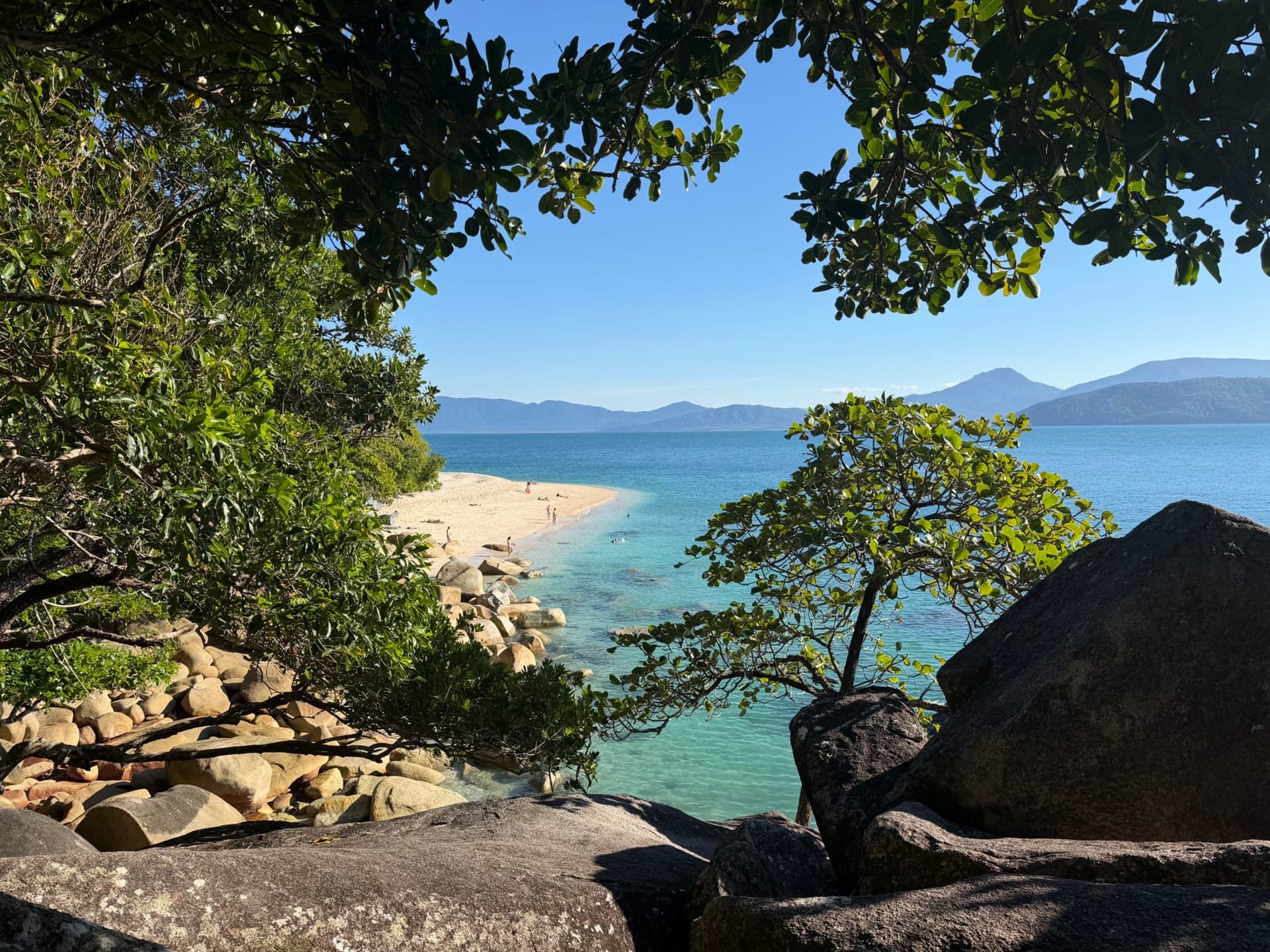
Magnetic Island
"The koalas on Magnetic Island have the bearing of animals who know the ferry runs back every hour and are entirely unimpressed."
The Townsville ferry terminal has the slightly apologetic atmosphere of a transport hub that knows it’s not the destination. Everyone on the boat faces the same direction — toward Magnetic Island, visible from the mainland on a clear day as a dark, forested shape six kilometres offshore — and the twenty-minute crossing has the quality of a commute that happens to end somewhere worth going. Townsville is a serious city: naval base, university, working port. Magnetic Island is its weekend. The moment the ferry docks at Nelly Bay and the mangroves press in from both sides of the road, the mainland’s agenda feels distant and slightly beside the point.
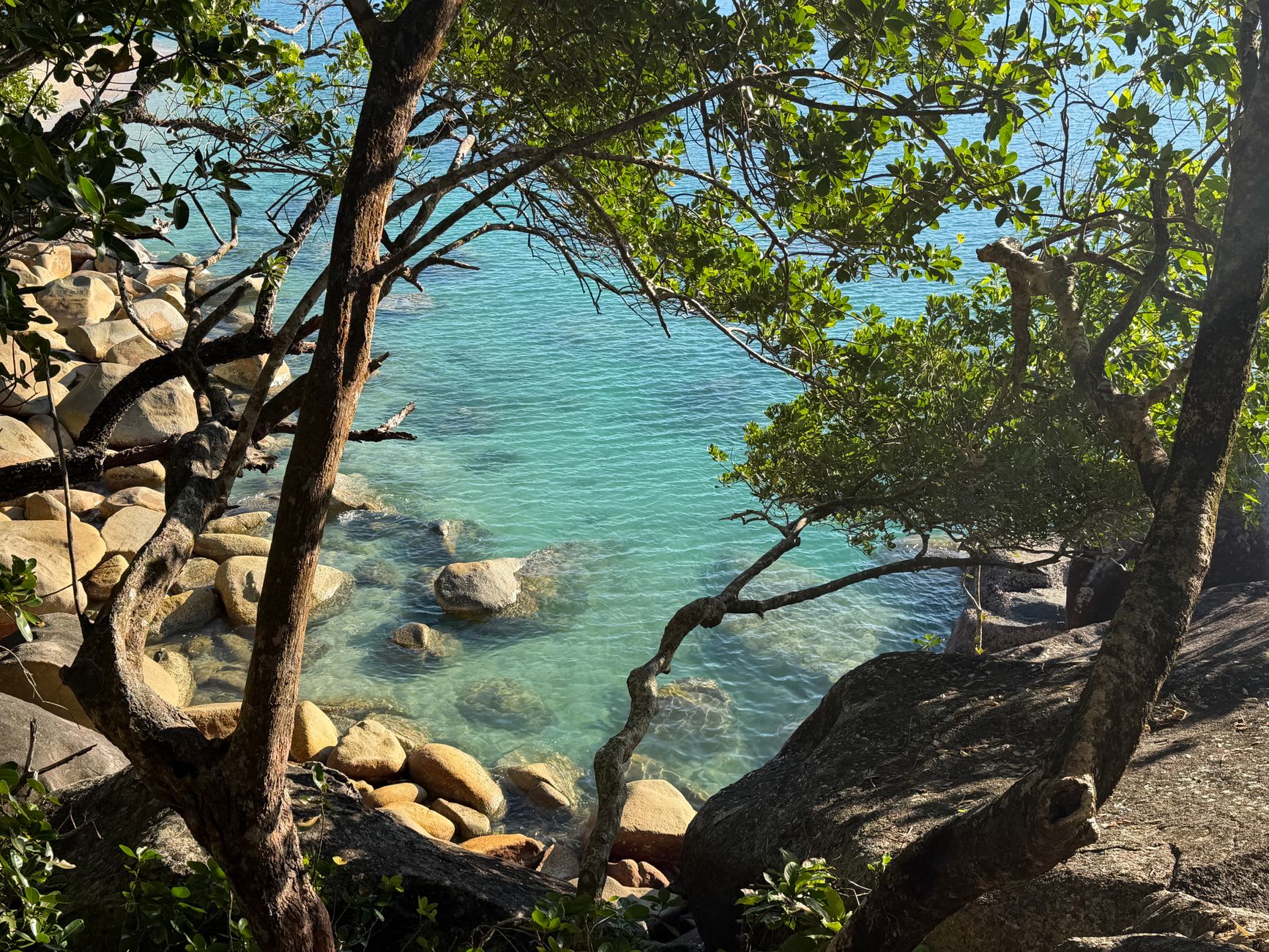
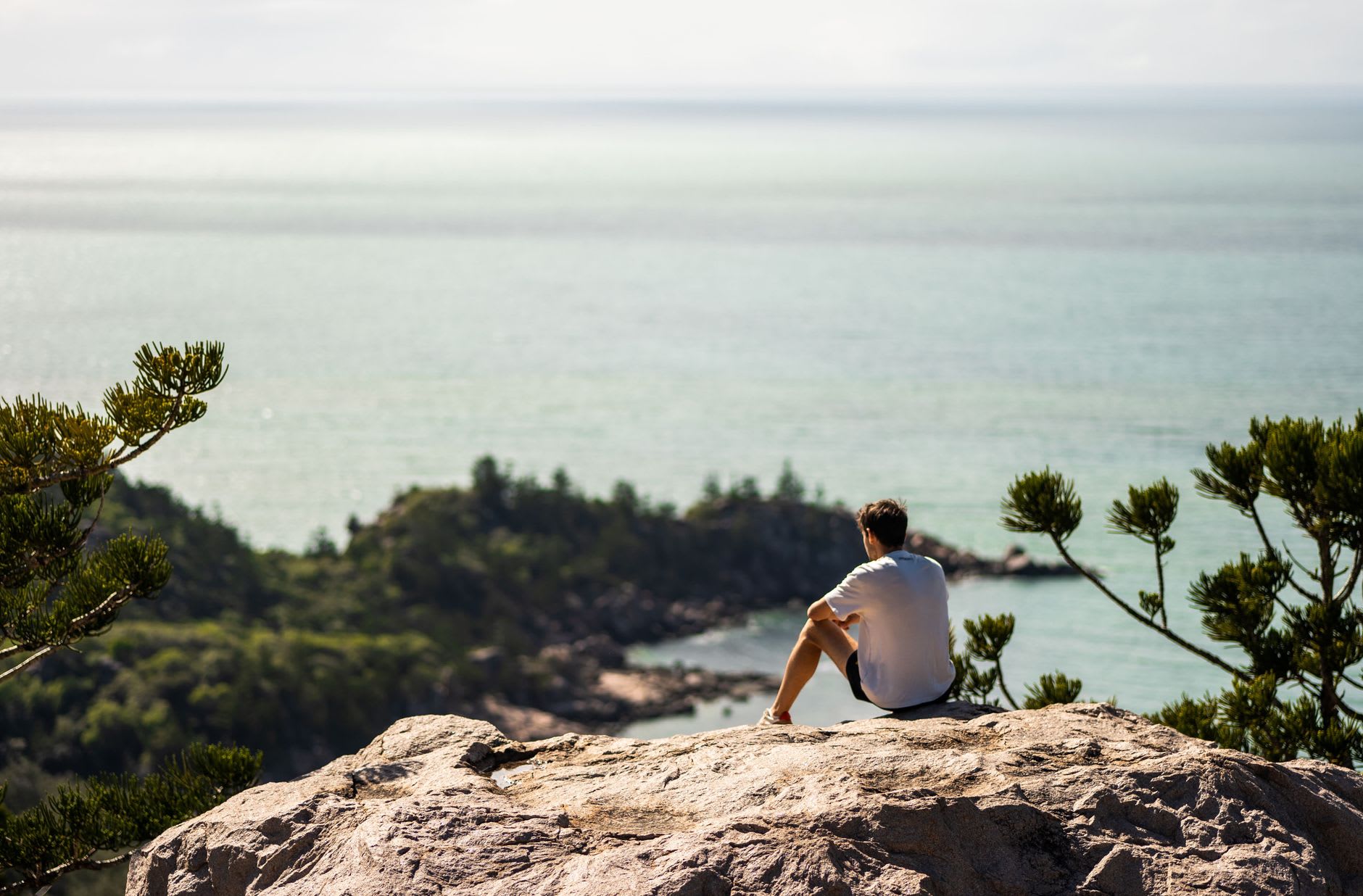
The island is seventy percent national park, which means that for most of its area there is nothing to do except walk the trails through dry sclerophyll forest and encounter whatever Australia has decided to leave there. The koalas are the reason most people come, and they deliver with remarkable consistency — sitting in the forks of eucalyptus trees along the Forts Walk with their expressions of complete disconnection from human affairs, occasionally descending to move from one tree to another with a slowness that makes their schedule incomprehensible. I watched one for a while, trying to read any intention in its movement, and failed entirely. The Forts Walk is the best trail on the island: it winds through ancient granite outcrops and remnant World War II gun emplacements to a lookout over Horseshoe Bay where the water below shifts through six shades of blue depending on the depth, and the Torres Strait pigeon traffic overhead is constant enough to be its own kind of spectacle.
The walking here is genuinely quiet. I spent a full morning on the island’s northern tracks and saw two other walkers and a mob of wallabies grazing at the edge of the grass with the unhurried confidence of animals that don’t have anywhere to be. That quality of solitude — accessible, reversible, manageable, never threatening — is Magnetic Island’s specific gift. You are not in the wilderness; you can be back in Townsville for dinner. But the density of wildlife along the trails, the quality of the light through the eucalyptus, and the view from the granite headlands over the Coral Sea are things the city can’t approximate.
Horseshoe Bay is the island’s largest settlement and social heart: a cluster of cafes, a tavern where the afternoon light comes through the windows in a way that makes cold beer seem like a reasonable response to everything, a beach with water sports hire, and a sand-floored bar where the sunset is a standard feature of the programming. The swimming here is excellent in the dry season — the bay is protected by its headlands, the water is usually calm enough to see the bottom at chest depth, and the stinger nets maintain a safe zone through the jellyfish months. There is a sense on Magnetic Island that things are arranged for the pleasure of the people who live there, and that tourists are welcome participants in that arrangement rather than its primary purpose, which gives the place a social ease that resort destinations often can’t manufacture.
Sea kayaking around the island’s eastern coves — through mangrove-fringed channels and past the granite headlands that drop straight into the Coral Sea — gives you the island at the pace it deserves. The water here is not the resort turquoise of the Whitsundays; it runs deeper and greener and older-feeling, the kind of water that suggests depth and life rather than performance. Snorkelling off the eastern rocks, in the channels between the granite outcrops, turns up fish life that has no particular interest in being photographed.
When to go: April through November is ideal — the dry season, manageable heat, no stingers in the open water. June and July are particularly good: cool enough for comfortable hiking, the koalas are reliably visible, and the island is lively but not overwhelmed. Avoid the school holiday peaks in September if you want easier access to the best spots on the Forts Walk.