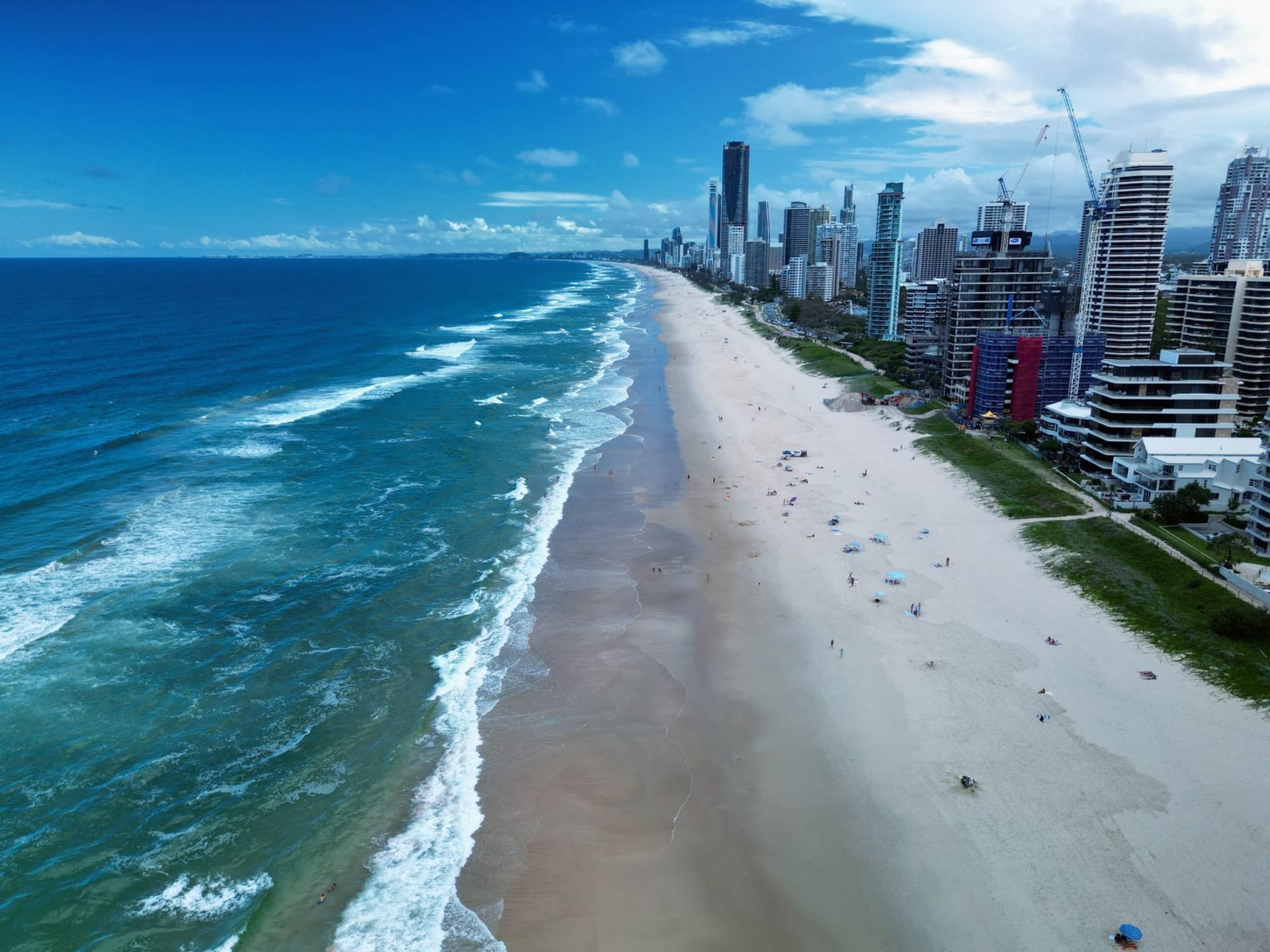
Gold Coast
"Surfers Paradise knows exactly what it is and makes no apologies — which is more than you can say for most places."
The Gold Coast is easier to love from a distance. From the Burleigh Heads headland, looking north across the bay, the high-rises of Surfers Paradise form a wall of glass and concrete along the waterline — a skyline that belongs in Miami or Dubai more naturally than it belongs in subtropical Queensland. But that same view, early on a winter morning before the crowds arrive, has a strange beauty: the towers reflecting the first light, the surf running beneath them in long clean lines, a pelican riding the thermal off the headland with the serene indifference of a creature that has witnessed far stranger things. I came to the Gold Coast without enthusiasm and left having substantially revised my opinion, which is exactly what this place seems to do to people who come with low expectations.
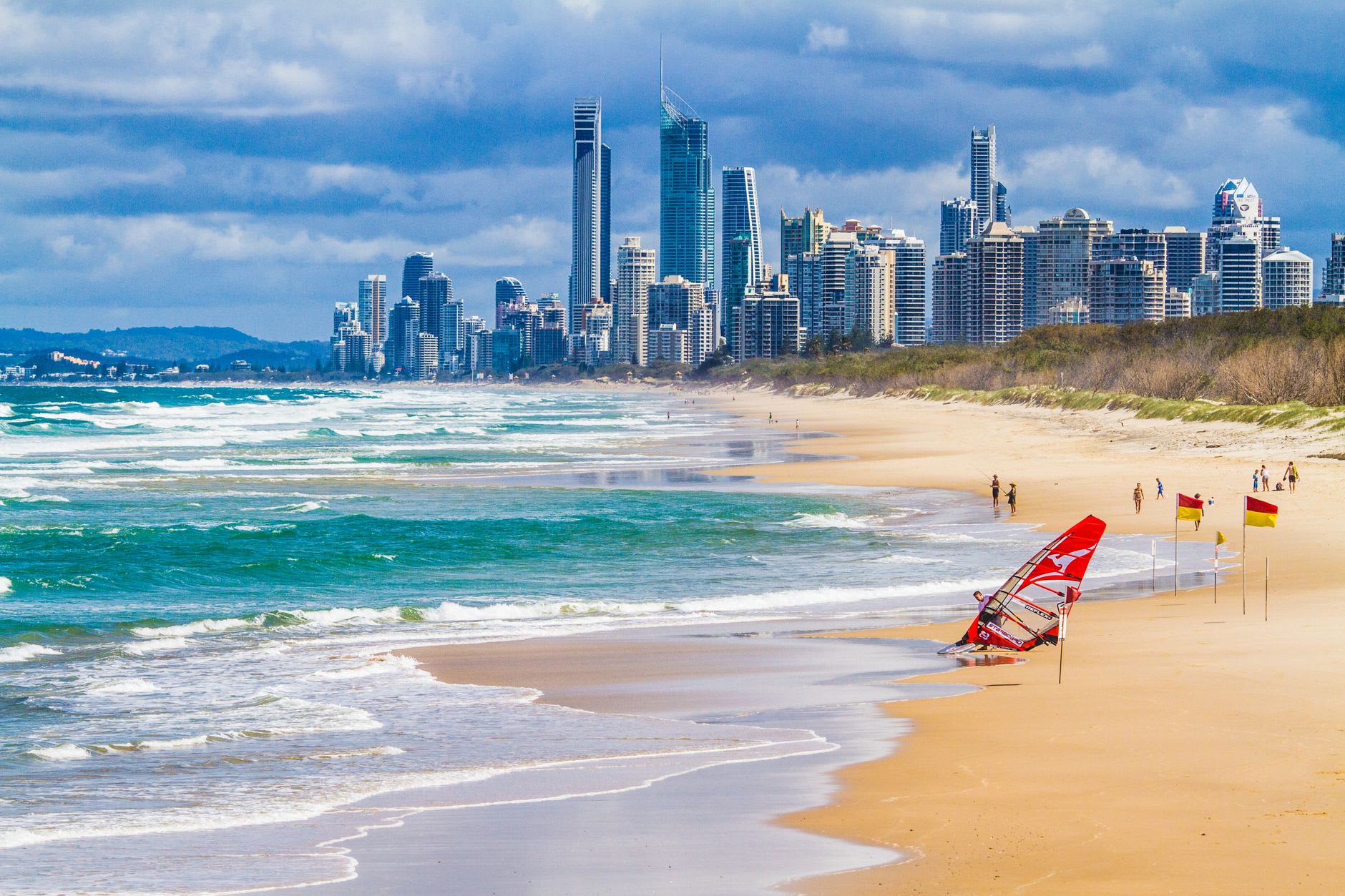
Burleigh Heads is the Gold Coast at its best: a small headland park with walking trails through paperbark and coastal she-oak, a beach that handles the surf well, and a strip of cafes and restaurants along James Street that has made this suburb one of the more interesting eating destinations in southeast Queensland. The coffee culture here is serious — not Sydney-serious, but close — and the quality of the fish and chips at the beach pavilion is the kind of thing that makes you briefly grateful to be alive and facing the ocean. The weekend farmers market draws people who carry hessian bags and argue thoughtfully about natural wine, which tells you something about the demographic shift the suburb has experienced in the last fifteen years.
Surfers Paradise is a different matter entirely. The neon and the nightclubs and the hen parties moving between casino bars — all of it is exactly as it appears on the surface, no hidden layers, no ironic distance available. I walked it once, around midnight, and found it genuinely alive in the way that places built entirely around pleasure sometimes are: loud and lit and unembarrassed, the crowd young and happy and wearing very little. There is an honesty to Surfers that more culturally aspirational destinations sometimes lack. It knows what it is and commits fully to that knowledge, which is its own form of integrity.

The hinterland changes the equation entirely. Lamington National Park — thirty minutes inland up the Numinbah Valley — is a plateau of ancient subtropical rainforest, waterfalls, and walking tracks that see almost none of the coast’s crowd density. The O’Reilly’s Rainforest Retreat has been operating since the 1920s and feeds rainbow lorikeets from the balcony at morning tea with a cheerful chaos that the birds have long since taken for granted. The contrast between standing in that quiet forest with a lorikeet eating from your outstretched hand and the high-rise beach strip forty kilometres away is one of Queensland’s better absurdities.
The surf is the Gold Coast’s honest redemption. From Snapper Rocks at Coolangatta to Kirra, Burleigh, and the points between them, the coast runs one of the most consistent surf lineups in Australia. On the right swell, Snapper Rocks is a right-hander that connects south through Kirra for hundreds of metres without breaking down, and the surfers who ride it — local, practiced, deeply territorial in the nicest possible way — do so with a fluency that makes watching feel like attendance at a sport you hadn’t previously understood properly. The surf here shaped the Australian surfing industry; most of the major shapers, manufacturers, and surf brands were born or matured in these few kilometres of coast.
When to go: April through October is comfortable — cooler, drier, less humid. Christmas and January are peak domestic holiday season and the beaches are crowded. June and July bring the Gold Coast Film Festival and some of the clearest, most pleasant winter days in Australia. The surf peaks in autumn and winter when southern swells run.