Cooktown
"Cooktown doesn't need to try to feel remote — the red dust on your car when you arrive is evidence enough."
The last thirty kilometres into Cooktown are unsealed, which feels appropriate. By the time the road comes down from the Daintree plateau into the wide valley where the town sits between the Endeavour River and the Coral Sea, you’ve driven through three hours of Cape York vegetation — dry eucalyptus savanna, scarlet termite mounds the height of a person, the occasional roadside cattle property operating at a spatial scale that makes the word “farm” inadequate. The unsealed section is the landscape’s way of ensuring you’ve committed. I arrived in the middle of a weekday afternoon with red dust on the hire car and a specific thirst that only cold beer in an old pub was going to satisfy, and I walked straight to the hotel on the waterfront and drank it looking out at the estuary and felt, with complete conviction, that I was exactly where I should be.
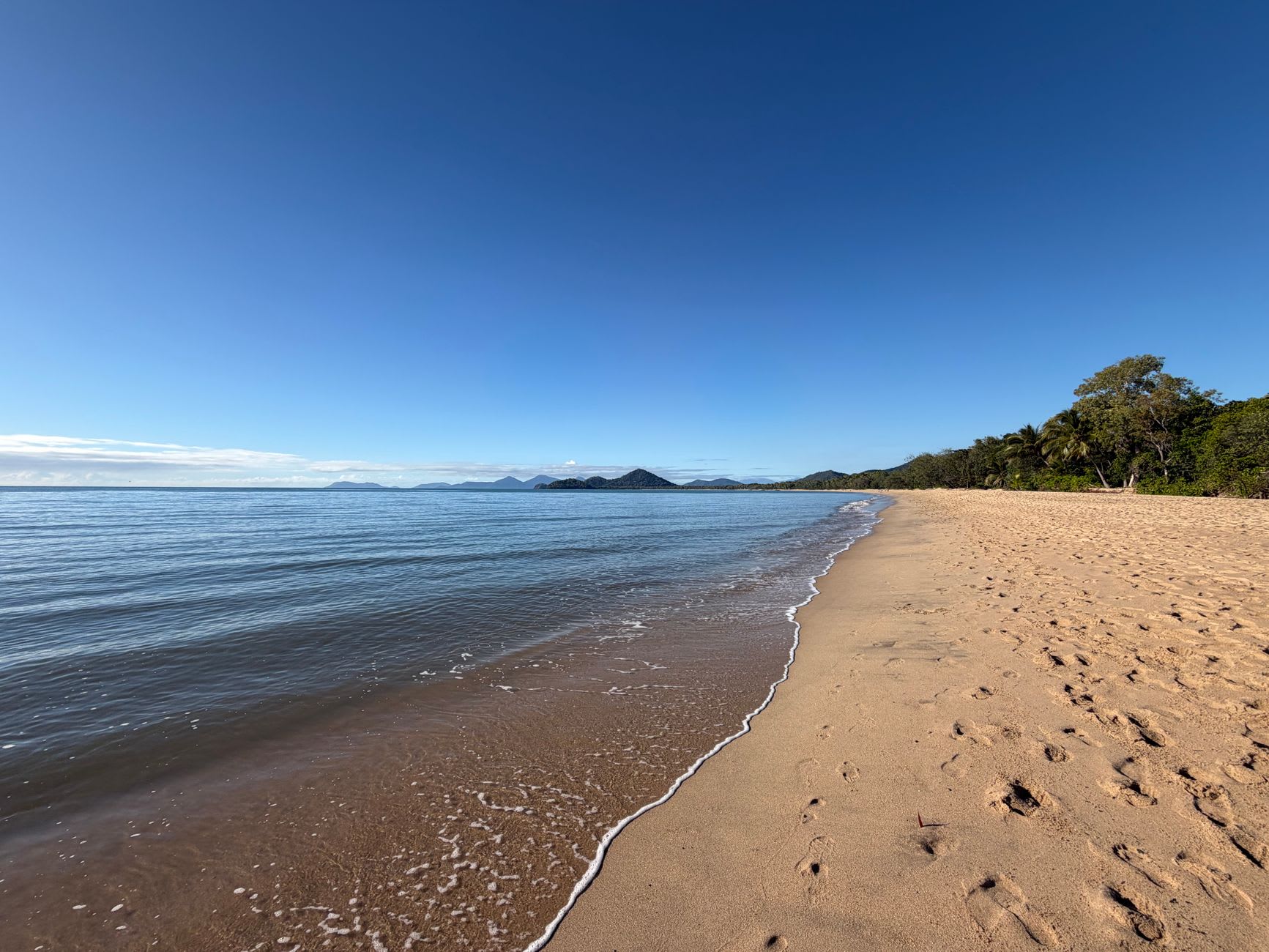
Cooktown is as close to the end of something as a sealed road can take you in Australia. Population around 2,500, one main street — Charlotte Street — running between the pub and the river, and a history that begins dramatically in June 1770 when James Cook beached the Endeavour here for seven weeks to repair a coral-strike and became, involuntarily, the first European to attempt any sustained interaction with the Guugu Yimithirr people of this Country. The James Cook Museum, occupying a beautiful old convent on Helen Street, is one of the better regional history museums in Australia — not because it sanitises the encounter but because it takes the Aboriginal perspective as seriously as it takes Cook’s log, and the result is something more complicated and more honest than colonial triumphalism tends to allow. The original anchor and cannon recovered from the reef are kept here, and the anchorweight of Cook’s specific predicament — 1,200 kilometres from the nearest European settlement, coral-holed, in a country he had no framework for understanding — comes across in the artifacts without the museum needing to labour the point.
The Botanic Gardens at the southern end of Charlotte Street operate at the pleasant edge of institutional capacity: wonderful plantings that include an ancient cycad garden predating the town itself, paths that are half-maintained in a way that suggests real use rather than decorative upkeep, and information signage that alternates between scholarly and mystifying. A resident cassowary lives on the grounds — raised from a chick after being orphaned years ago — and moves between the garden beds with a comfortable authority that suggests the gardens belong to the bird and the visiting hours are a mutual arrangement.

The Endeavour River estuary is the town’s true orientation. At full tide it is broad and brown and full of crocodile warning signs that the locals treat as ambient furniture. A fishing charter from the marina will take you into the upper reaches where the mangroves press close and the mud banks surface at low tide with bird life that the southern states don’t have: nankeen night herons, azure kingfishers working the creek banks with a precision that seems almost mechanical, the red-winged parrot in the riverside paperbarks. The barramundi fishing in this river is the reason people make dedicated journeys from Sydney and Melbourne. I don’t fish, but I understand why you would here — there is something about the combination of remoteness, beauty, and the practical necessity of patience that makes complete sense in this particular landscape.
The night sky makes the final argument. Cooktown has almost no light pollution, and the Milky Way appears overhead not as a smear but as a solid, three-dimensional river of light with depth and texture — the kind of sky that makes city dwellers briefly angry about what they’ve been missing. I sat on the hotel deck for two hours after dinner watching it move, and in the morning I was a better traveller for having done so.
When to go: May through October is the only realistic window — the dry season, when the roads are passable, the heat is manageable, and the river is at its most beautiful. The wet season from November through April closes the southern road access and brings cyclone risk. Some visitors intentionally come in the wet for the green transformation of the landscape and the fuller solitude — but come prepared.