Sainte-Rose-du-Nord
"Sainte-Rose-du-Nord is the village the fjord kept for itself before the road finally found it."
A village of a few hundred people tucked into a cove on the Saguenay's north shore, routinely called one of the prettiest in Quebec, and quiet enough that it still feels like a discovery.
The road into Sainte-Rose-du-Nord drops down through spruce forest so suddenly that the village seems to arrive before you’re ready for it — a tight cove on the Saguenay’s north shore, houses stacked up the hillside above a small marina, the fjord opening wide on either side. It’s a village of a few hundred people, connected to the rest of the region by a single road that wasn’t paved until well into the twentieth century, and that isolation is part of why it still feels the way it does: unhurried, undeveloped, more concerned with its own fishing boats than with the visitors who’ve started arriving in growing numbers to photograph it.
I stopped at the small marina and talked with a man mending nets who told me his family had fished the Saguenay here for four generations, mostly for the small char and eel that populate the fjord’s brackish upper layer. The village’s economy has shifted since — tourism has crept in gently, a handful of auberges and a small maritime museum — but the working waterfront still functions as a working waterfront, boats coming and going with the tide rather than the tour schedule.

The lookout above the village, a short walk up from the church, is the shot everyone comes for — the cove laid out below with its cluster of rooftops, the marina, and the fjord stretching away toward Tadoussac in one direction and Chicoutimi in the other. I went up in the early evening, when the light was doing something slow and gold across the water, and had the entire viewpoint to myself for the better part of an hour, which felt like a small miracle given how frequently the village appears in Quebec tourism photography.
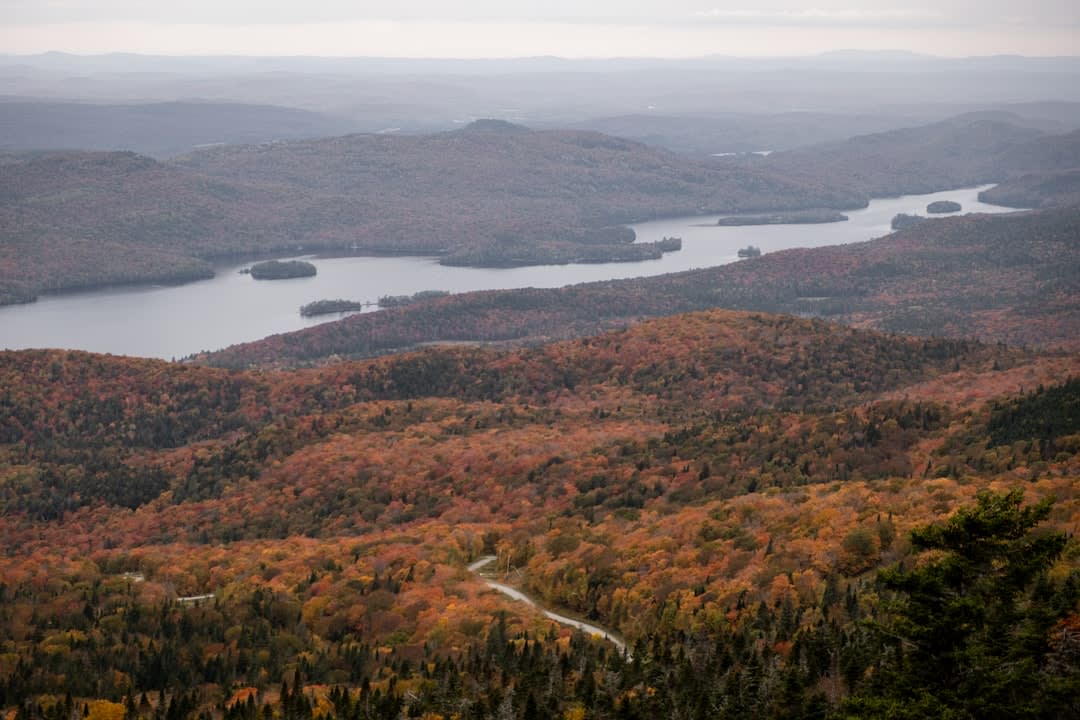
There’s a small grotto and a set of caves near the shoreline that locals will point you toward if you ask, remnants of the same limestone geology that shows up elsewhere along this stretch of the fjord, and a network of short hiking trails through the surrounding forest that give more of the same tucked-away, half-forgotten quality that makes the village worth the detour off the main highway.
When to go: June through September for the mildest weather and calmest water in the cove. Early morning or evening light is essential for the hillside lookout — midday sun flattens the view considerably.
Keep exploring
More from Québec
 quebec
 Sept-Îles
The Côte-Nord's biggest town, an iron-ore port and Innu cultural hub sitting on one of the largest natural harbors in the world.
Explore quebec
 Shawinigan
A hydroelectric boomtown built around a waterfall, now telling its own industrial story with more honesty than nostalgia.
Explore quebec
 Sherbrooke
The unofficial capital of the Eastern Townships, a former mill city rebuilding itself around its rivers and its university.
Explore quebec
 Sucrerie de la Montagne
A working sugar shack in the woods of Rigaud where maple syrup gets boiled the old way and lunch arrives family-style until you physically cannot eat any more.
Explore quebec
 Sutton
A village at the foot of a ski mountain near the Vermont border, with a main street that feels handpicked and hiking trails that outlast the snow.
Explore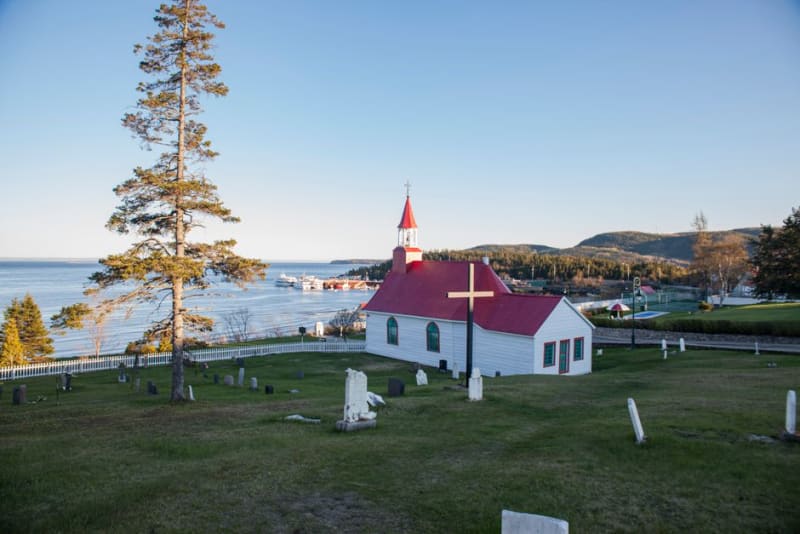 quebec
 Tadoussac
The village where the Saguenay fjord meets the St. Lawrence and turns the water into a whale feeding ground — one of the oldest trading posts in North America, still built around the tide.
Explore