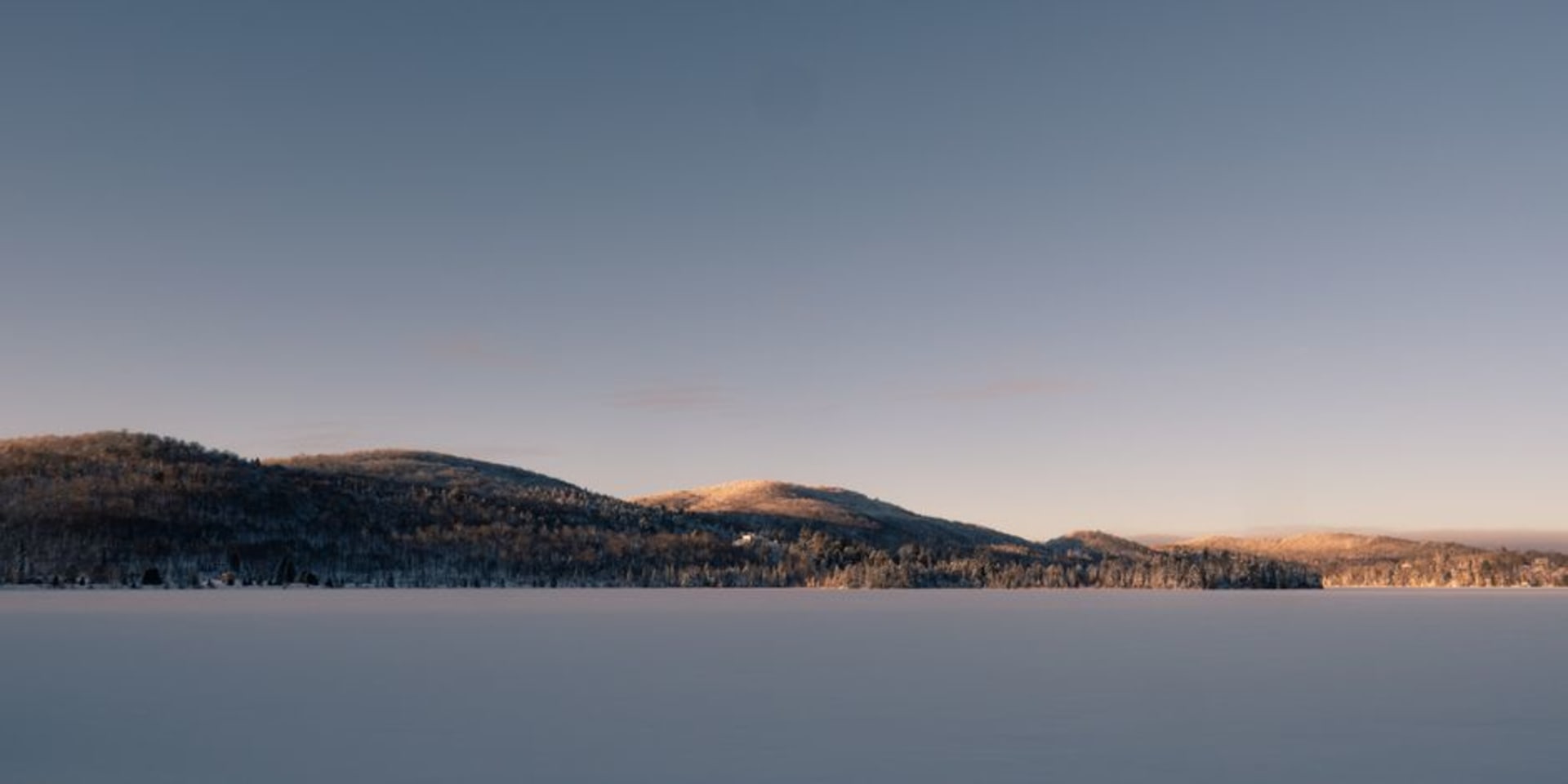
Mont-Tremblant
"The village looks fake until you remember someone had to actually build all this, and then it looks like ambition instead."
The Laurentians' flagship resort village, where a pedestrian cobblestone town stacks itself against a mountain that turns into 96 ski runs every winter.
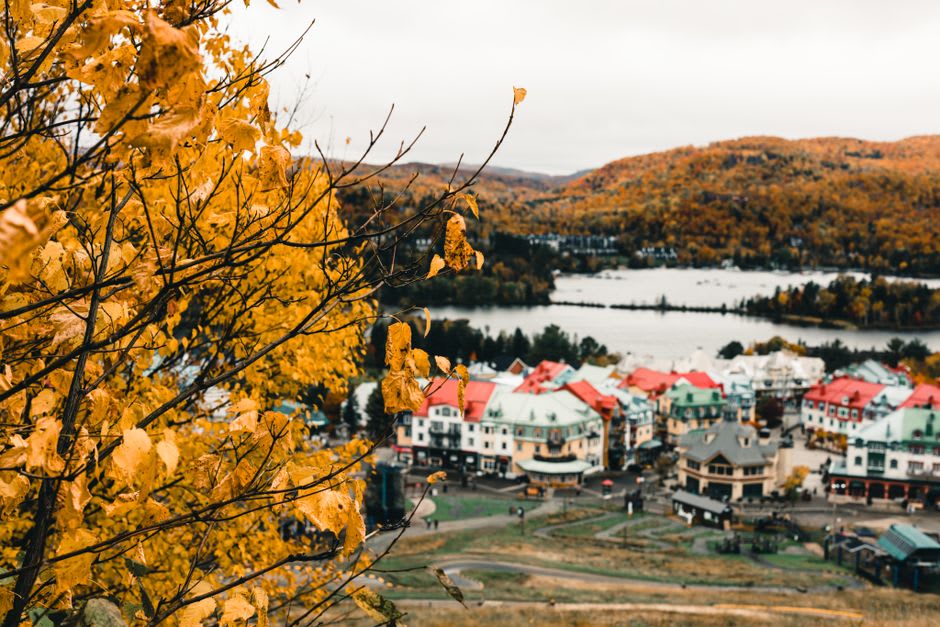
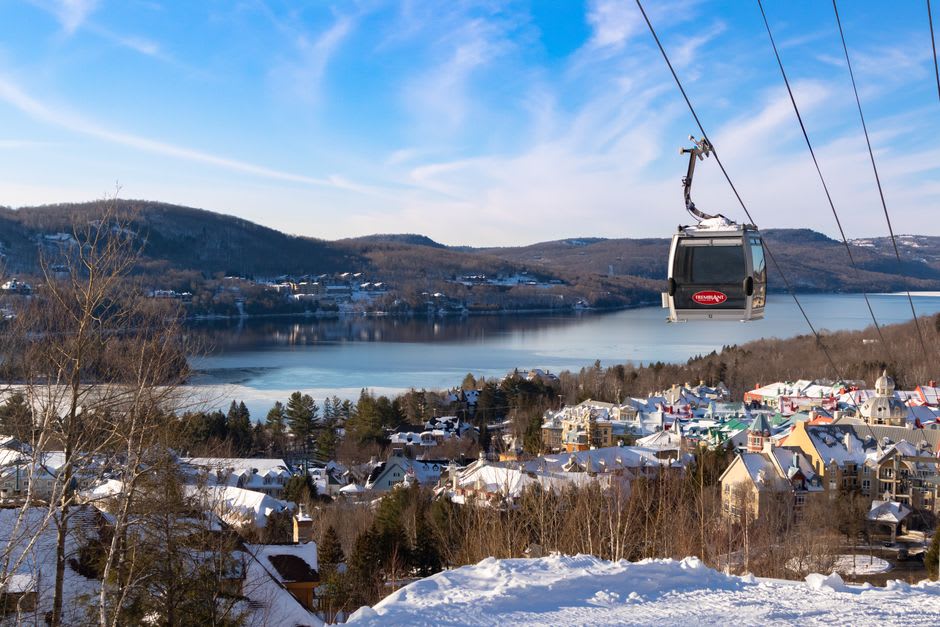
Lia called it “Disneyland for skiers” within about four minutes of walking into the pedestrian village, and she wasn’t wrong, though I’d argue that’s not an insult. The base of Mont-Tremblant is a deliberately constructed thing — candy-coloured buildings stacked up a gentle slope, a gondola at the top of the main street, terraces stocked with mulled wine in winter and rosé in summer — and it works precisely because it commits fully to the bit. We arrived in early February, snow banked waist-high along every railing, and the whole village had the lit-up, slightly theatrical quality of a place that knows exactly what it’s selling.
The mountain itself is the real draw and it earns the reputation — 96 trails, the highest vertical drop in the Laurentians at 645 metres, and a north-south split that means you can chase either sun or shade depending on the hour. I am, by French Alps standards, a mediocre skier, and I still had one of the better ski days of my life on the Nansen run, a long cruiser through birch forest that dumps you back at the village with your legs shaking and your face frozen into something like a grin. Lia, who grew up snowboarding in the Pyrenees, went straight for the more technical terrain on the south side and came back reporting the moguls were “properly rude,” which from her is a compliment.
What surprised me was how well the resort works outside ski season. In summer the same slopes become an extensive mountain biking network, the lake at the base — Lac Tremblant — turns into a paddleboarding and swimming spot ringed by pine forest, and the golf courses designed by Tom Fazio and others draw a different, quieter crowd entirely. We came back in August once and the village, minus the snow, felt almost like a different town — slower, greener, full of families instead of ski boots.
The food scene has grown up around the tourism rather than despite it — La Forge does a solid Québécois steakhouse menu, and there’s a decent microbrewery, La Diable, that’s been pouring beer to skiers since before craft beer was a word anyone used up here. It’s not a place to go looking for hidden gems. It’s a place that already knows what it is and does it very well.
When to go: January through March for skiing, with February usually delivering the most reliable snowpack. June through September for the lake, mountain biking, and golf, when the village empties out just enough to feel relaxed rather than packed.