Americas
Québec
"Québec City is what happens when France refuses to let go, and wins."
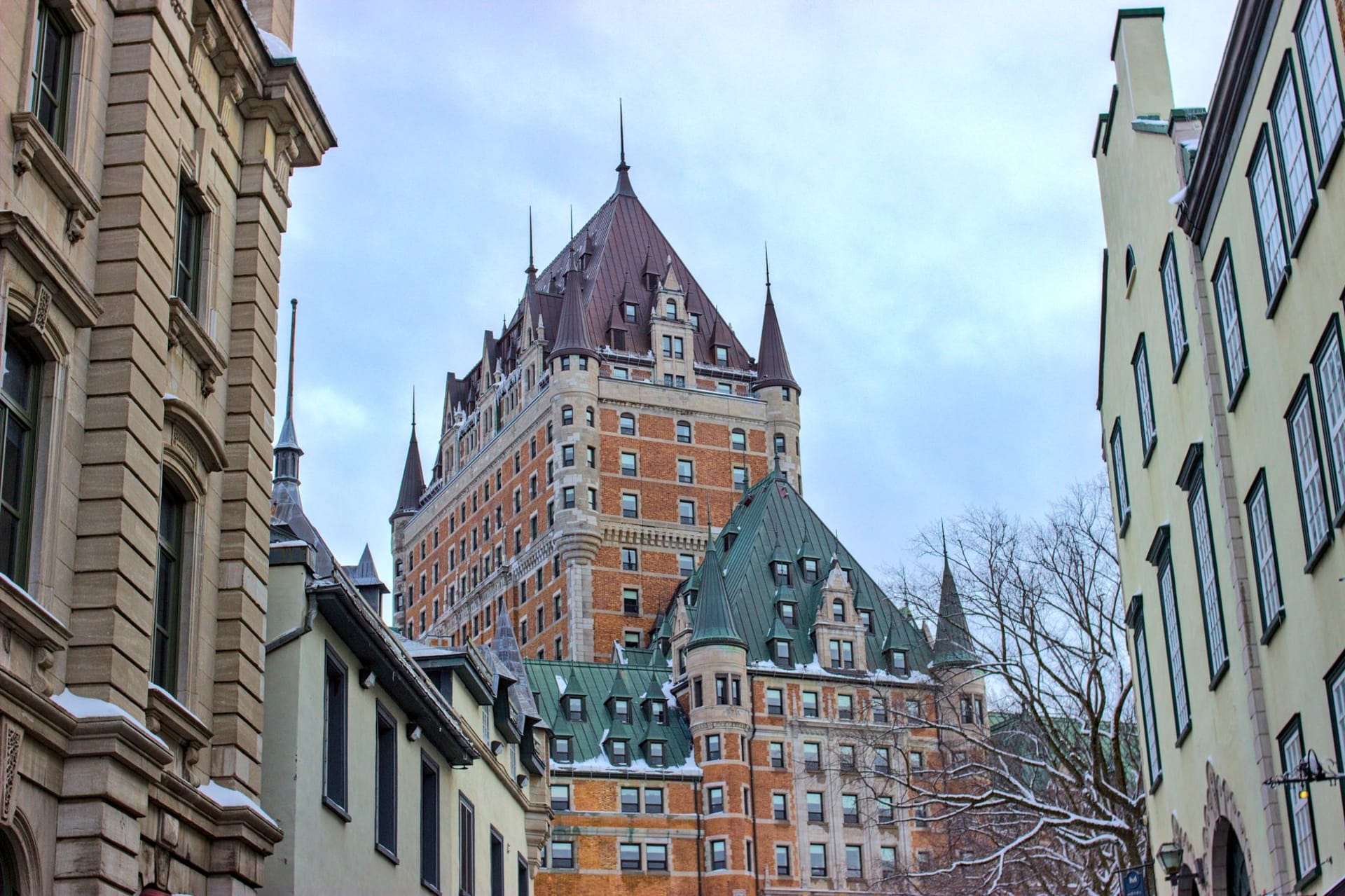
I arrived at Gare du Palais in February, which I do not recommend and also completely recommend. The cold had a personality — not the neutral cold of altitude or the wet cold of the ocean, but something drier and more deliberate, the kind that makes the air creak. Walking up the hill from Basse-Ville to Haute-Ville, through the old stone gate into the walled city, with Château Frontenac looming above and the St. Lawrence frozen solid below, I understood for the first time what people mean when they say a city feels like somewhere.
This is the thing about Québec that no amount of reading prepares you for: it is genuinely, uncomplicatedly French. Not French-adjacent, not French-influenced — French. The language, the bread, the way people argue about cheese. I grew up in France and I’ve spent years in Mexico, and Québec occupies a strange third space between the two: the linguistic DNA of home, the winter ferocity of somewhere entirely new. Joual — the local French vernacular — took me a few days to fully track, but once my ear adjusted I felt a warmth in it that standard Parisian French sometimes lacks. People here are proud of their language in a way that doesn’t read as defensive so much as joyful. They know what they preserved.
The food is the other revelation. Poutine is the cliché, but eat it at least once at a counter in the Marché du Vieux-Port at midnight and you’ll understand why the cliché endures — cheese curds that squeak, gravy that coats every fry, pure winter fuel. Beyond that, there’s tourtière at the Épicerie J.A. Moisan (the oldest grocery store in North America, still operating on Rue Saint-Jean), cretons on thick sliced bread, sugar pie from any boulangerie you walk past. Montréal gets the gastronomic headlines but Québec City has a quieter, older version of the same inheritance.
When to go: January and February for the Winter Carnival — the ice sculptures on the Plains of Abraham and the ice canoe race across the half-frozen St. Lawrence are genuinely unlike anything else I’ve seen. September and October for fall colour and crisp temperatures without the crowds. Avoid July if you can; the tourist density in the walled city becomes difficult.
What most guides get wrong: They treat Québec City as a day trip from Montréal. It’s not — it’s a full destination that rewards three or four days minimum. The two cities share a province and a language and almost nothing else. Montréal is cosmopolitan and restless; Québec City is old and rooted and quietly sure of itself. They are not interchangeable, and choosing between them is a false problem. Go to both.