Mont Orford
"Orford is a small mountain that behaves like it knows exactly how good it has it."
A national park built around a single mountain, doing double duty as a ski hill in winter and a hiking and arts destination the rest of the year.
Mont Orford tops out at 853 meters, which by any serious mountain standard is barely a hill, and yet it dominates the Eastern Townships landscape in a way that peaks twice its height fail to manage in bigger ranges. Driving south from Magog, it appears suddenly above the tree line, a solid green wall in summer or a white one in winter, and the whole regional identity seems to orient around it the way a small town orients around its church spire.
We hiked the Mont Orford trail on a warm Saturday in early October, starting from the base near Étang-aux-Cerises and climbing steadily through hardwood forest that turned, as we gained elevation, increasingly gold and red. The summit isn’t dramatic in a Rockies sense — no exposed scrambling, no vertigo-inducing drops — but the payoff is a 360-degree view over a patchwork of lakes (Memphremagog to the south, Massawippi further east) and forest that runs unbroken to the horizon in every direction. Lia, who’d hiked considerably bigger mountains with me in Mexico and Patagonia, admitted this modest Quebec peak had one of the better summit views she’d seen relative to the effort required.
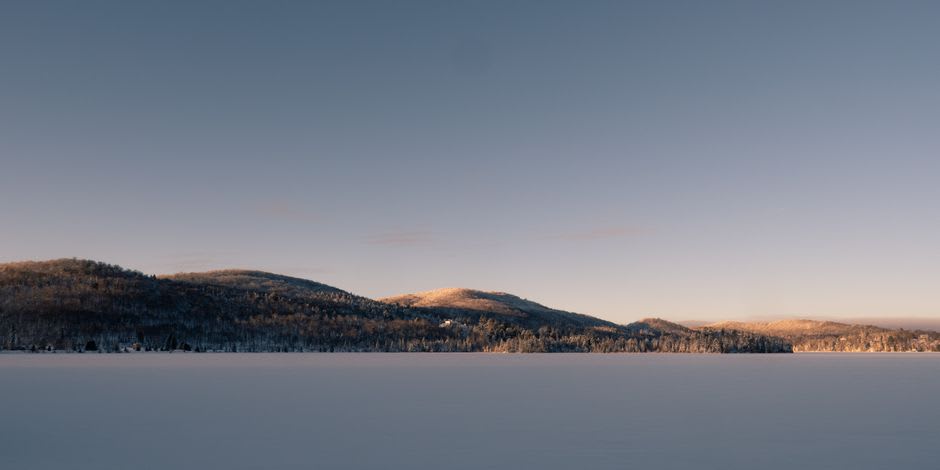
The mountain anchors Parc national du Mont-Orford, one of Quebec’s oldest provincial parks, and the park does something I appreciate: it refuses to be just one thing. In winter, Mont Orford becomes a serious ski hill, one of the largest vertical drops in the Townships, with terrain that draws skiers up from Montreal and down from the surrounding villages. In summer, the same slopes become hiking and mountain biking trails, and the park’s lakes — Stukely and Fraser — open for swimming and canoeing. There’s also, improbably, a well-regarded classical music festival, the Orford Musique academy, which has been training young musicians and hosting summer concerts in a hall at the foot of the mountain since the 1950s.

We ended the day at Lake Stukely, swimming in water cold enough to make you gasp and clear enough to see the bottom at four meters, with the mountain we’d just descended visible above the treeline behind us. It’s a good rhythm, this one — up the mountain, down into the lake, repeat as needed.
When to go: Late September through mid-October for the best hiking and foliage combination. December through March for skiing, when Orford’s vertical drop and reliable snow make it one of the better winter options within reach of Montreal. July and August for lake swimming and the music festival.
Keep exploring
More from Québec
 quebec
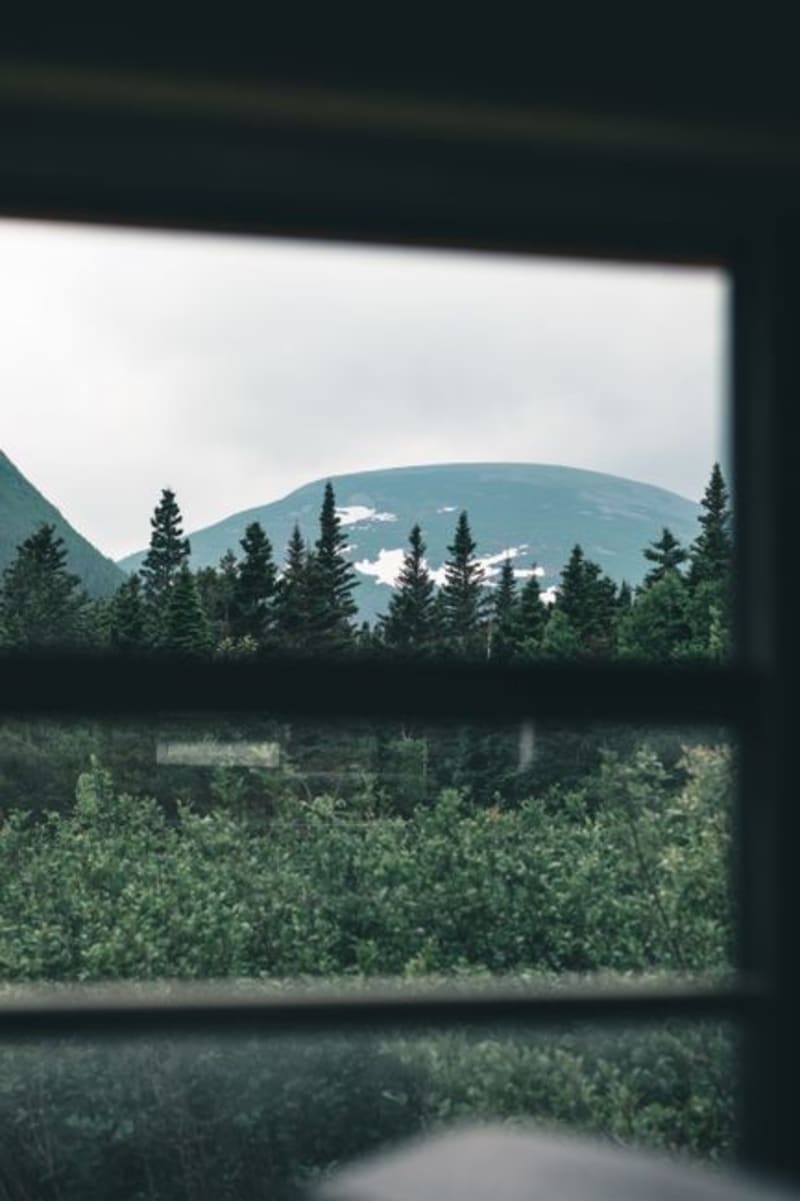
 Mont-Sainte-Anne
Quebec City's home mountain — a ski hill by winter and one of the continent's foundational mountain-biking destinations by summer, twenty minutes from the walled city and worlds away from it.
Explore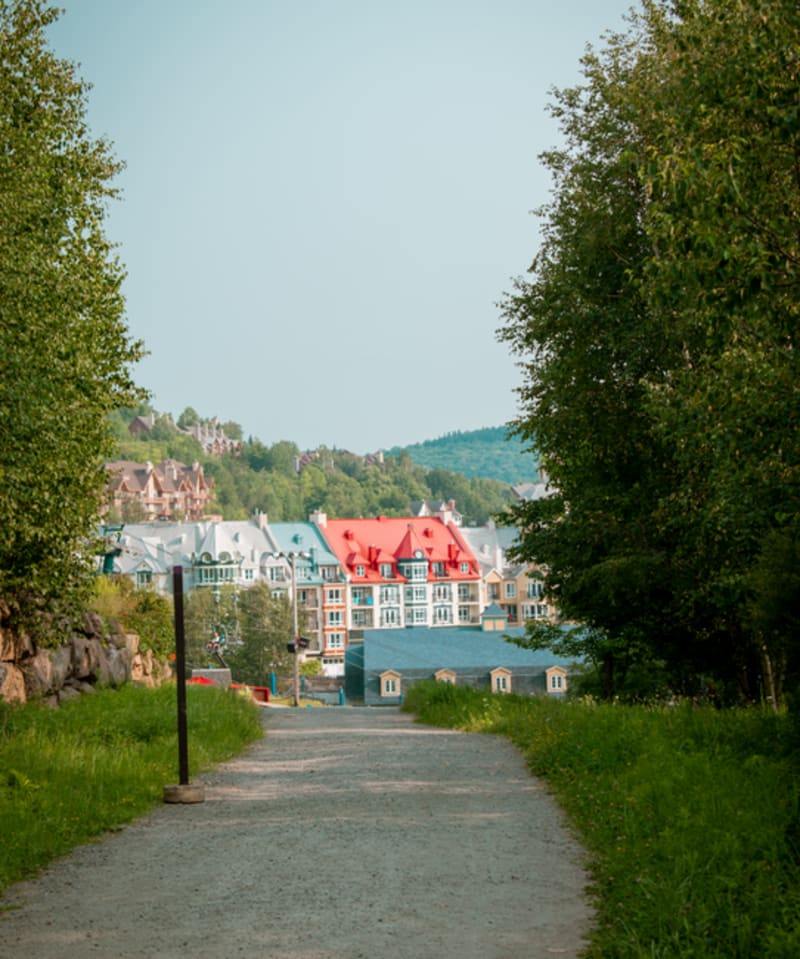 quebec
 Mont-Tremblant
The Laurentians' flagship resort village, where a pedestrian cobblestone town stacks itself against a mountain that turns into 96 ski runs every winter.
Explore quebec
 Montebello
A small Outaouais village built around the largest log structure on earth — Château Montebello — and the summit that once tried to make it famous.
Explore quebec
 Montmorency Falls
The waterfall 30 metres taller than Niagara that Quebec mentions casually, as if everyone has one.
Explore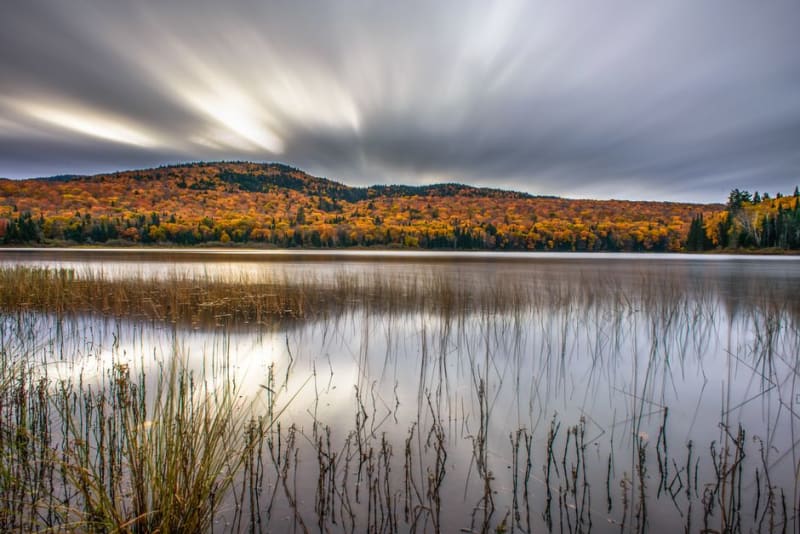 quebec
 Monts-Valin National Park
The snow-ghost mountains north of the Saguenay fjord, where wind and cold sculpt the conifers into shapes that look more like sculpture than forest.
Explore quebec
 Morin-Heights
The Laurentians' anglophone-founded mountain biking hub — a small, low-key village where Scottish and English settlers left their mark and single-track trails now cover the surrounding hills.
Explore