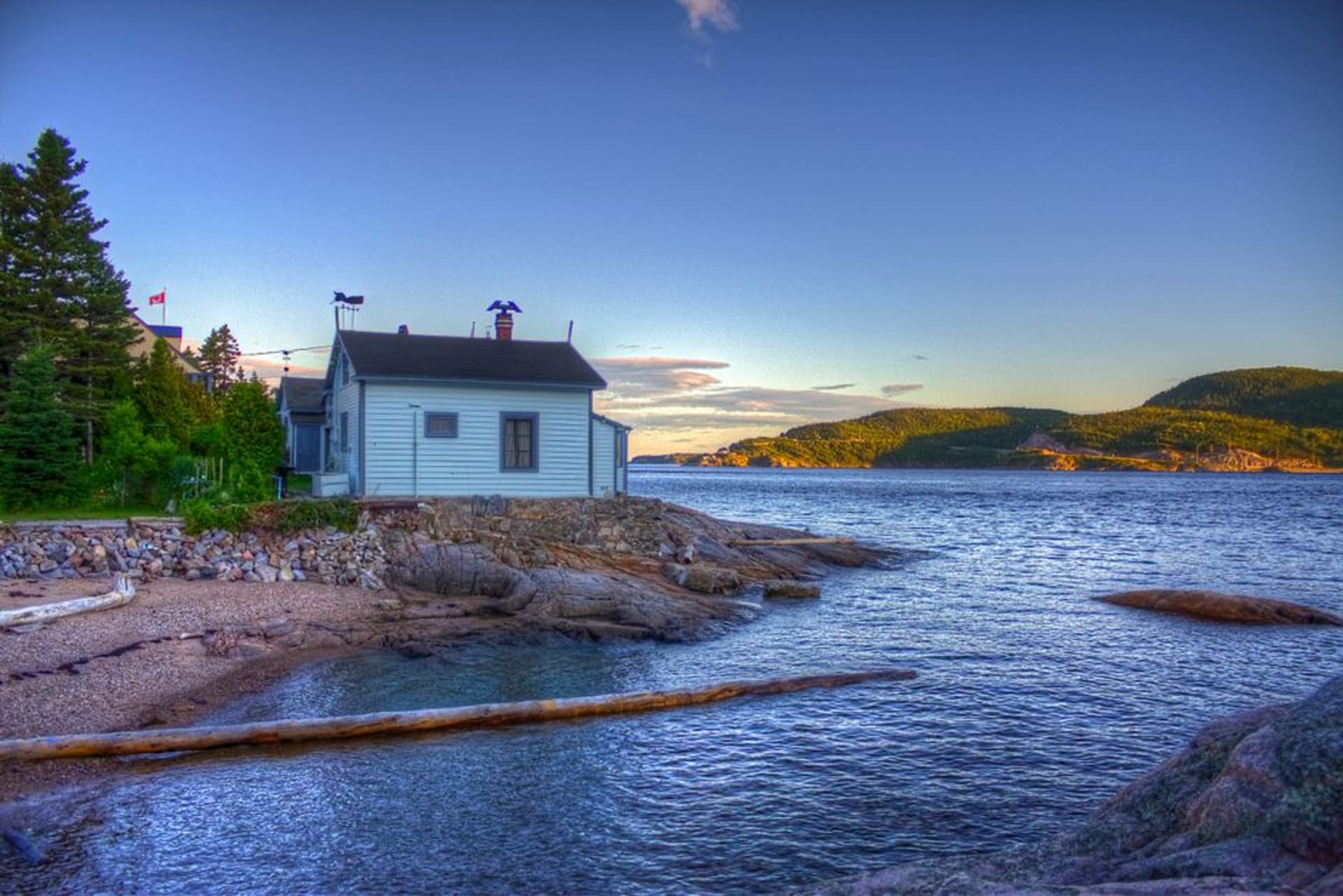
Miguasha
"Miguasha is a small park with a genuinely enormous claim: this cliff is where you can watch, in stone, the exact moment life decided to leave the water."
A UNESCO fossil cliff holding the best-preserved record on Earth of fish learning to walk out of the water — 380 million years compressed into one small park.
I didn’t expect a provincial park on a quiet stretch of the Baie des Chaleurs to be one of the more scientifically important places I’ve stood in my life, but Miguasha earns that without exaggeration. The cliffs here, eroding steadily into the Restigouche River estuary, hold the best-preserved fossil record anywhere on Earth of the Devonian period — specifically, the era known to paleontologists as the Age of Fishes, when the ancestors of every land vertebrate, including us, were still finishing the transition out of the water. UNESCO listed it as a World Heritage Site for exactly this reason, and the on-site museum doesn’t oversell the claim.
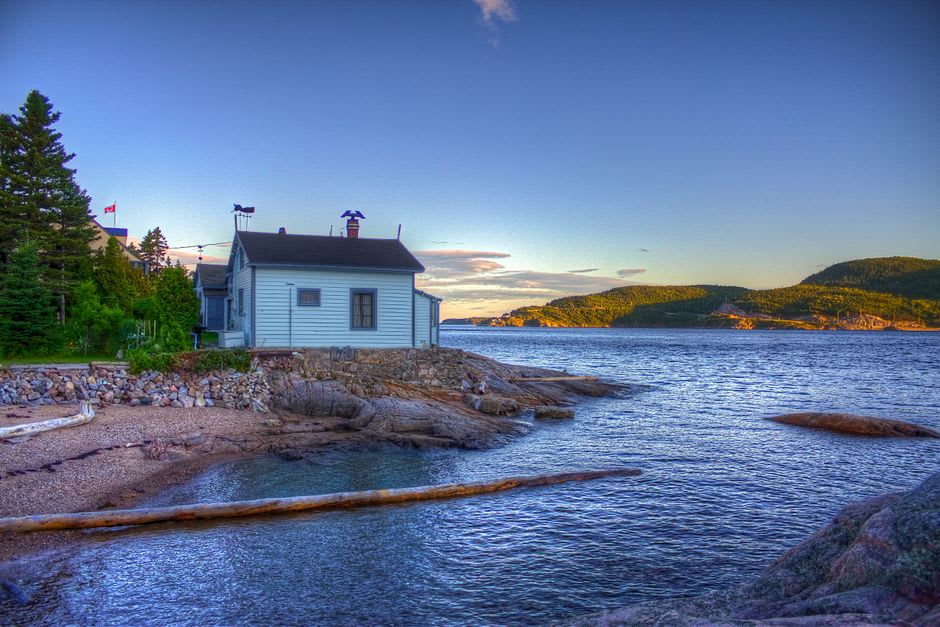
The star specimen, and the reason paleontologists travel here from around the world, is Eusthenopteron — a lobe-finned fish with limb-like bone structure inside its fins, one of the clearest known transitional fossils between fish and the first four-legged land animals. The museum has original specimens on display, including fossils found just decades ago that are still being studied, and a guided walk down to the cliff base (access is controlled to protect the site, so you go with a Parks Quebec naturalist) lets you see the actual fossil-bearing strata still being exposed by tidal erosion. Our guide pulled a small fragment of fish scale out of a recently fallen piece of shale in front of us, unplanned, which did more to make the site feel alive than anything in the exhibit halls.
What struck me most, walking the shoreline afterward with Lia, was the quiet of the place. Miguasha doesn’t have the crowds of Percé or the drama of Forillon — it’s a modest park on a modest bay, and the thing it’s protecting is invisible unless someone explains what you’re looking at. Once they do, you can’t stop noticing the rock face differently: not scenery, but archive.
When to go: The park and museum operate June through September; guided cliff-base walks depend on tide and weather and are worth booking ahead. Go slow through the museum before the shoreline walk — the fossils make far more sense once you’ve seen the specimens up close first.