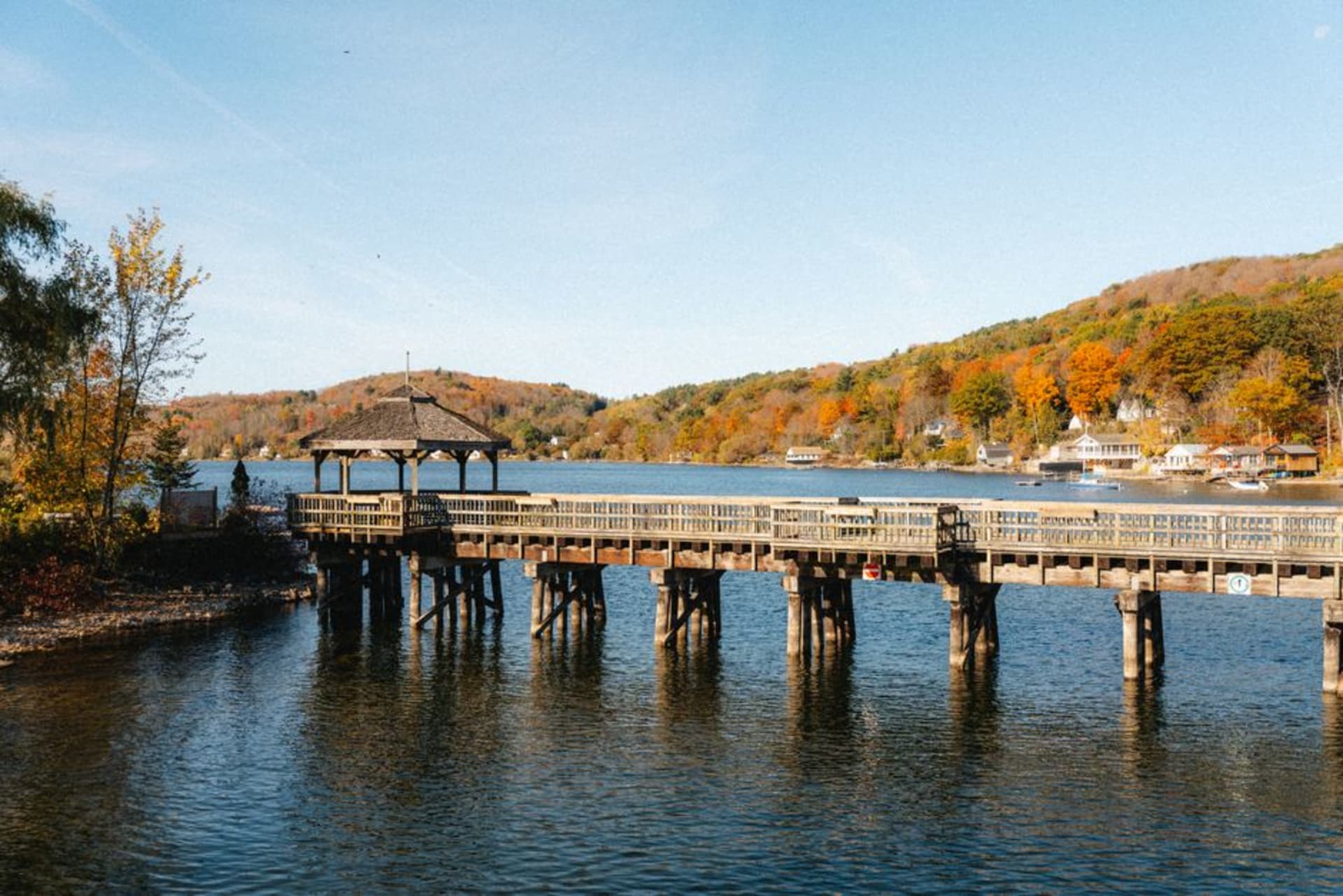
Lake Massawippi
"Massawippi doesn't perform for you. It just sits there being beautiful, which somehow works better."
A long glacial lake ringed by Victorian summer estates and quiet forest — the Eastern Townships at their most unhurried.
Lia found Lake Massawippi on a map before I did, tracing the little blue shape south of Sherbrooke and asking why we’d never been. Good question. We’d spent three summers in Quebec by then and somehow skipped the one lake locals kept mentioning in the same breath as their grandparents’ cottages. So we drove down from Montreal on a Friday in September, windows open, the highway narrowing into two-lane roads lined with sugar maples just starting to turn, and arrived at the north end of the lake as the light went low and gold across the water.
The lake itself is long and narrow, glacially carved, running roughly north-south for about ten kilometers between low forested hills. What struck me first wasn’t the water — plenty of lakes are pretty — but the houses along its shore. Wealthy Americans and English-Canadians built summer estates here in the late 1800s, fleeing the heat of Boston and Montreal, and a surprising number of those grand shingled cottages still stand, half-hidden behind cedar hedges, docks reaching out into water so clear you can watch the smallmouth bass move underneath your canoe.
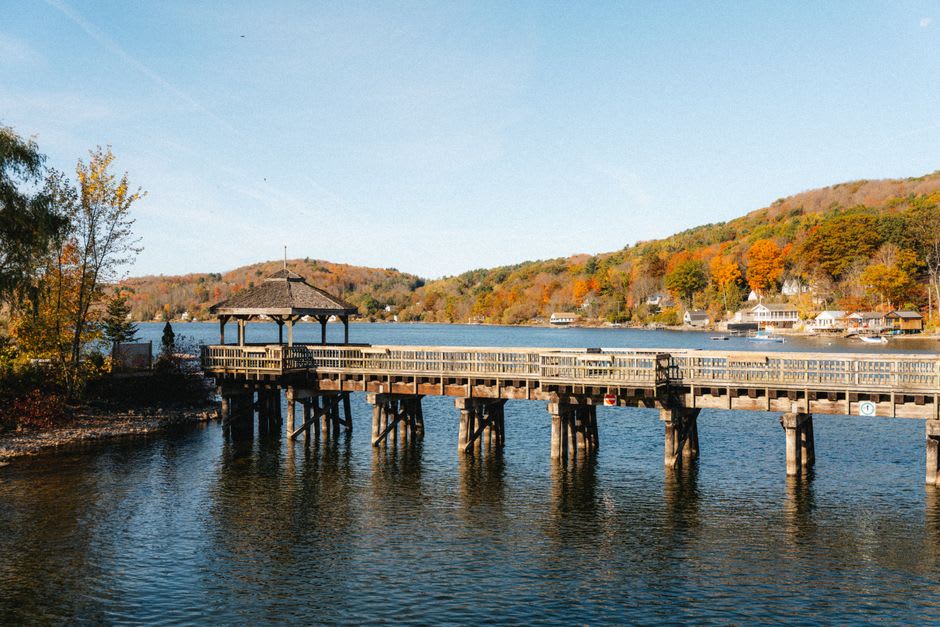
We rented a canoe from a small outfitter near the public beach in Ste-Catherine-de-Hatley and paddled south for a couple of hours, hugging the western shore where the old estates give way to undeveloped forest. There’s a stillness to Massawippi that I associate more with lakes in Scandinavia than with anything I’d previously experienced in North America — no motorboats roaring past, no music from shoreline bars, just the occasional loon call and the sound of our own paddles. Lia, who grew up sailing off Brittany, kept saying it reminded her of nowhere and everywhere at once, which is about the best compliment a landscape can get.
Wine is the other reason people come to this corner of the Townships now. The lake sits inside what’s become Quebec’s most serious wine region, and a handful of vineyards on the surrounding hillsides — chosen specifically for the microclimate the lake creates, moderating frost in spring and fall — produce cool-climate whites and hybrid reds that have genuinely surprised me. We stopped at a small producer on the eastern shore for a tasting that ran long because the owner wanted to talk about frost risk for forty-five minutes and neither of us minded.
We stayed two nights at a small auberge on the north shore, the kind of place with a wraparound porch and a breakfast that took ninety minutes because nobody was in a hurry to leave the table. That, more than the canoeing or the wine, is what I’d tell people to come here for — Massawippi teaches you to slow down by simply refusing to give you a reason to rush.
When to go: Late September to mid-October for fall colour reflected in the water, arguably the best foliage viewing angle in the Townships. June through August for swimming and canoeing when the water has warmed. Avoid deep winter unless you’re specifically chasing cross-country skiing on the surrounding trails — the lake itself goes quiet and frozen.