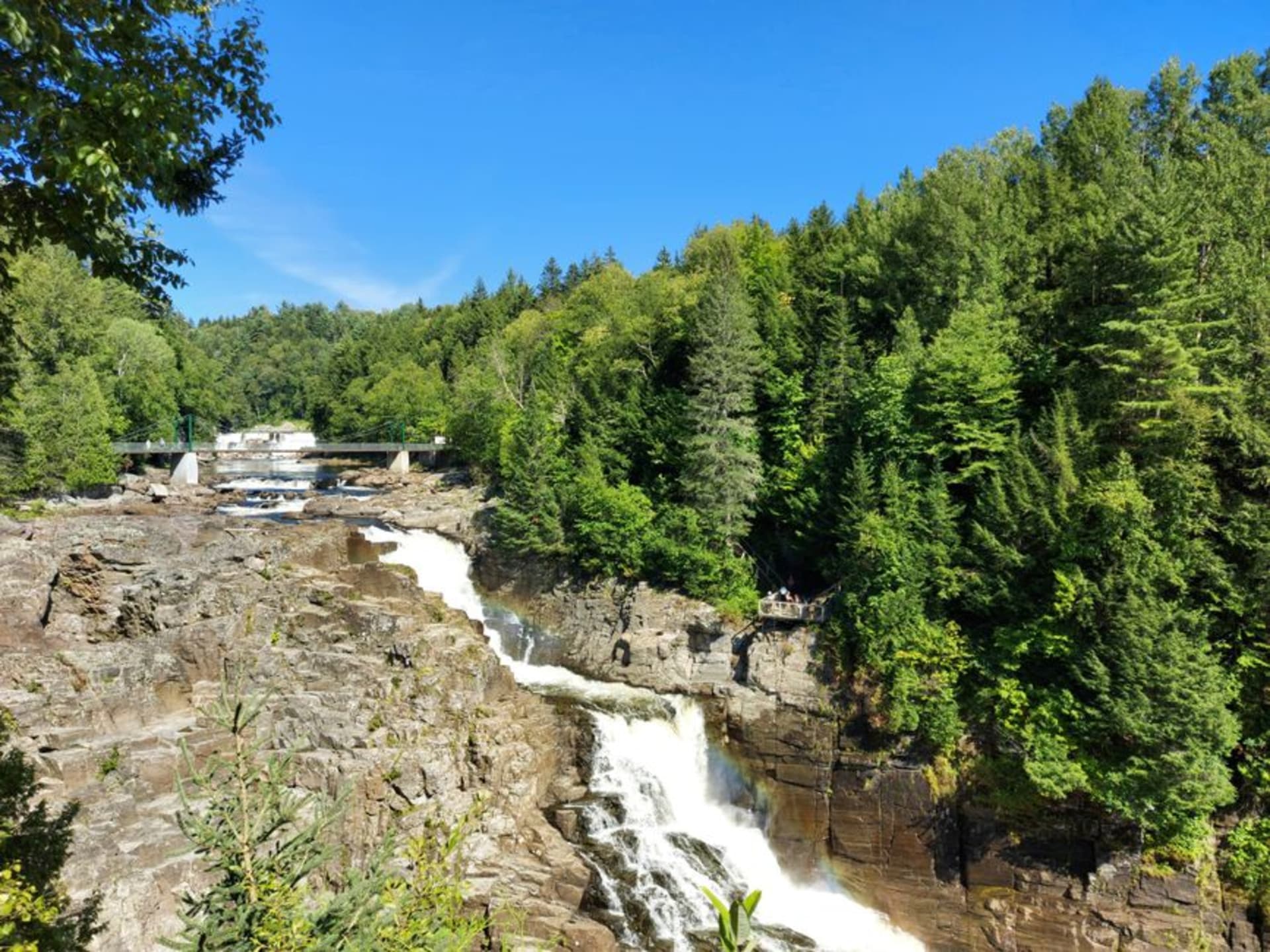
La Pulperie de Chicoutimi
"A pulp mill made this city rich for a century, and its ruins still sit exactly where the wealth was made — a museum you walk through rather than around."
The ruined pulp mill on the Saguenay's edge that once made Chicoutimi the paper capital of the world — now a museum complex holding the flood-displaced house of a regional painter.
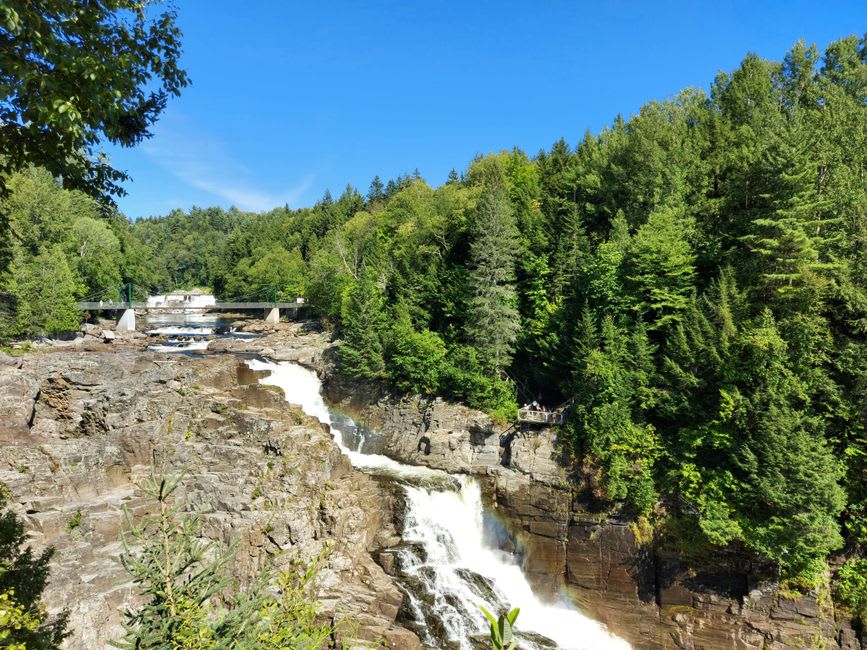
The scale of the ruins is what stops you first. La Pulperie de Chicoutimi was, in its early-twentieth-century prime, the largest pulp producer on Earth, processing timber floated down the Saguenay watershed into the wood pulp that fed paper mills across North America and Europe, and the stone shells of its processing buildings still stand along the Rivière Chicoutimi in the middle of the city — roofless in places, walls four feet thick, windows that once looked out on an operation employing thousands. I walked through the ruins on a self-guided path that winds between the old buildings and the river, water still running fast beneath them, and it was easy to picture the noise and heat this place would have generated at full production before the industry collapsed here in the 1920s, roughly the same era that closed Val-Jalbert an hour to the north.
The museum complex built around the ruins is more ambitious than the industrial history alone would suggest. In 1996, the Saguenay region suffered a catastrophic flood — the Saguenay Flood, still referenced constantly by locals as a defining regional trauma — that destroyed hundreds of homes along the river. One house, belonging to the family of painter Arthur Villeneuve, was moved to the Pulperie grounds for preservation: Villeneuve, a barber by trade who took up painting later in life and covered every interior and exterior surface of his own house with vivid, densely detailed scenes of Quebec history and Saguenay life, is now considered one of Quebec’s most significant naive artists, and walking through his painted rooms after the industrial austerity of the mill ruins is a genuine change of register.
The grounds also host a regional history museum covering the broader Saguenay-Lac-Saint-Jean settlement story — the logging economy, the flood, the region’s particular relationship to the river that both built and periodically devastated it — and the combination of industrial ruin, folk-art house, and regional museum gives Chicoutimi a depth that’s easy to underestimate if you’re only passing through on the way to the fjord’s more scenic sectors.
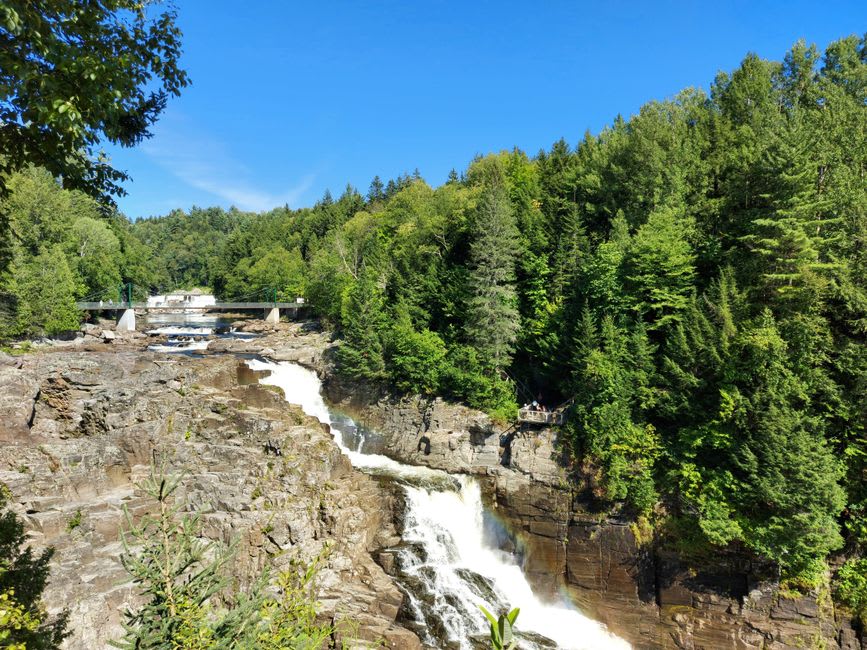
Chicoutimi itself, now merged into the larger city of Saguenay, sits at the head of navigation on the fjord — the point where oceangoing ships historically turned around — and the riverside walking path from the Pulperie down toward the harbour gives a good sense of the city’s layout, built entirely around the industry the ruins commemorate.
When to go: May through October for full access to the outdoor ruins and Villeneuve house. Late June for the Saguenay Flood commemoration, which adds special programming and gives useful context on the region’s relationship with the river.