La Malbaie
"La Malbaie got its name from Samuel de Champlain's disappointed sailors — a 'bad bay' that turned out, once the wealthy discovered it two centuries later, to be one of the best views in the province."
A Charlevoix resort town built by wealthy summer visitors over a century ago, still carrying that slightly formal, slightly faded grandeur beside the widening St. Lawrence.
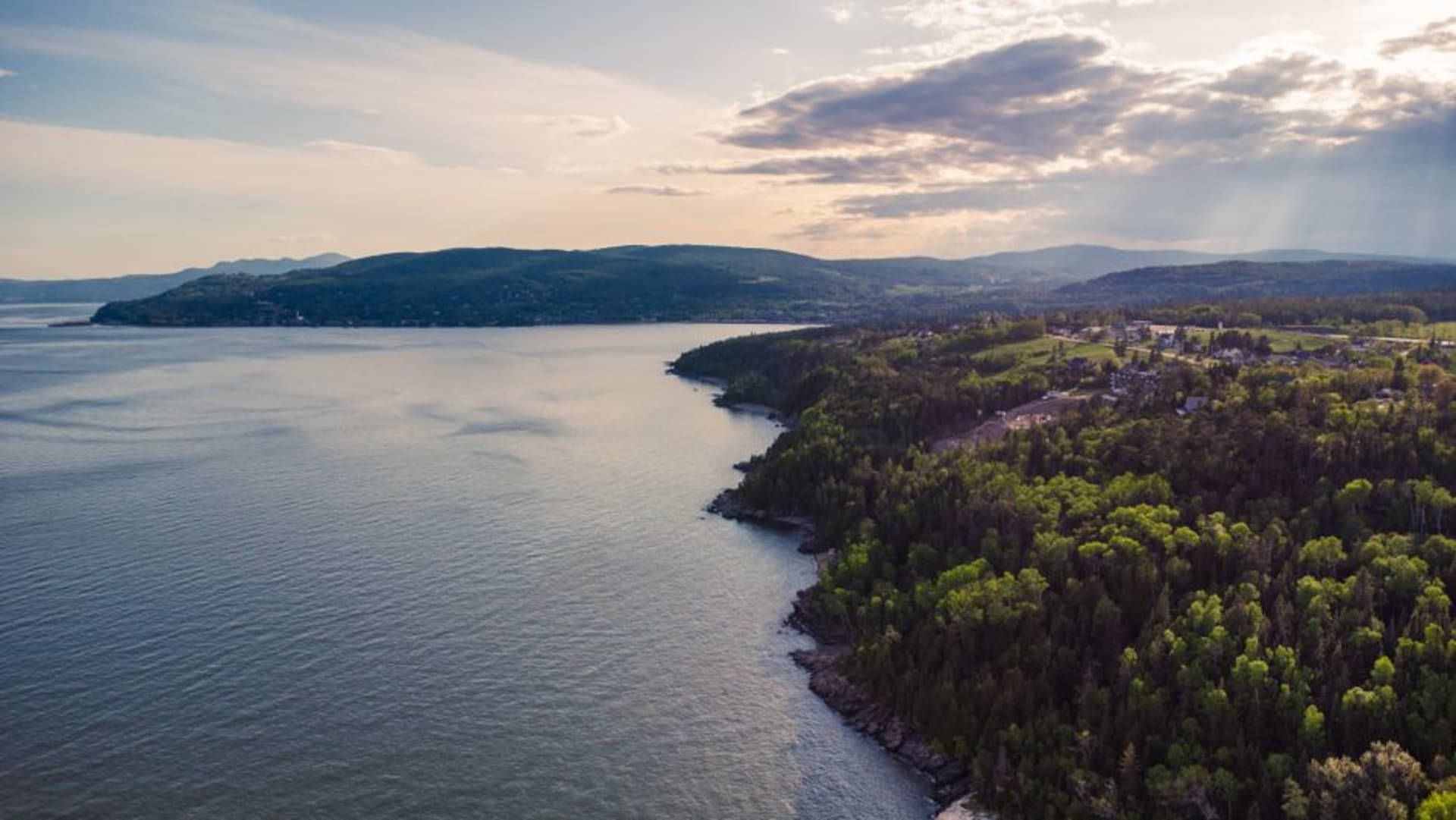
Samuel de Champlain’s crew named La Malbaie in 1608 after their ships ran aground at low tide in the shallow bay here, a bad first impression that the town spent the next three centuries quietly disproving. By the late 1800s, La Malbaie — then still known partly by its English name, Murray Bay — had become one of the preferred summer retreats for wealthy American and Canadian families escaping the heat further south, William Howard Taft among them, drawn by the cool river breeze and the dramatic setting where the St. Lawrence widens into something close to a sea. The Fairmont Le Manoir Richelieu, a grand château-style hotel perched above the water since 1899 and rebuilt after a 1928 fire, still anchors the town’s identity, its green copper roofline visible from most of the waterfront.
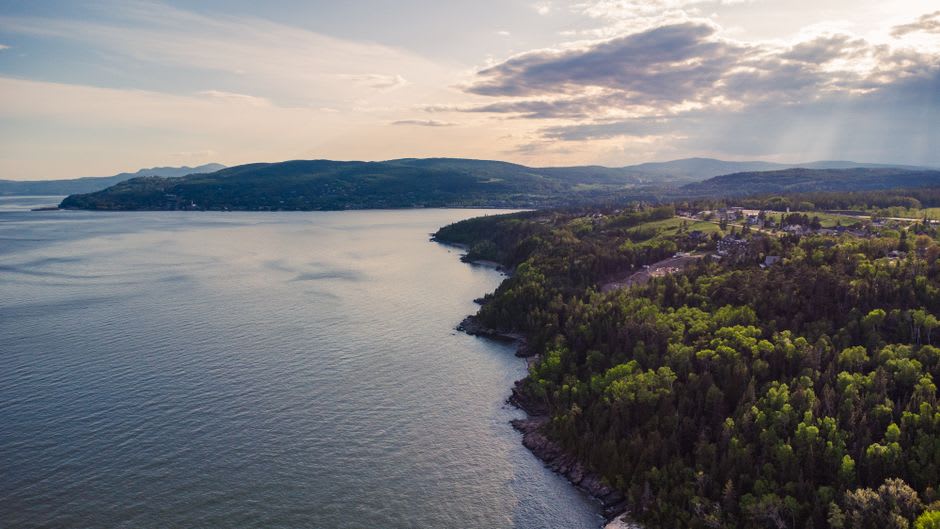
We didn’t stay at the Manoir — the rates reminded us we were, after all, on a trip that also involved sleeping in an ice hotel for the novelty of it, not the luxury — but walked its grounds and had a drink on the terrace, watching the light shift over the water as it widened toward Charlevoix’s open estuary. The casino attached to the hotel draws its own crowd, and the golf course, designed by Herbert Strong in the 1920s, is considered one of the finer historic courses in the province. Beyond the resort’s grounds, La Malbaie’s older core along Chemin des Falaises has a scattering of grand summer “cottages” — some genuinely enormous by any reasonable definition of the word — built by the same wealthy families a century ago, several now converted into inns and B&Bs.
The Musée de Charlevoix, in town, does a good job contextualizing this history: the interplay between the modest fishing and farming communities that predated the resort era and the summer colony of outsiders who reshaped the town’s economy and self-image around tourism. Lia found the museum’s section on the region’s artists — Charlevoix has drawn painters for over a century, the light here doing something to landscape colour that keeps bringing them back — the most interesting part, and we left with a small print from a local gallery that now hangs in our place in Mexico, a strange souvenir of a genuinely cold place.
When to go: June through September for full access to the grounds, museum, and golf course, and the mildest weather for walking the waterfront. September and October add fall colour to the same views without summer’s crowds.