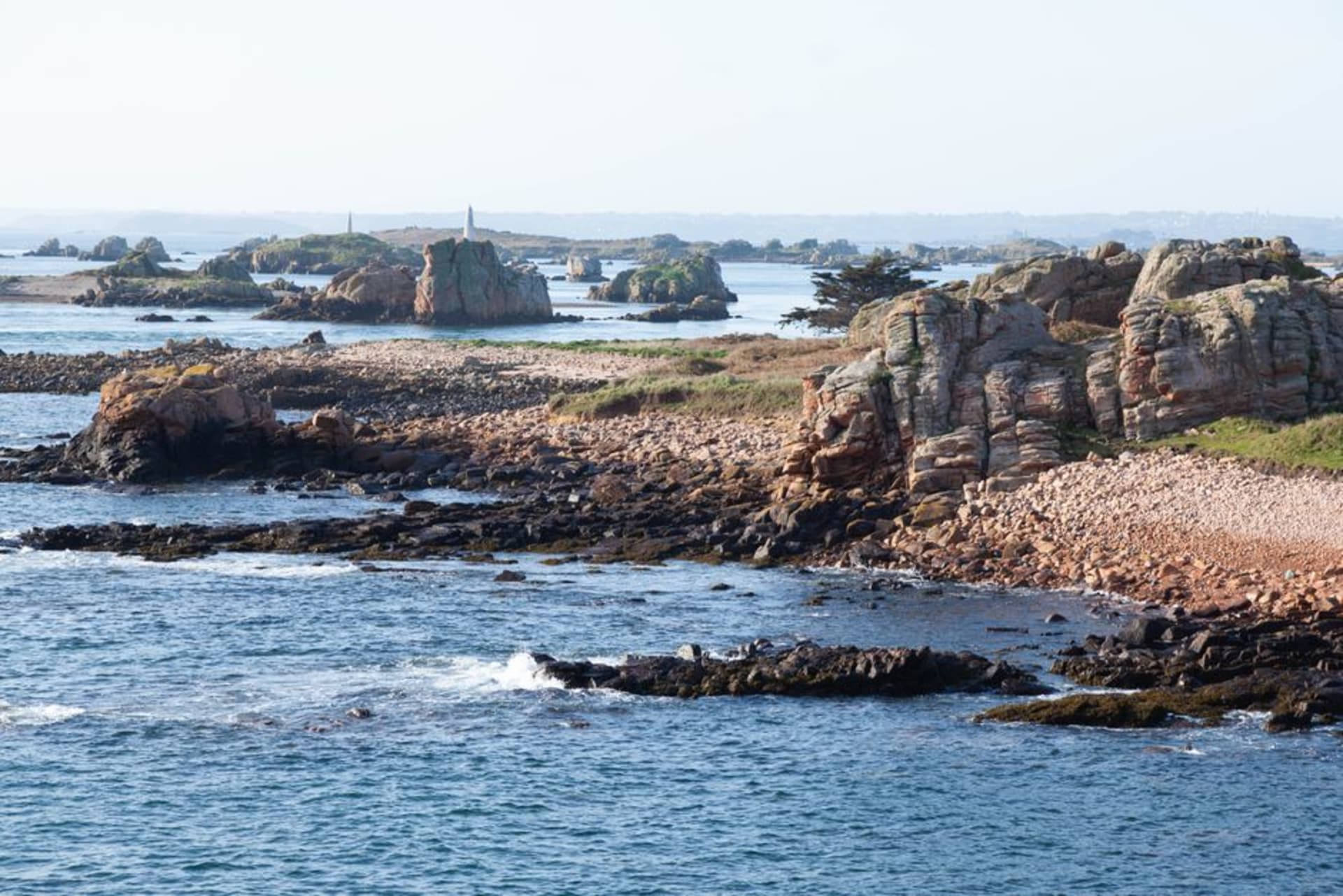
Île d'Entrée
"Île d'Entrée is the Magdalen Islands' island — cut off even from the rest of the archipelago's own remoteness."
The one inhabited Magdalen Island with no bridge or causeway to the rest — an English-speaking fishing community of about a hundred people, reached only by boat.
Every other inhabited island in the Magdalen Islands chain is connected by dune roads and causeways, which makes Île d’Entrée the exception that everyone in Cap-aux-Meules mentions with a slight raise of the eyebrows, as though it belongs to a separate, smaller category of remote. I took the passenger ferry from Cap-aux-Meules harbor, a forty-five-minute crossing on choppy water, and arrived at a community of roughly a hundred people, almost all of them English-speaking descendants of Scottish and Irish settlers who arrived in the 1800s — a linguistic island inside a linguistic island, since the rest of the Magdalens are overwhelmingly French.
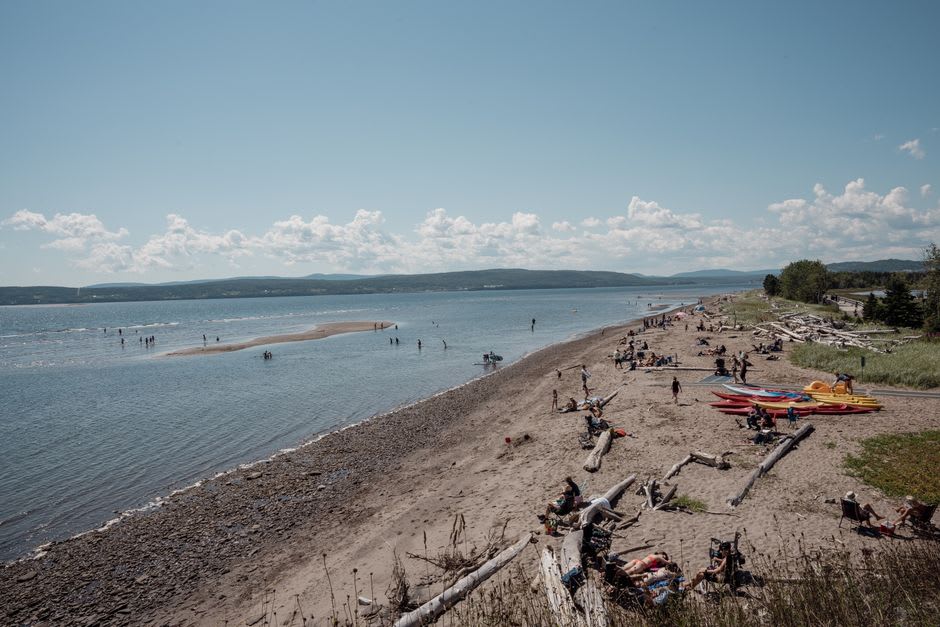
There is exactly one hill worth the name on Île d’Entrée — Big Hill, at about 174 metres the highest point in the entire archipelago — and the walk up it is the reason most day-trippers make the crossing. From the summit the whole island reveals itself as an impossibly green wedge of pasture and cliff, sheep and cattle grazing right up to the edges, with the rest of the Magdalen Islands visible as a low grey-green line on the horizon across the water. I sat up there for close to an hour, which is longer than I usually give any single viewpoint, mostly because there was nowhere else on the island that competed for the time.
The village itself is small enough to walk end to end in twenty minutes: a general store, a church, a scatter of houses with satellite dishes turned toward a signal that has to travel further here than almost anywhere else in Quebec. A fisherman mending nets by the harbor told us, in an accent that sounded more like Cape Breton than anything I’d heard elsewhere in the province, that most young people leave for the mainland eventually and most of them come back. I believed him. It’s the kind of place people leave and then can’t stop comparing everywhere else to.
When to go: June through September, when the passenger ferry runs a manageable schedule from Cap-aux-Meules. Check the crossing times before you go — missing the return boat means an unplanned overnight with very limited lodging.