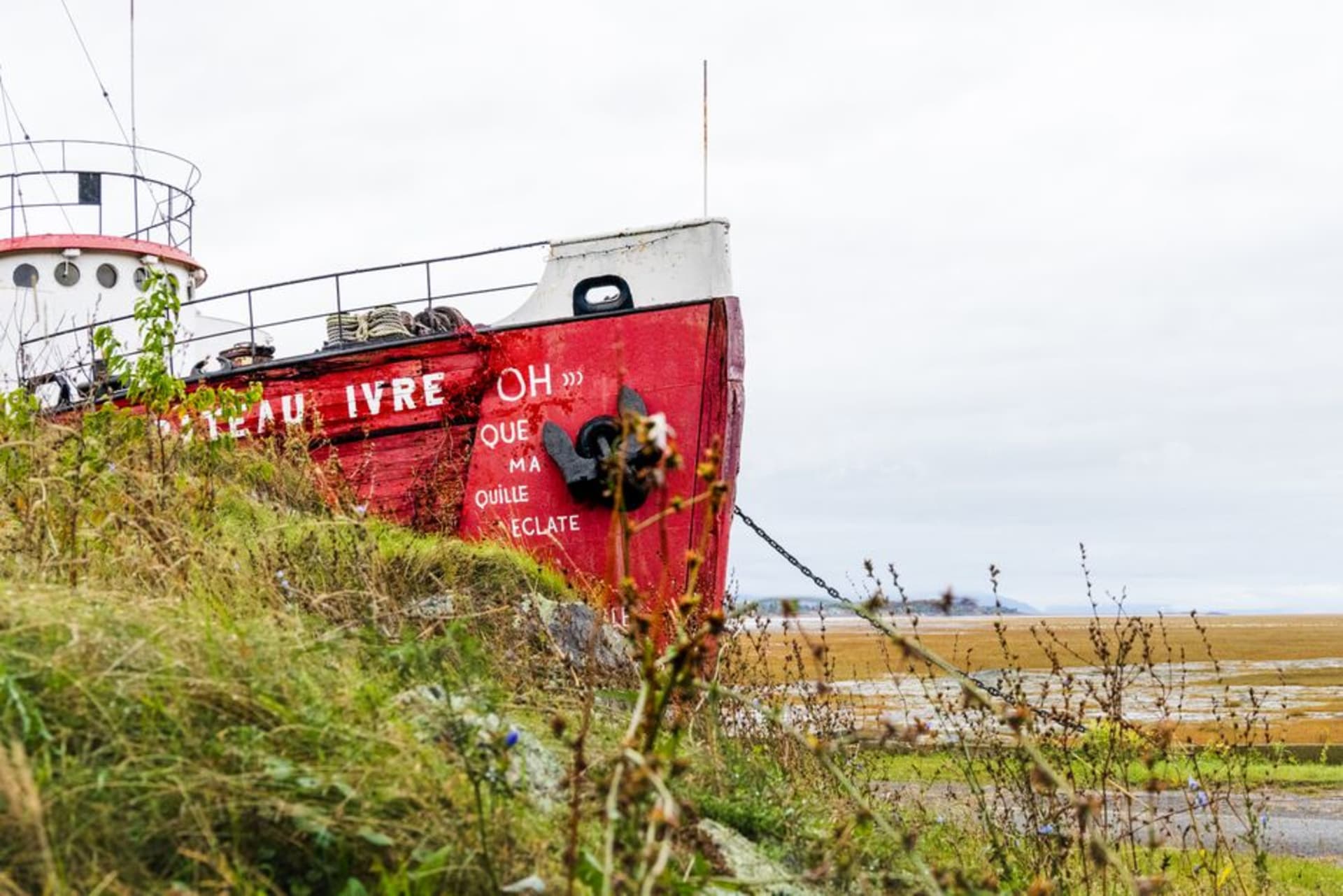
Havre-Aubert
"Havre-Aubert is what the Magdalen Islands looked like before anyone thought to call it charming."
The oldest and southernmost of the Magdalen Islands, where a fishing hamlet called La Grave has been quietly refusing to modernize for three centuries.
I got to the Magdalen Islands the unglamorous way — a five-hour ferry from Souris, Prince Edward Island, that left me faintly seasick and completely unprepared for how the archipelago would look from the water: a scatter of low green hills and red cliffs strung together by dune roads, sitting in the middle of the Gulf of St. Lawrence like nowhere else in Quebec. Havre-Aubert is the southernmost island in the chain and the first one most ferries touch, and it holds La Grave, a strip of grey clapboard fishing sheds along a pebble beach that has been the commercial heart of the archipelago since the 1700s. Lia found a shop selling sea-glass jewelry made from bottles that had washed up on the very beach we were standing on, which felt like the whole island explaining itself in one gesture.
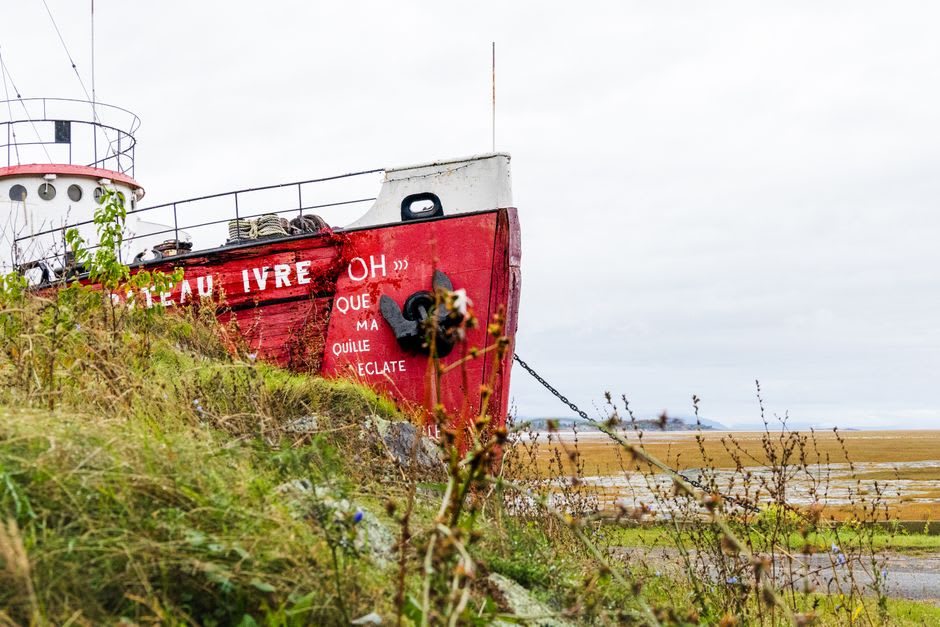
La Grave earned its name from the gravel beach the original Acadian and Breton fishing families hauled their boats up onto, and it still functions as a working harbor even though most of its old sheds have become art studios, smokehouses, and a small aquarium that keeps injured seals until they can be released. We ate smoked mackerel standing up at a counter that had clearly been serving the same three items since before either of us was born, and it was better than most sit-down meals I’ve had in cities that charge four times as much. Behind La Grave, the Butte du Vent — Havre-Aubert’s own set of red sandstone dunes — rises over a beach where the sand genuinely runs a deep rust-orange, iron oxide leaching out of the cliffs the way it does across most of the archipelago.
The island’s other landmark is Île du Havre Aubert’s lighthouse district and the Sandcastle Museum, which sounds like a novelty attraction until you realize the Magdalen Islands host an actual international sand-sculpture competition every summer, drawing artists who build things on this beach that have no business surviving a single tide. I watched a crew from Belgium finishing a piece the afternoon before it would be washed away by evening, and nobody seemed bothered by the impermanence. It seemed like the correct attitude for an island built on sandbars.
When to go: July and August for the sandcastle competition, warm enough water for swimming, and the highest chance of calm ferry crossings. Late September brings fewer visitors and the same red cliffs under sharper light, though the wind off the Gulf turns serious fast.