Chic-Chocs
"The Chic-Chocs are the one place in the Gaspé where you stop looking at the sea and start looking up — and what's up there is genuinely alpine."
The only place south of the Arctic where caribou still roam wild in Quebec — an alpine range punched up out of the middle of the Gaspé peninsula.
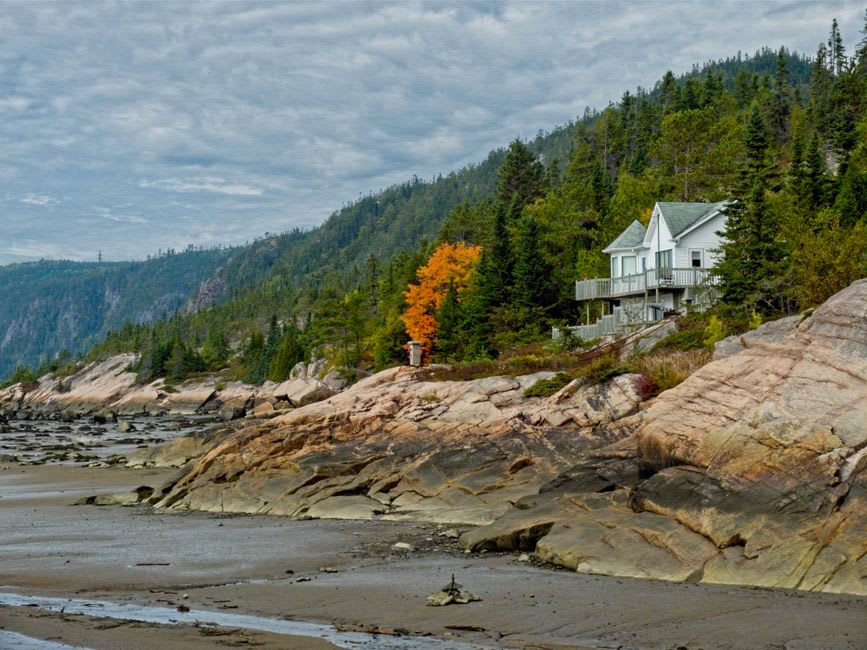
Everywhere else on the Gaspé peninsula, the story is the coast — the cliffs, the whales, the fishing towns. The Chic-Chocs are the interior’s answer to all of that, a mountain range running through the centre of the peninsula with peaks that punch above the treeline into honest alpine tundra, a landscape that has no business existing this far south and exists anyway because of a specific accident of latitude and exposure. Gaspésie National Park protects the range’s highest section, and Mont Jacques-Cartier, at 1,268 metres, is the second-highest peak in southern Quebec and home to the last wild caribou herd south of the St. Lawrence’s northern wilderness — an isolated, genetically distinct population that has hung on here since the last ice age.
Getting to see the caribou requires effort and a bit of luck. Parks Quebec runs a shuttle from the interpretation centre partway up the mountain, after which it’s a hike across boreal forest and then, abruptly, out onto open tundra — dwarf birch, lichen, exposed rock, a wind that hits differently once you clear the treeline. We waited close to an hour at the summit viewpoint before three caribou appeared, moving unhurried across the rock, entirely unconcerned with the small cluster of hikers watching them. The park limits visitor numbers on the mountain specifically to protect this herd, which now numbers only in the low hundreds, so the wait and the quota both felt like the right trade for what we saw.
The range as a whole — the name comes from a Mi’gmaq word usually translated as “rocky mountains” — also holds some of the best hiking in eastern Canada below the peaks, dense boreal forest trails past waterfalls and glacial cirques, and Quebec’s highest concentration of moose, which we saw far more casually than the caribou, including one that stood in the middle of a gravel access road for a full five minutes, apparently unbothered by our patiently idling car.
When to go: Late June through September for the alpine trails and caribou shuttle access; the summit zone is closed outside this window. Early morning gives the best odds of caribou sightings, before midday heat pushes them to shade.