Charlevoix
"Charlevoix is where the St. Lawrence stops being a river and starts being a sea — the whales noticed this before anyone else did."
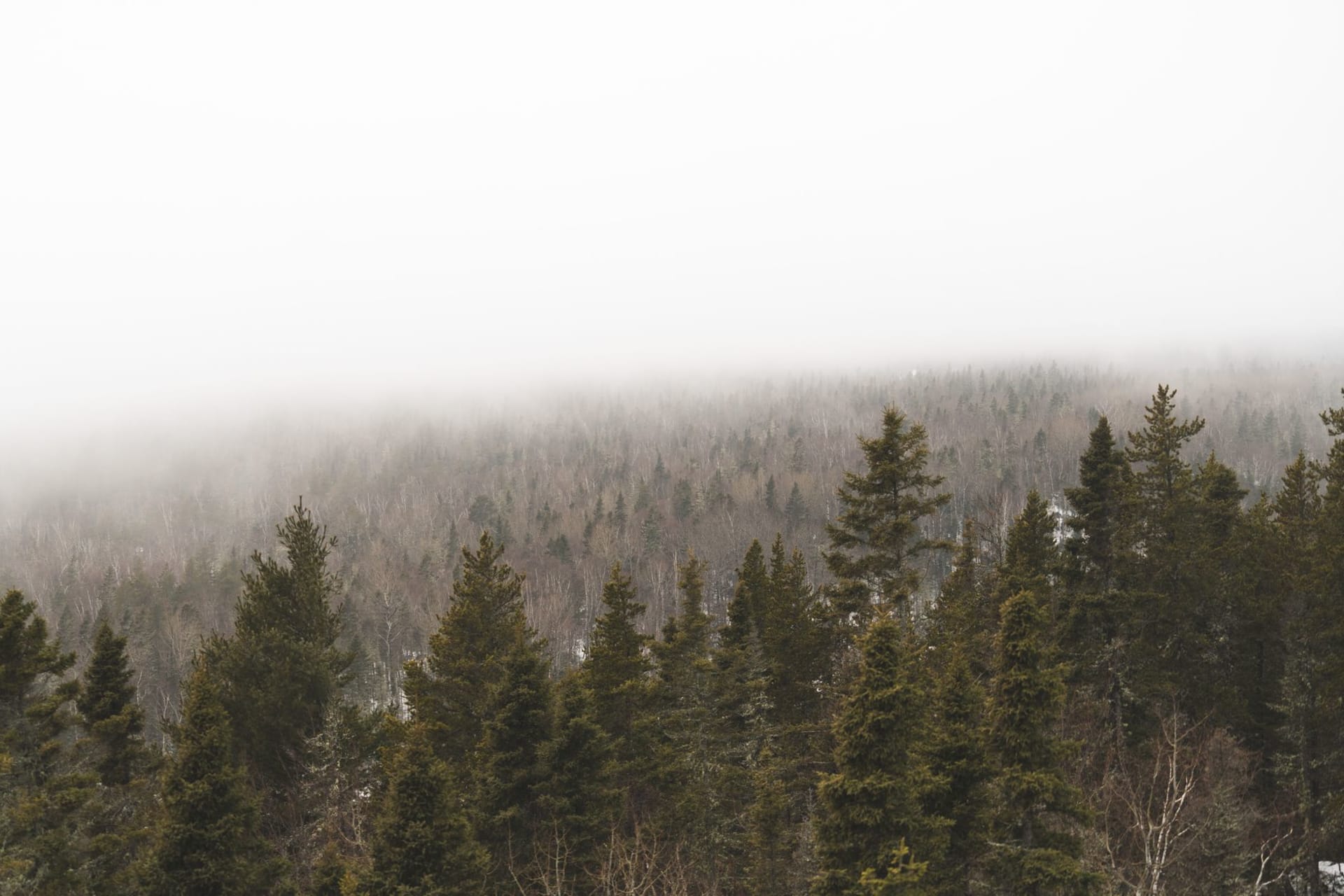
I drove to Charlevoix on a morning in late September when the maples were doing the thing that brings people to Quebec from across the world — turning colours that seem too saturated to be real, orange and crimson and gold running up the hillsides in combinations that read as excessive until you’re inside them and they stop being excessive and start being correct. The road from Quebec City follows the north shore of the St. Lawrence, and the river widens as you drive northeast until it stops looking like a river entirely and starts looking like the beginning of an ocean. Baie-Saint-Paul comes first: a valley town, impossibly photogenic, surrounded by hills that have been painted by every artist in Quebec at some point. The galleries on Rue Saint-Jean-Baptiste had canvases in the windows of exactly this valley. The paintings were redundant. The thing itself was too much.

Charlevoix is a UNESCO World Biosphere Reserve, and the reason for that designation is not just the scenery — it is the fact that the entire region sits inside an ancient astrobleme, the crater of a meteorite that struck 350 million years ago and left a depression in the earth that the St. Lawrence and its tributaries have spent geological time filling. The result: rolling highlands, deep river valleys, black spruce bogs, and along the shore, the tidal flats where beluga whales come close enough to watch from land. I saw my first beluga from a picnic table near Les Éboulements: a white shape in the cold green water, unhurried, absolutely indifferent to being observed. The Saguenay-St. Lawrence Marine Park begins here, and the confluence of the Saguenay fjord with the St. Lawrence creates an upwelling of cold, krill-rich water that draws minke, fin, and humpback whales in summer. I came in late September and the whales had mostly passed through, but the belugas are year-round residents and they appeared without being asked.
The food in Charlevoix is extraordinary, which surprised me though it probably shouldn’t have. The region has a long agricultural tradition and an artisan food culture that predates the current vogue for terroir by several generations. The Charlevoix cheese — a raw-milk tomme made at the Laiterie Charlevoix in Baie-Saint-Paul — is one of the better cheeses I’ve eaten in North America: firm, nutty, the milk of cows fed on the particular grasses of this valley. A meal at one of the small auberges along the coastline sent out a venison carpaccio with pickled local blueberries and a foam of something that tasted like the spruce forest itself. It was pretentious in all the right ways.

The villages along the Charlevoix coastline — Les Éboulements, Port-au-Persil, Saint-Irénée — have an end-of-the-road quality that I find calming rather than isolating. Saint-Irénée hosts the Domaine Forget de Charlevoix, a music and dance academy where summer concerts happen on a cliff above the river. I didn’t catch a performance, but the cliff itself, facing the immense water at sunset, was performance enough.
When to go: Late September through mid-October for fall colour, among the most intense in eastern Canada. June through August for whale watching; boats operate from Tadoussac and Baie-Sainte-Catherine. Winter opens ski terrain at Le Massif de Charlevoix, which has the longest vertical drop in eastern Canada and runs you down toward the St. Lawrence.