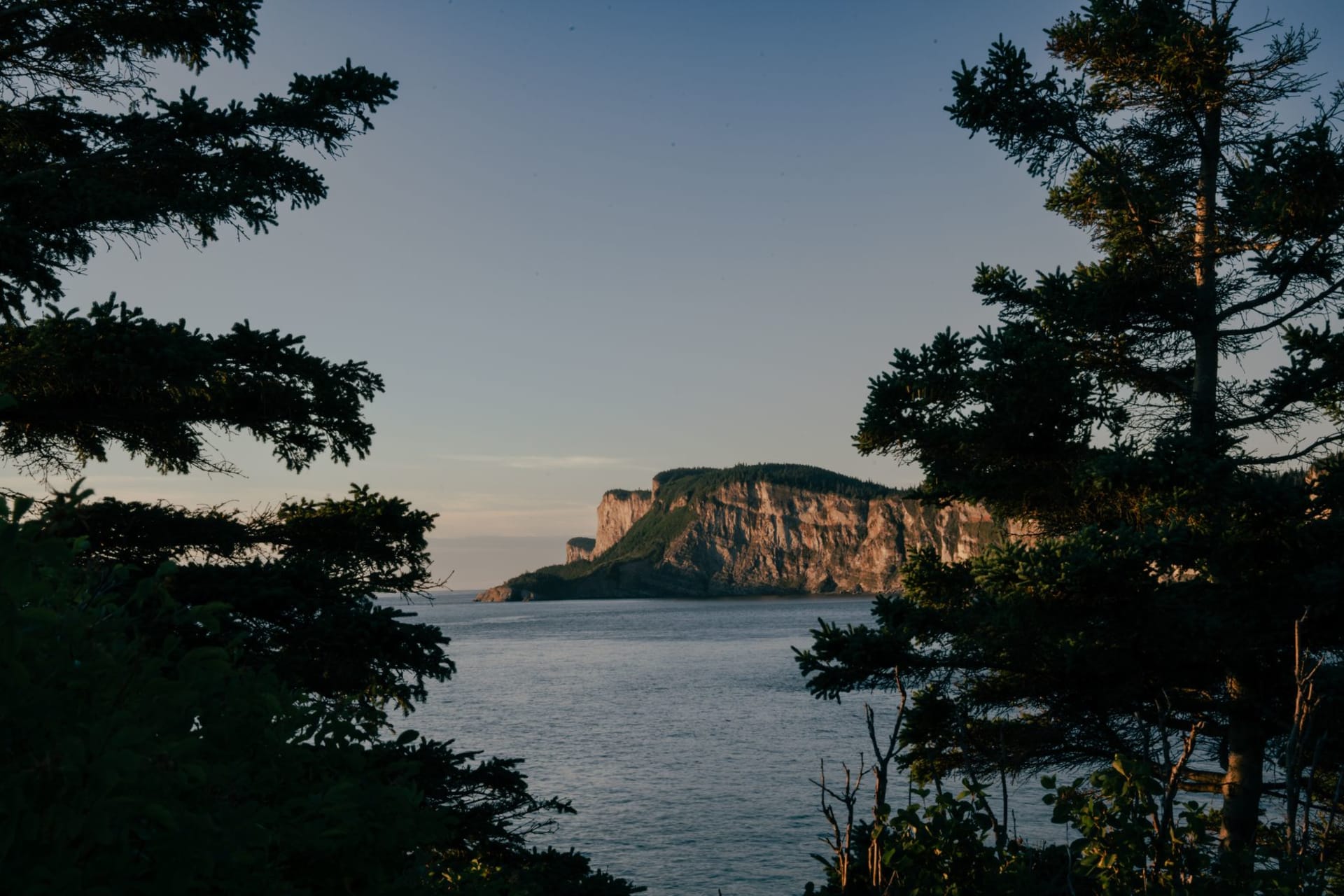
Cap Tourmente
"When 50,000 geese take off at once, the sound hits you before the sight does — and then both hit you at the same time."
I arrived at Cap Tourmente in mid-October, just after dawn, having driven east from Quebec City along the north shore as the sun was coming up over the Laurentians. I could hear the geese from the parking lot. Not the sound of geese — plural — but a sound like something mechanical and massive, a rolling white noise that didn’t resolve into individual birds until I was standing on the dike above the tidal flats and the flats themselves materialized below me: white and moving, alive with something close to 50,000 greater snow geese resting before the next leg of their migration south to the Virginia coast. The biologist at the visitor centre later told me that Cap Tourmente is the only stop on their migration route of any real consequence — the geese eat the bulrush rhizomes in the St. Lawrence tidal flats, and without those nutrients the migration would be unsustainable. The weight of the phrase “the only stop” settled on me somewhat.

The reserve is managed by Environment and Climate Change Canada, and the infrastructure is good: elevated platforms on the dike, a visitor centre with genuinely useful interpretation, trail networks through the mixed forest on the hillside above the flats. I spent the morning on the dike as the geese fed, watching them through binoculars borrowed from the interpretive centre. The tidal cycle governs their feeding — they follow the retreating tide out onto the flats, pulling the rhizomes up with bills equipped with small tooth-like serrations called tomia, designed specifically for this work. When a peregrine falcon appeared over the flats at around nine, the geese lifted off in a wave — first the group nearest the falcon, then a chain reaction outward — and the noise and the mass of white birds against the October sky was the kind of thing I know I’ll try to describe for years without quite getting right. The sound alone — that rolling detonation of 100,000 wings — was worth the drive from the city.
The forest behind the dike has trails through maple and birch that are spectacular in fall colour. I walked up to the viewpoint on the headland above the reserve in the afternoon — the trail climbs through the forest to an open rock face with a view down to the tidal flats and the St. Lawrence and, on a clear day, the south shore and the beginning of the Appalachians beyond it. The geese, from up there, were a white smear on the distant water. The silence on the headland was total except for the wind and the far-off sound of 50,000 feeding birds that was, even at that distance, still audible.

In spring — late April and early May — the geese return north through Cap Tourmente on their way to their Arctic breeding grounds. The spring migration is often even denser than the fall, the birds thinner and hungrier after winter, feeding with a concentrated urgency. Either window is worth it; together, they form the most spectacular wildlife event available within an hour of a major Canadian city.
When to go: Mid-October for peak fall migration — numbers typically peak around October 15-20, though weather governs the exact timing. Late April through early May for the northward spring migration. The reserve is open year-round but the geese are the entire point, and their timing is governed by Arctic seasons rather than tourist calendars.