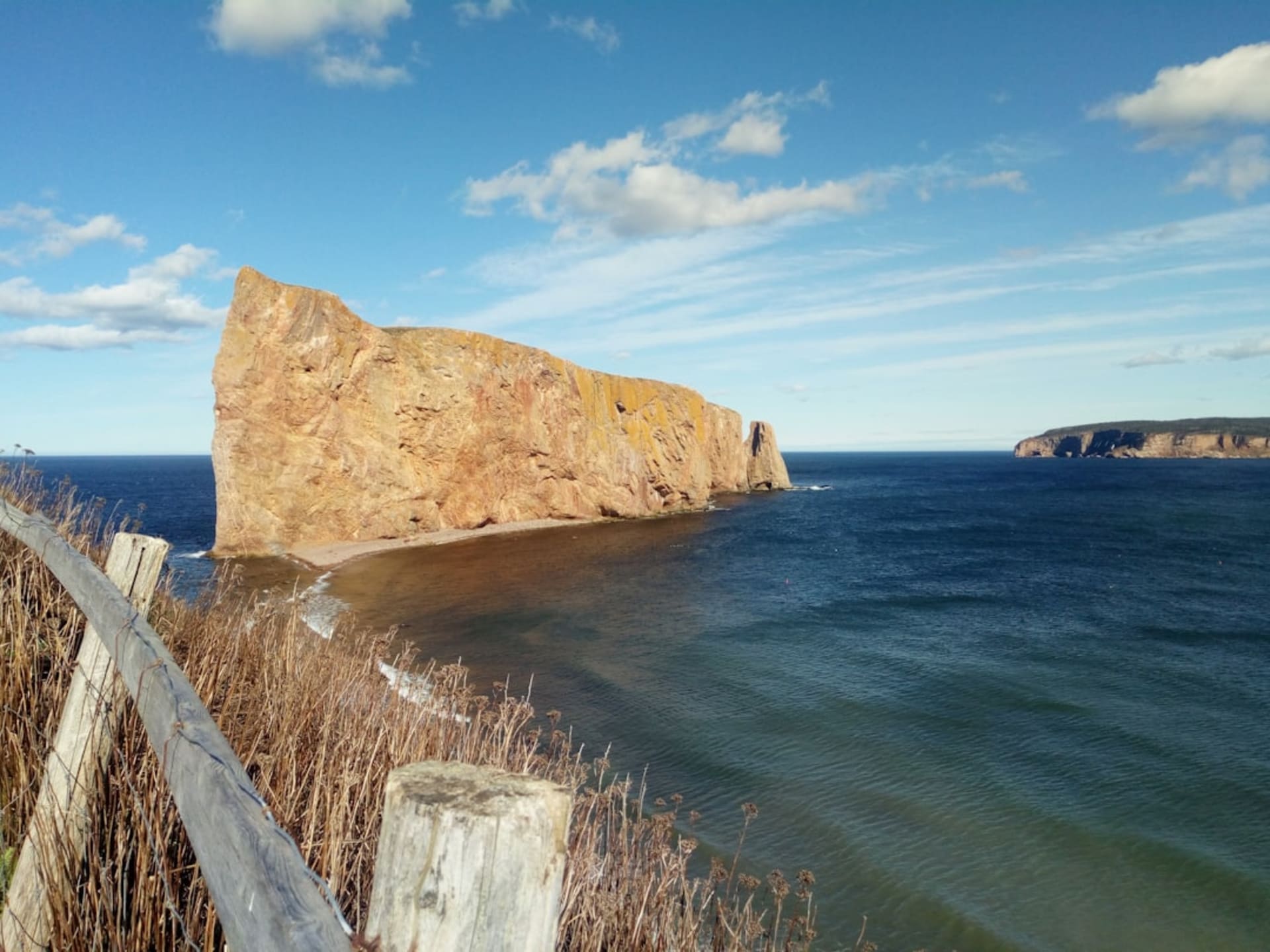
Île Bonaventure
"Île Bonaventure is what a nature documentary would look like if you could actually stand inside it."
One of the largest and most accessible northern gannet colonies on earth — 100,000 birds on a single cliff face, and the smell reaches you before the sight does.
The boat from Percé takes about twenty minutes, circling Rocher Percé first before crossing to Île Bonaventure, and the whole way out I could hear the island before I could properly see it — a rising static of bird noise carried on the wind. Then the cliffs came into focus and I understood: white was not a colour of the rock here, it was a colour applied to the rock, a dense coating of northern gannets packed onto every available ledge of the red sandstone, upwards of 100,000 birds in one of the largest, most accessible colonies of their kind anywhere in the world.
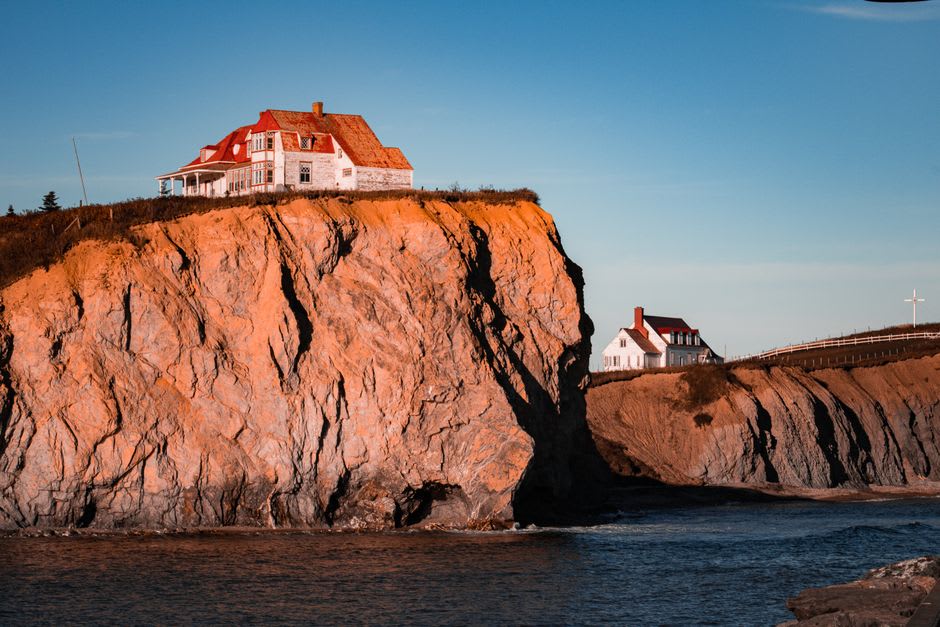
You land at the island’s small dock and walk about 45 minutes across old farmland — Bonaventure was inhabited by fishing families until the 1970s, and their weathered white houses still stand near the trailhead, now a small museum of island life — before the path opens onto the cliff-top viewing platforms. Parks Quebec built the trail to bring you astonishingly close without a fence between you and the colony; gannets nested a few metres from where I stood, entirely unbothered, engaged in the constant business of guarding nests, preening, and launching themselves off the cliff edge into six-metre dives after capelin. Lia, who had been mildly skeptical about “a bird island,” went quiet for the better part of twenty minutes, which is the review I’d trust over any guidebook description.
The smell is real and worth mentioning honestly — guano and fish and salt, concentrated by a hundred thousand birds living in close quarters — but it fades from notice within a few minutes, overtaken by the sheer visual scale of the thing. Beyond the gannets, the island hosts razorbills, murres, and black-legged kittiwakes on the same cliffs, and grey seals haul out on the rocks below. The boat operators run the round trip with a stop at Rocher Percé on the return, so the two sites pair naturally into a single half-day outing.
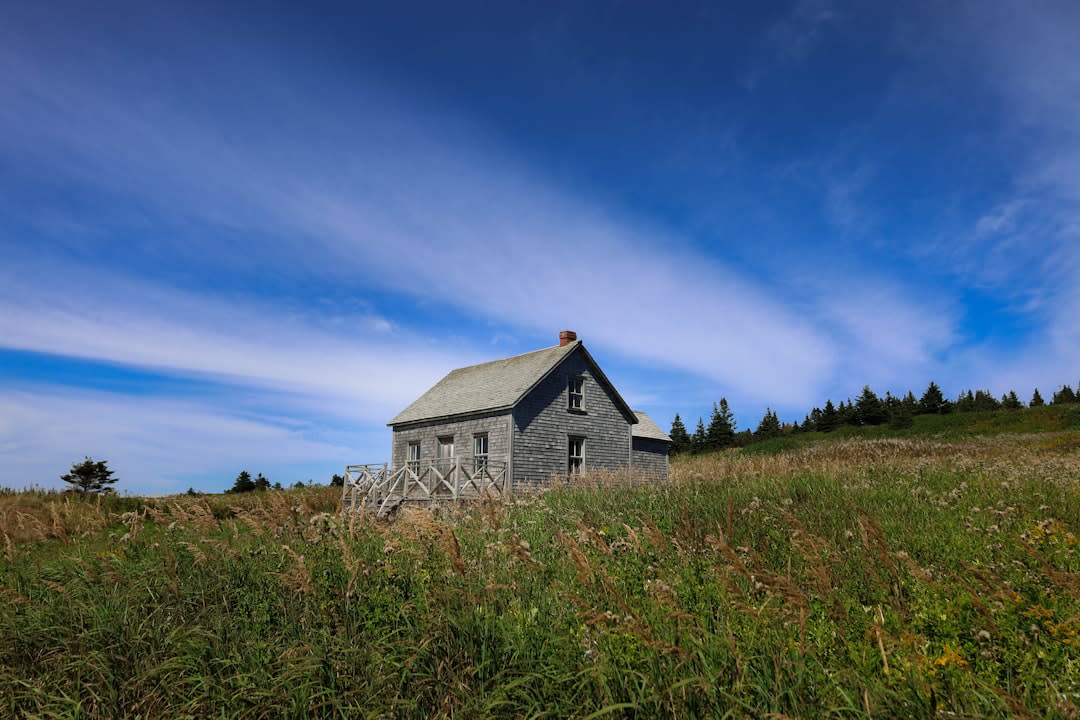
When to go: Late May through early September, when the gannets are actively nesting and the boats run regular crossings. Peak colony activity is June and July. Wear closed shoes for the crossing trail — it’s unpaved and can be muddy after rain.