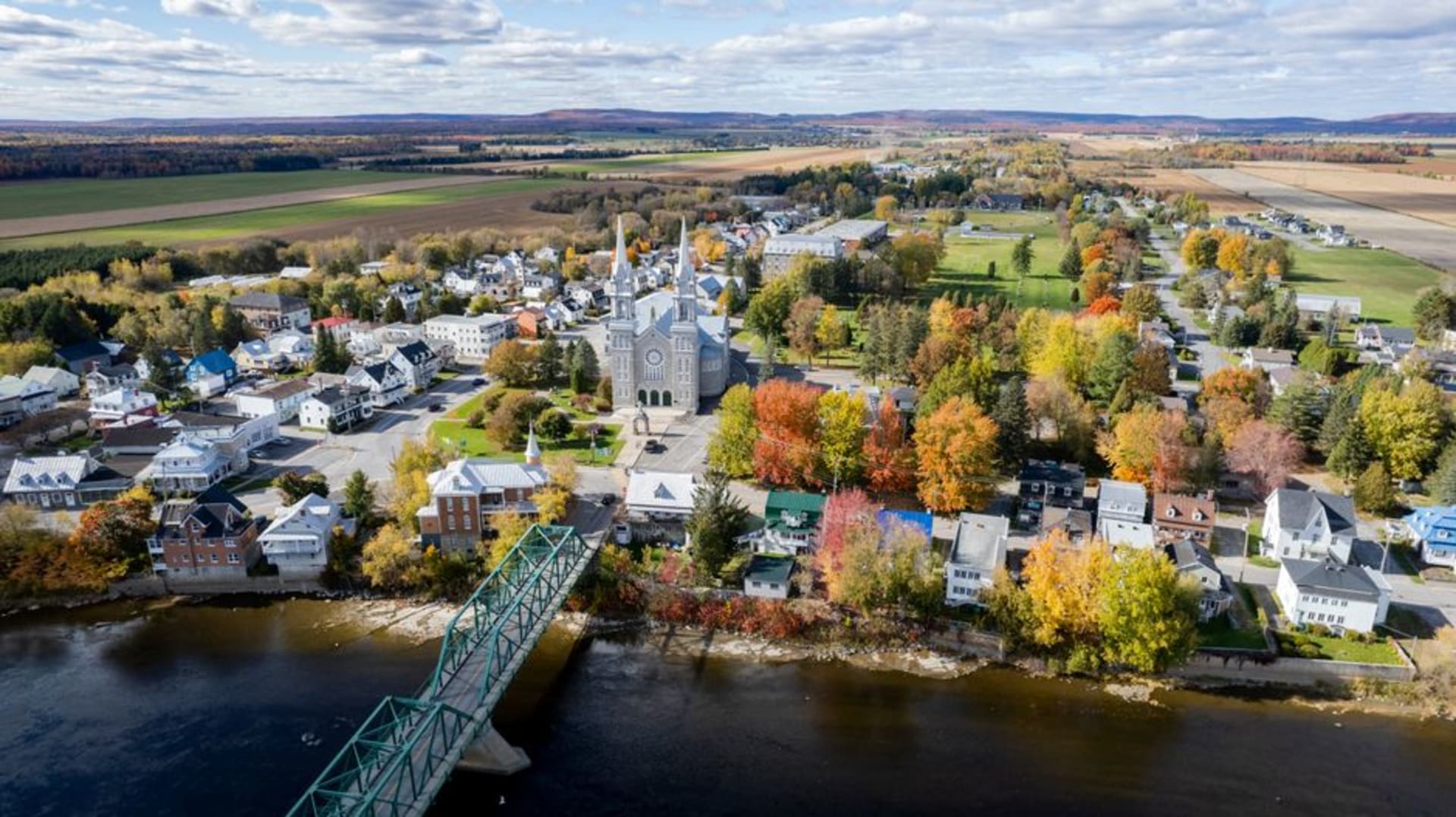
Anse-Saint-Jean
"A village of nine hundred people put a covered bridge on the national currency, and once you see it in person you stop questioning the decision."
The fjord village with the covered bridge on the Canadian ten-dollar bill — small, agricultural, and set against some of the most dramatic scenery the Saguenay has to offer.
I recognized the bridge before I recognized the village, which tells you something about how this tiny place punches above its weight. Le Pont Couvert d’Anse-Saint-Jean — a red covered bridge spanning the Rivière Saint-Jean, built in 1929 — appeared on the back of the Canadian ten-dollar bill for years, and standing in front of it in person felt oddly like meeting a minor celebrity: smaller than expected, more charming than expected, entirely worth the detour. The village behind it, Anse-Saint-Jean, has fewer than a thousand residents and sits on one of the most photogenic bends of the Saguenay fjord, where the hills close in tight enough that the water looks almost landlocked.
The village grew up around forestry and farming rather than tourism, and it still feels that way — a scattering of farmhouses along the valley, a general store, a church with a steeple visible from most vantage points in town. What changed things was the ski hill, Mont Édouard, built into the hillside above the village in the 1990s, and the gradual discovery by hikers and paddlers that Anse-Saint-Jean sits at one of the most dramatic access points to the fjord itself. The lookout above the village — a short climb from the marina — gives a view down the Anse Saint-Jean bay toward the main body of the Saguenay, hills rolling away on both sides in a way that makes the fjord’s scale suddenly legible.
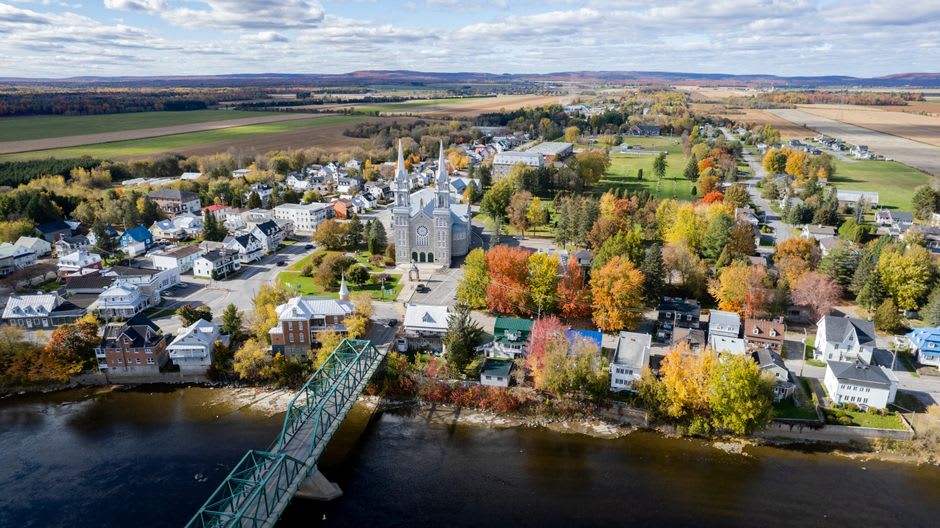
We rented bikes from a shop near the marina and rode the gravel road along the Rivière Saint-Jean out past the covered bridge, through farmland that felt entirely disconnected from the fjord scenery ten minutes behind us — hay fields, grazing cattle, the kind of unhurried agricultural quiet that Quebec does well and doesn’t advertise much. The marina itself is a launch point for kayak trips into the fjord proper, and paddling out from Anse-Saint-Jean gives a different angle on the Saguenay than the more heavily visited sectors of the national park — narrower, quieter, closer to the working village than to the tourist infrastructure.

In winter, Mont Édouard turns the same hills into a ski hill with a reputation among Quebecers for uncrowded runs and genuinely good snow, a fraction of the traffic of the resorts closer to Quebec City or Montreal.
When to go: July and August for cycling, kayaking, and the covered bridge in good light. Late September for fall colour along the valley. December through March for skiing at Mont Édouard, which stays reliably quiet even on weekends.