Vieste
"Vieste is the town the rest of the Gargano circles back to — everyone ends up here eventually, and nobody minds."
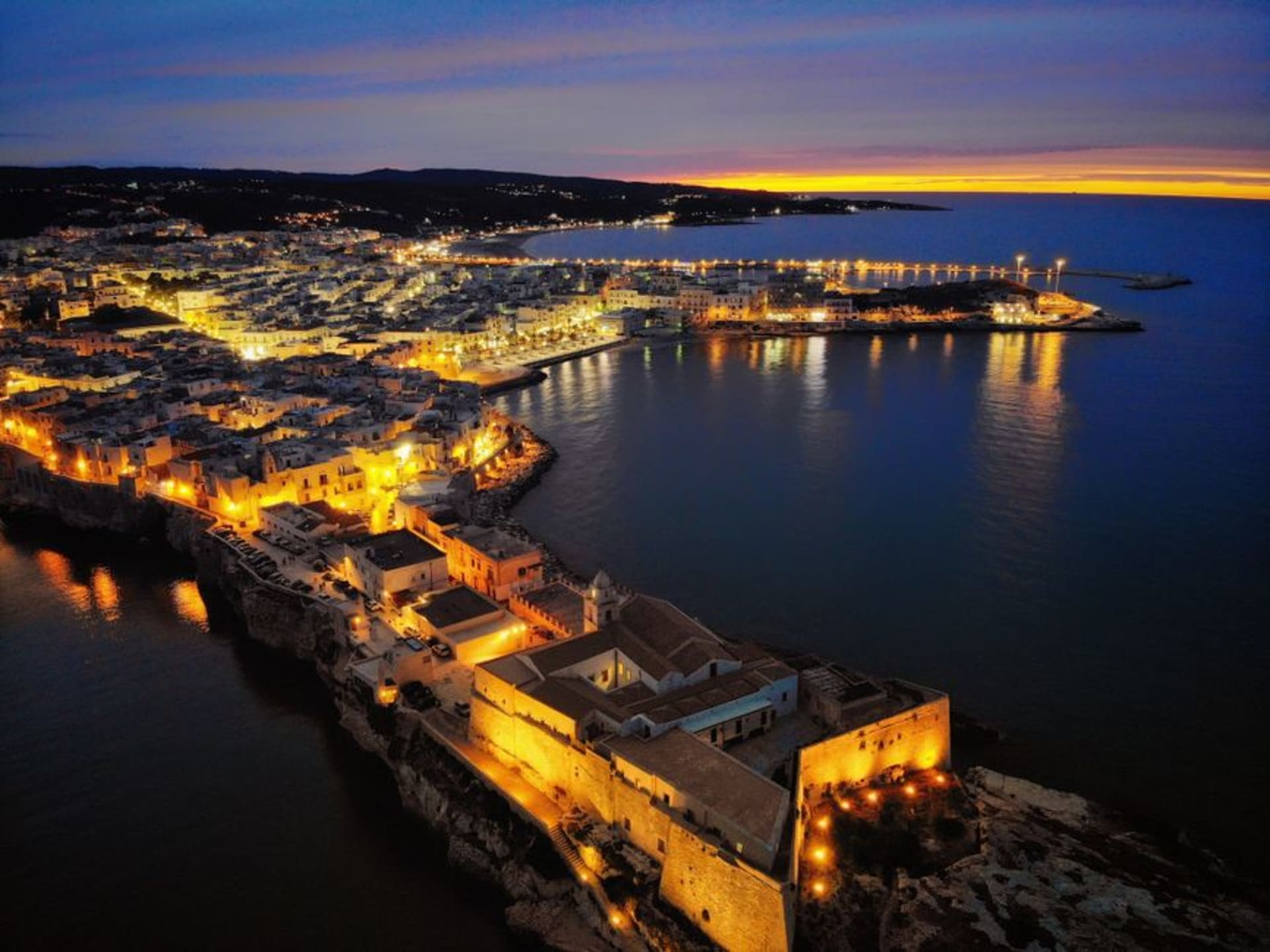
The Gargano's coastal capital — a white old town on a limestone spur, a sea stack rising offshore, and beaches that curve away in both directions for as far as you can walk.
First impressions
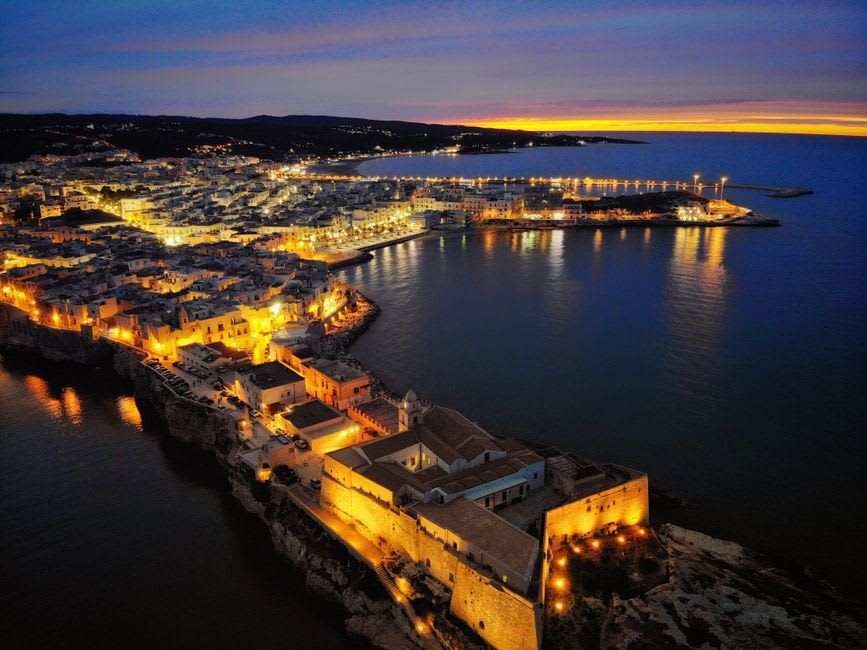
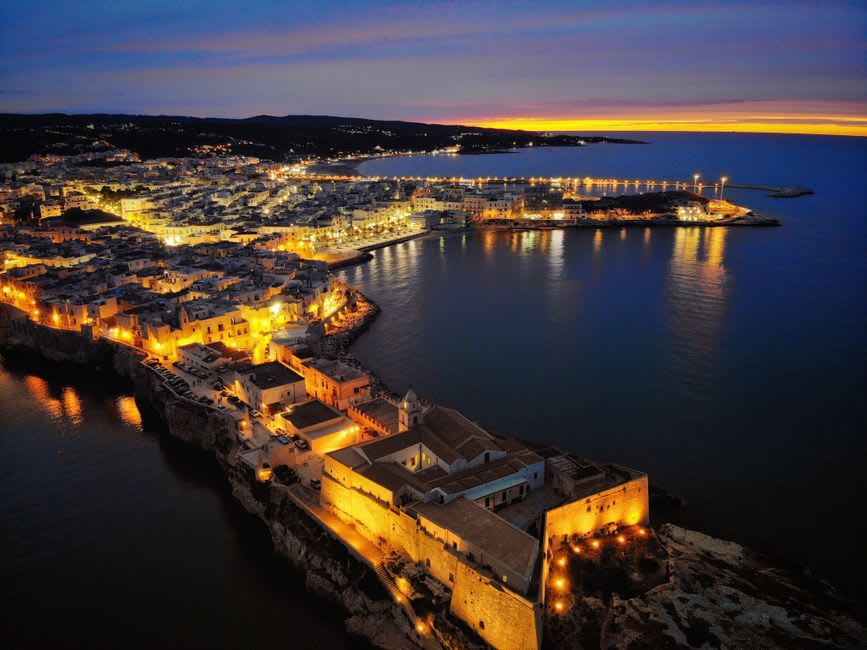
We came into Vieste at the end of a long drive up from Bari, tired and salt-crusted from a stop at a beach that turned out to be the wrong beach, and the town did the thing towns rarely manage to do when you are tired: it fixed the mood immediately. The old quarter sits on a promontory of pale limestone, houses stacked white against white, and the road in gives you the whole thing at once — headland, castle, sea on two sides — before you have even parked the car. Lia leaned out the window and said something in French I didn’t fully catch, and I didn’t need to, because I felt it too.
The Pizzomunno and the town beach
Below the old town, the main beach curves in a long arc of pale sand with the Pizzomunno rising out of the water at its northern end — a limestone stack some sixty metres tall that local legend turns into a drowned fisherman frozen mid-longing for a mermaid, which is a better story than most rock formations get. We swam out toward it in the late afternoon when the beach crowd had thinned, the water shifting from pale turquoise to a deeper blue as the sand dropped away, and treaded water looking back at the town cascading down its cliff, lit gold.
Walking the old town
The old town itself rewards aimless walking more than any checklist of sights. Narrow lanes twist between whitewashed houses hung with drying laundry and potted geraniums, opening unpredictably onto sea views or tiny piazzas with a single café and three tables. The Chianca Amara — a stone slab in the cathedral square once used, grimly, for beheadings during the Ottoman raid of 1554 — sits there matter-of-factly among the tourists eating gelato, which is the kind of juxtaposition this coast does without any apparent self-consciousness.
Boats, caves, and the coast beyond
Vieste is also the easiest launching point for the Gargano’s sea caves and for day trips to the Tremiti Islands, and half the harbour is given over to boat operators calling out departure times. We took a smaller outfit — six people, a local captain who cut the engine at each cave mouth so we could hear the water working the stone — rather than the bigger tour boats, and it made the difference between a checklist and an actual afternoon.
When to go: June and September give you swimmable water without the July-August crush, when Vieste’s population multiplies several times over and the beach becomes a genuine scrum. May is lovely and nearly empty if you don’t need the sea to be warm.