Europe
Puglia
"Puglia is what Italy looks like before tourism decided what Italy should look like."
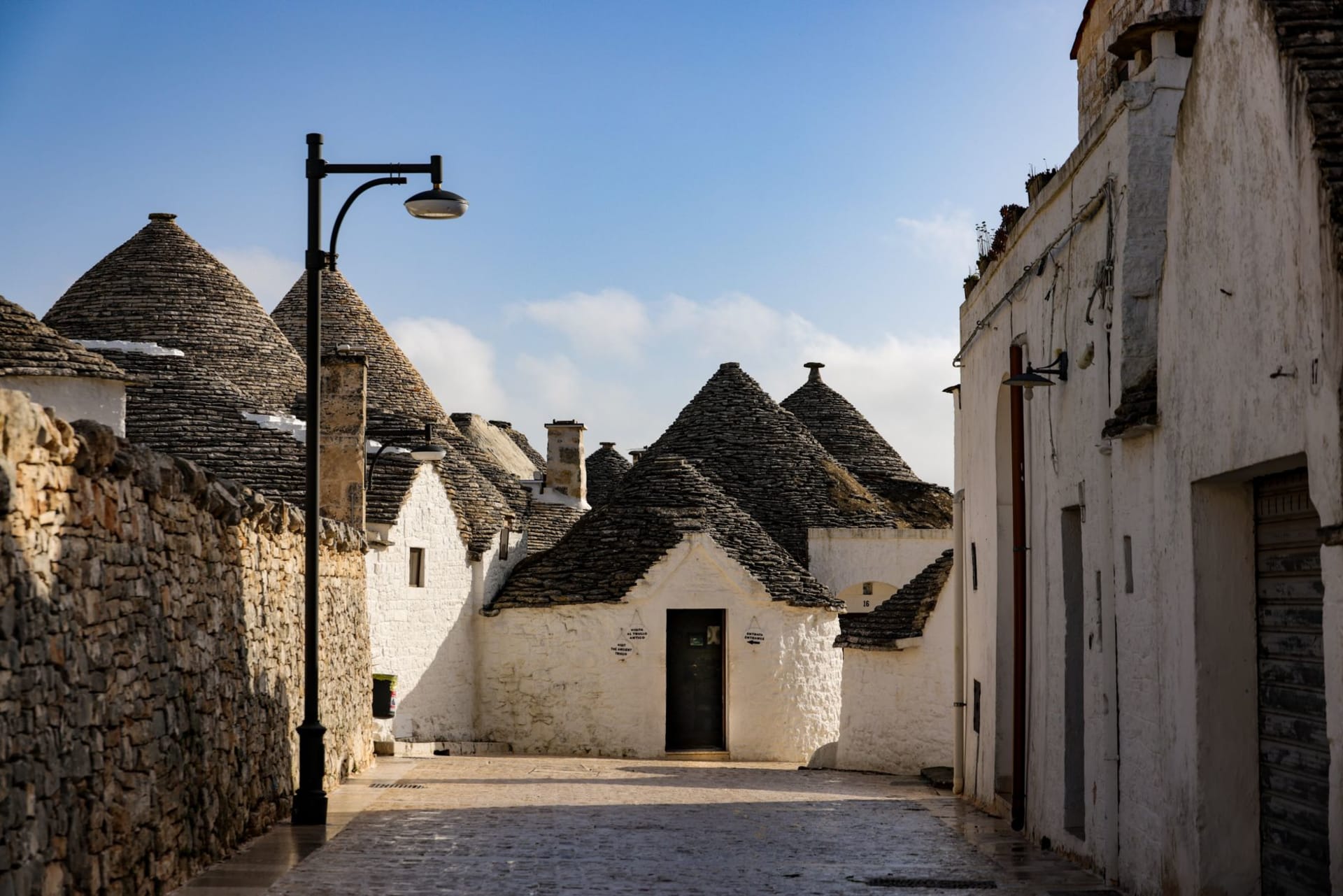
I arrived in Alberobello at midday in late September, stepped out of a sun-baked rental car, and stood there for a moment not entirely sure I was still in Europe. The trulli — those round whitewashed houses with their stacked limestone cones — do not look like architecture so much as something that grew out of the ground. Hundreds of them climbing a hillside, each roof painted with a mysterious symbol, each interior cool and domed and smelling of old stone. I had seen the photos. The photos do not prepare you.
Puglia is the furthest south you can go in Italy before the country runs out of land, and it carries the density and stubbornness of a place that knows it is often overlooked. The Salento peninsula alone could hold two weeks: Lecce’s Baroque facades so exuberantly carved they look like cake decoration; Gallipoli’s old town on a small island connected to the mainland by a single bridge; Otranto with its cathedral mosaic covering the entire floor — a twelfth-century cosmology in stone, the whole world laid out under your feet. The Adriatic on one side, a deeper blue and calmer than I expected. The Ionian on the other, turquoise and shallow and absurdly warm. You can swim in October without an argument.
The food here does not apologize for its simplicity. Orecchiette con cime di rapa — pasta with bitter turnip greens and anchovy — is the kind of dish that makes you question every complicated meal you have ever eaten. The burrata comes from the area around Andria and is nothing like what they sell in Paris under the same name. Primitivo wine from the Manduria area is dark and dense and pairs with everything. I ate at a masseria outside Ostuni — one of those converted farmhouses surrounded by ancient olive trees — and the meal lasted four hours not because the service was slow but because nobody at the table wanted it to end.
When to go: Late May through June, or September through mid-October. July and August bring heat and crowds and elevated prices, particularly around the coast. September is ideal — the sea is still warm, the harvests begin, and the towns return to the pace they prefer.
What most guides get wrong: They route visitors through Alberobello and Polignano a Mare and call that Puglia. The interior — the Valle d’Itria, the Murge plateau, the whitewashed hill towns of Locorotondo and Cisternino — is quieter, cheaper, and in many ways more characteristic of what this region actually is. Go to Matera too, just over the border in Basilicata. It shares Puglia’s light and temperament, and it will rearrange something in you.