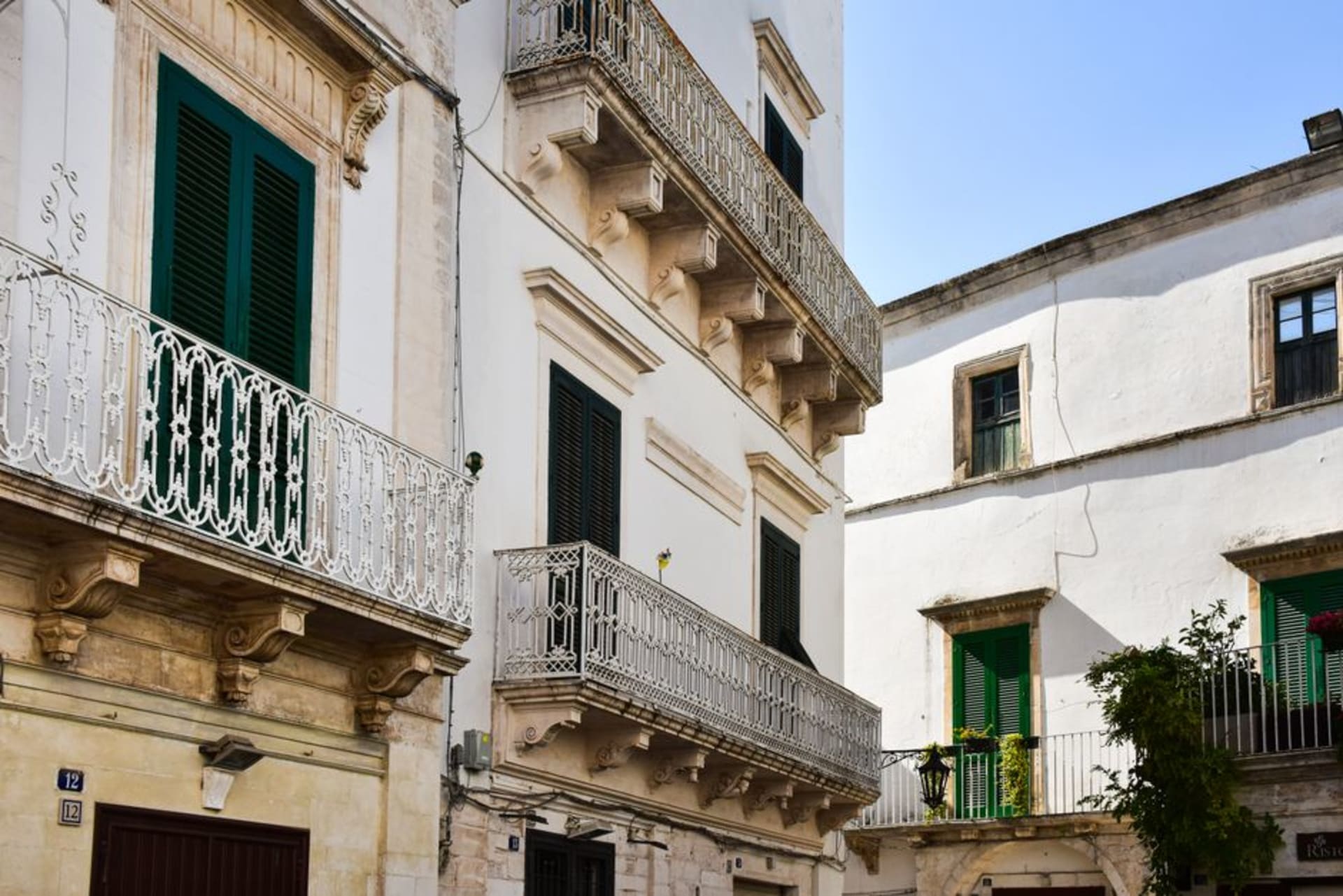
Ugento
"Ugento's history goes back further than almost anywhere else in the Salento, and hardly anyone stops to notice."
An ancient Messapian town whose Torre San Giovanni frazione delivers a laid-back Ionian beach scene without the Instagram fame of its Salento neighbours.
Most of the Salento’s fame rests on things the Romans, Byzantines, or Baroque architects built, but Ugento predates all of it by a wide margin — it was one of the principal cities of the Messapians, the pre-Roman people who occupied this end of the peninsula, and the town’s small archaeological museum holds a genuinely striking collection from that period, including a solid gold statuette of Zeus that is, by some distance, the most valuable single object I encountered in any Puglian museum. We had the galleries almost entirely to ourselves on a weekday morning, reading placards about Messapian burial customs and trade routes stretching across the Adriatic to Illyria, long before Rome had any presence here at all.
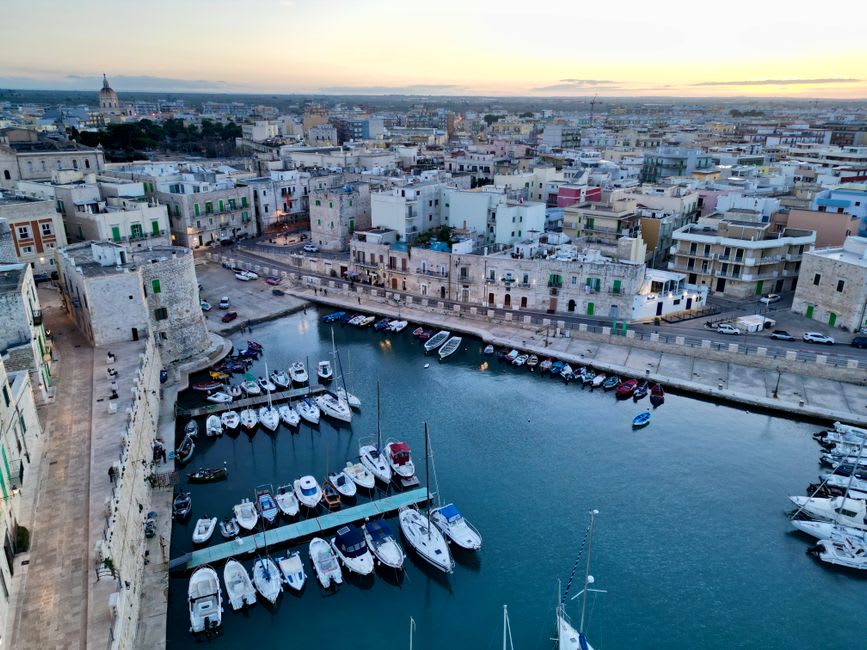
The old town above ground carries the more usual accumulation of later centuries — a Norman-Baroque cathedral, a scatter of noble palazzi — pleasant enough but not the reason to detour this far inland from the coast. That reason sits about eight kilometres away at Torre San Giovanni, Ugento’s coastal frazione on the Ionian, a straightforward beach town with a long promenade, a scatter of lidos, and a watchtower on the rocks that gives the place its name, all delivered without the crowds or reputation of Gallipoli or Pescoluse just up the coast.
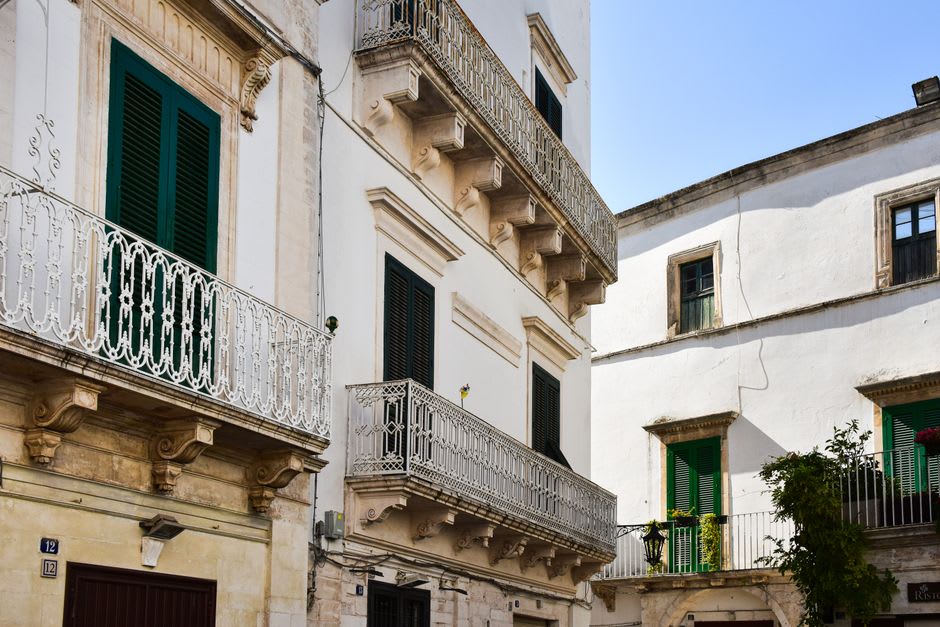
We spent an easy afternoon at Torre San Giovanni doing very little — a swim in water that, while not quite matching Pescoluse’s postcard shallows, was clean and pleasantly warm, a walk along the promenade past fishing families setting rods off the rocks, a granita from a kiosk that had clearly been serving the same three flavours since the seventies. The town has a settled, unhurried holiday rhythm that felt entirely local — mostly Salento and Lecce families with second homes or long-term rentals here, rather than the international mix you find further along the coast.
What stuck with me longest wasn’t the beach but the museum’s small collection of Messapian funerary stelae, carved with warriors and horses in a style distinct from anything Greek or Roman, evidence of a culture that thrived here for centuries before being absorbed and then largely forgotten. Standing in front of them, then driving twenty minutes to a beach kiosk for a granita, gave the day a strange but satisfying compression — three thousand years of this coastline’s history covered before lunch.
When to go: Visit the museum any time of year, since it’s indifferent to season and rarely crowded. June through September suit Torre San Giovanni for swimming, with July and August busiest among the regional families who favour it as a quieter alternative to the bigger coastal towns.