Trani
"The cathedral at Trani is planted at the water's edge like it is daring the Adriatic to come any closer."
I did not expect Trani. I was driving north from Bari along the Adriatic coast, doing a kind of reconnaissance of the cities between Bari and Barletta that the Puglia itineraries tend to skip in favour of the Valle d’Itria, and Trani appeared around a curve as a working port backed by a compact honey-coloured old town, and I stopped for what I intended to be an hour and stayed the night. The reason was the cathedral.
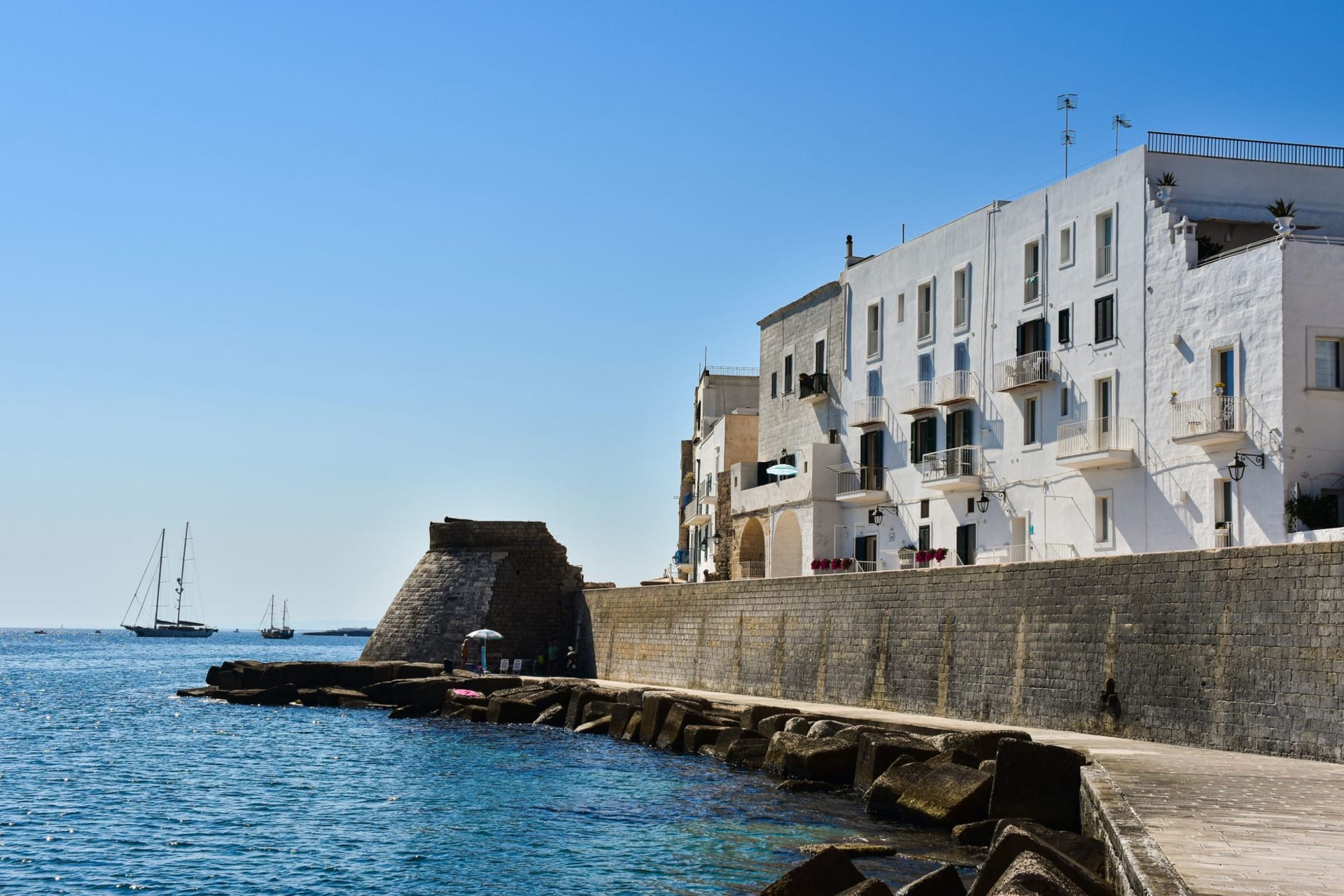
The Cathedral of San Nicola Pellegrino sits at the very edge of the sea, its feet practically in the water at high tide — a twelfth-century Romanesque structure in the creamy local stone, the rose window above the door reflecting in the harbour when the morning is still enough. I walked to it along the seafront and stood in front of it for a while with the absurd feeling of having found something by accident that I would have planned a journey to see. The proportions are those of a building that knows it is beautiful, that places itself in landscape deliberately. The fact that it looks out to sea — no harbour fence between it and the Adriatic — gives it a quality of address, as if the cathedral were speaking to the water rather than to the city behind it.

Inside the cathedral, cool and high and luminous, there are layers: the crypt below the main floor, then the lower church, then the upper basilica. The crypt particularly — descending into it from the nave, the air dropping ten degrees, the columns low and rough and lit by candles that have been burning in some form or another since the Normans were here — has the quality of entering geological time rather than merely historical time. Bones of the saint; a Byzantine mosaic fragment; the smell of old stone and beeswax and whatever mineral the limestone breathes out when it is very old and very cool.
The port town around the cathedral has the confidence of a city that has been doing business for a long time and does not particularly need to explain itself. The lungomare — the seafront walk — runs from the castle past the cathedral and along the harbour where the fishing boats tie up alongside pleasure craft and the occasional large yacht. The aperitivo culture in Trani is serious: the bars on the waterfront put out tables from about six o’clock, the glasses are large, the food that accompanies the drinks is substantial, and the crowd is predominantly local in a way that feels earned rather than merely demographic.
Trani had a historically significant Jewish community — the Giudecca quarter between the cathedral and the Porta Ogissanti contains several medieval synagogues in various states of conversion and preservation, some now churches, one restored as a cultural space. The scale of the old Jewish quarter, compressed into a few blocks of alleyways, gives a sense of the size and organisation of a community that was expelled in 1541 under the Spanish crown. The streets are very narrow and very quiet now, and the buildings that were synagogues have the faint structural dignity of objects repurposed against their original will.

The wine around Trani is the Muscat of Alexandria — Moscato di Trani — a sweet white with a long local history, and the restaurants here serve it as a dessert wine with the local pastries rather than as an aperitivo sweet, which is the right call. I had it with a plate of cartellate — those fried Pugliese pastry spirals drenched in fig syrup — at a bar near the cathedral, looking out at the harbour lights beginning to come on across the water, and decided that Trani was the most underrated city in Puglia, a claim I recognise is probably what everyone thinks about the city they discovered by accident.
When to go: Trani is a year-round destination — a functioning port city rather than a seasonal resort. Spring and autumn are ideal for the full experience. The waterfront in winter, the cathedral in November rain, the empty harbour: these have their own appeal. Summer is pleasant but the city doesn’t have the beach infrastructure of the coastal resorts, which is partly why it stays sane in July and August.