Torremaggiore
"An emperor died in a city that no longer exists, and all that marks the spot now is a single stone arch standing alone in a wheat field."
A Tavoliere farm town built around the ruins of Fiorentino, the vanished imperial city where Frederick II died — a ghost settlement now marked only by a single standing arch in an empty field.
Of everything we saw in the Tavoliere, the site outside Torremaggiore affected me the most, and it’s the smallest thing on this list by a wide margin: a single Romanesque arch, standing completely alone in an open field, all that remains above ground of Fiorentino — once a fully functioning medieval city, a favored residence of Frederick II, and the place where the emperor actually died in December 1250. The city was abandoned sometime after his death, gradually plundered for building stone by neighboring towns including Torremaggiore itself, and by the modern era had vanished so completely that for a long time its exact location was disputed.
Archaeologists eventually confirmed the site a few kilometers from town, and what’s there now is deliberately minimal: the one surviving arch — probably part of a church or the imperial residence itself — some low excavated wall foundations marking out streets and building plots, and otherwise open farmland stretching in every direction. Lia and I were the only people there on a weekday afternoon, wind moving through wheat that had grown up right to the edge of the dig, and there was something about the absolute silence of the place, given who had died there and what he’d represented, that neither of us wanted to break with conversation for a while.
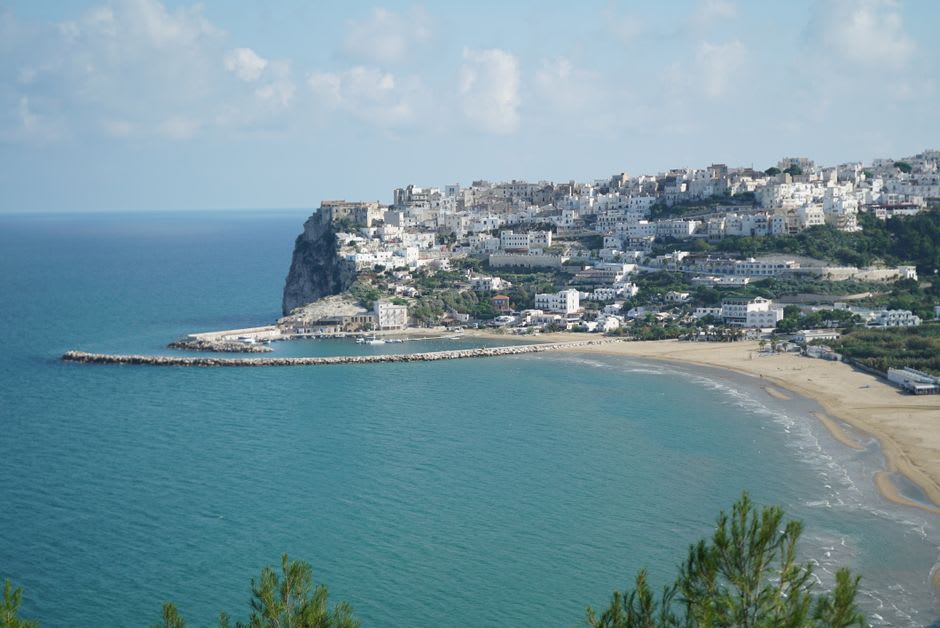
Torremaggiore itself, the working farm town a short drive from the ruins, has its own more modest charms — a seventeenth-century ducal castle in the center, a busy Saturday market, and a strong local wine tradition tied into the same San Severo DOC zone just to the north. We stopped at a bar on the main corso for coffee and the owner, once he heard where we’d just come from, seemed pleased in the particular way locals get when a visitor bothers to see the thing that actually matters to them rather than just passing through.
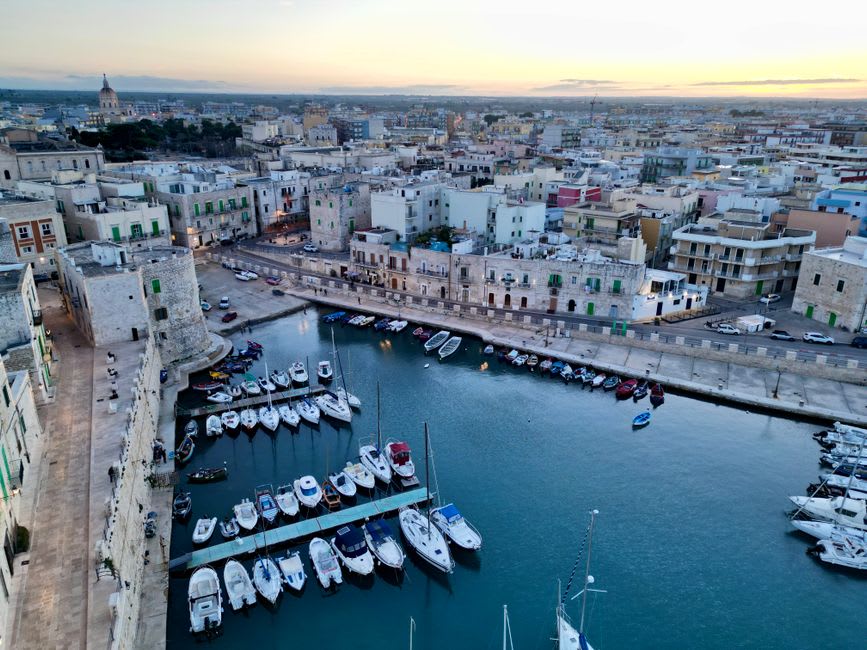
Driving away, wheat fields on both sides of the road again, I kept coming back to the strangeness of an emperor as powerful as Frederick II dying in a city so thoroughly erased that only one arch remains to mark it. Puglia does this more than anywhere else I’ve traveled — it buries its biggest history in its quietest corners.
When to go: Spring, when the wheat around the Fiorentino site is green and the fields are at their most striking, or early autumn just after harvest, when the stubble fields give the ruins a starker, more melancholic character. The site has no facilities and very little shade, so avoid the peak of summer heat.
Keep exploring
More from Puglia
 puglia
 Trani
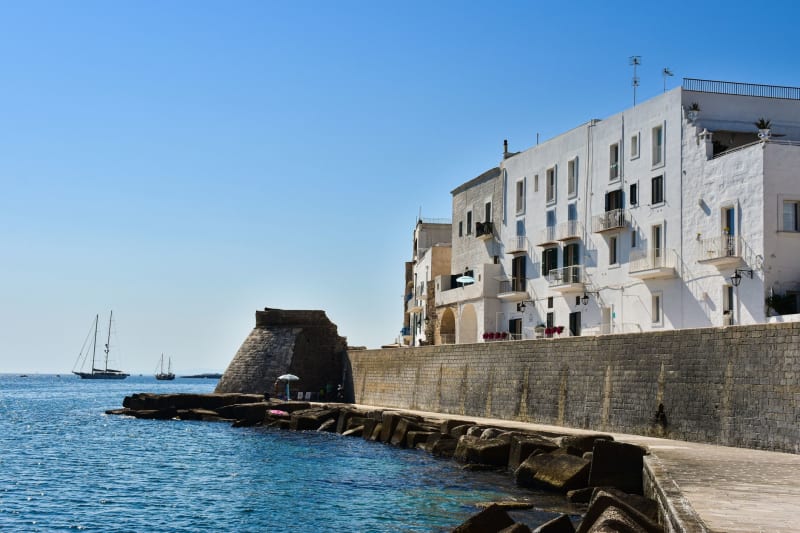
A port city with a Romanesque cathedral built directly on the sea — one of the most quietly perfect architectural scenes in southern Italy.
Explore puglia
 Troia
A small Tavoliere town built around one of the finest Romanesque cathedral facades in southern Italy, its rose window carved like lace out of solid stone.
Explore puglia
 Turi
A quiet cherry-growing town in the Terra di Bari countryside, surrounded by orchards and masserie, with a historic center built almost entirely from the region's pale local stone.
Explore puglia
 Ugento
An ancient Messapian town whose Torre San Giovanni frazione delivers a laid-back Ionian beach scene without the Instagram fame of its Salento neighbours.
Explore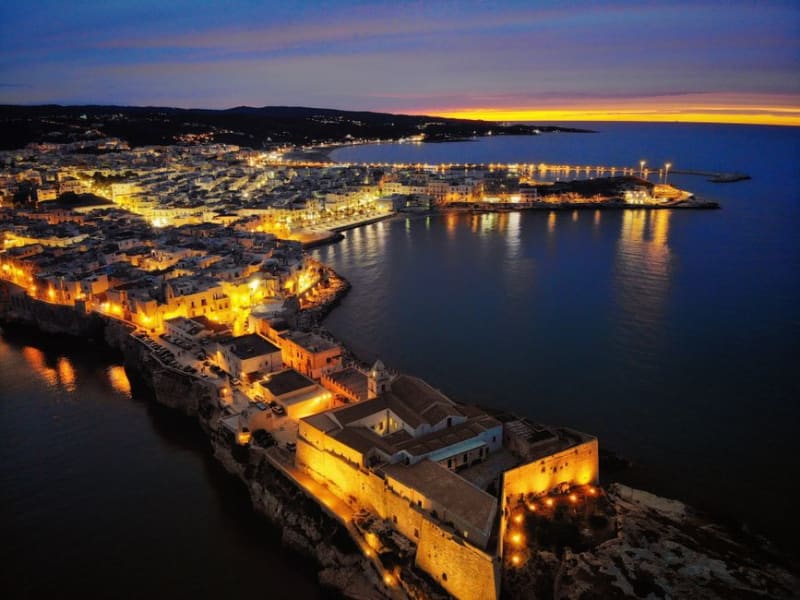 puglia
 Vieste
The Gargano's coastal capital — a white old town on a limestone spur, a sea stack rising offshore, and beaches that curve away in both directions for as far as you can walk.
Explore puglia
 Acquaviva delle Fonti
A countryside town in the Terra di Bari known for its cured meats and its Wednesday livestock market, ringed by farmland and the masserie that supply the region's butchers.
Explore